



ment. However, lawsuits may be considered when injuries or financial losses are not fully covered by insurance. Both drivers and passengers may have legal options after a minor auto accident.
Laws vary significantly by state. Some states operate under fault-based systems, while others follow no-fault insurance rules that limit when you can sue. Individual legal advice from an attorney familiar with your state’s laws is important.
This article was created with the help of AI and reviewed by humans.
What Counts as a “Minor” Car Accident?
“Minor” is not a legal term defined in statutes. It usually refers to car accidents with limited vehicle damage and no obvious severe injuries at the scene. Insurance companies and state reporting requirements often assess severity based on repair cost thresholds and whether anyone required hospitalization.
Common examples of minor car accidents include:
- A 5-10 mph rear-end collision in a parking lot
- A low-speed sideswipe at a four-way stop
- A tap at a red light causing bumper scratches
- Backing into another vehicle while parallel parking
In some states, reporting requirements and legal claims may differ when many drivers are involved in a minor car accident, as the number of drivers can impact how the incident must be reported and handled.
Typical damage in these situations includes scratched paint, small dents, and damaged bumpers—but the minor car remains drivable without towing. Repair costs often fall under $2,000-$5,000 according to industry data.
Signs of a “minor” crash typically include:
- Visible damage under 6 inches (scratches, small dents)
- No airbag deployment
- No fluid leaks from either vehicle
- Both vehicles remain drivable
- No on-scene ambulance transport
Even a minor fender bender can still cause soft-tissue injuries like whiplash, especially for passengers who had no control over the vehicle’s movements.
Common Injuries and Hidden Damage in Minor Car Accidents
“No visible injuries” at the scene does not mean there is no harm. Even minor car accidents can lead to significant injuries that may not be immediately apparent, making it important to seek medical attention and consider legal action if injuries arise later. Adrenaline can mask pain for hours, and inflammation from soft-tissue damage often takes 24-72 hours to fully develop.
Soft tissue damage, like whiplash and neck stiffness, can be common injuries in low-speed collisions, potentially resulting in significant medical expenses. Research indicates that 20-40% of low-speed rear-end collision victims experience whiplash.
Common minor car accident injuries include:
- Whiplash and cervical strain
- Neck and back muscle strain
- Concussions from sudden head movement
- Headaches from vascular impacts
- Seatbelt bruises across the chest
- Minor injuries such as scrapes and bruising, which should be documented and treated by a medical professional to support any compensation claim
- Anxiety, sleep problems, or driving phobia
Passengers are especially vulnerable because they lack control over braking and may be in unusual body positions at impact. Back-seat occupants, children, and older adults face elevated injury risks.
Seeking medical attention within 24-72 hours is crucial, even for minor injuries. Medical records—including diagnosis dates, treatment notes, and follow-up care documentation—become key evidence in an insurance claim or lawsuit.
Property damage may also be “hidden.” Frame misalignment, suspension problems, and tire damage from curb impacts often don’t appear until days after a fender bender and can cost significantly more than initial estimates suggest.
Do You Have to Report a Minor Car Accident?
Reporting rules differ by state, but many states require reporting car accidents that involve injuries or a minimum amount of property damage—often over $500 or $1,000.
After a minor car accident, it is crucial to report the incident to your insurance company as soon as possible, ideally within 24 hours, to ensure a positive outcome for your claim. Many insurance policies require prompt notice of any auto accident, even if it seems minor, to avoid coverage disputes later.
Three types of reporting to understand:
- Law enforcement reports – Required in many states if injuries occur or damage exceeds a threshold. Creates an official police report.
- Insurance company notification – Required by most policies within days of any collision.
- Information exchange – Exchanging names, insurance cards, and contact details with the other driver.
Documentation needed to support a claim includes official police reports, photos and videos, repair estimates, and medical records. These documents are essential tools to help determine fault in a minor car accident, as they provide evidence that can clarify how the incident occurred and who may be liable.
Steps to document the accident scene:
- Take photos of all vehicle damage, license plates, and the surrounding area
- Note weather conditions, traffic signals, and any skid marks
- Collect names and contact information from witnesses
- Exchange information with the other driver (name, phone, insurance policy number)
- Request a copy of the police report or incident number
Passengers may also want copies of the police report and insurance information for their own potential claim against either driver.
When Can You Sue After a Minor Car Accident?
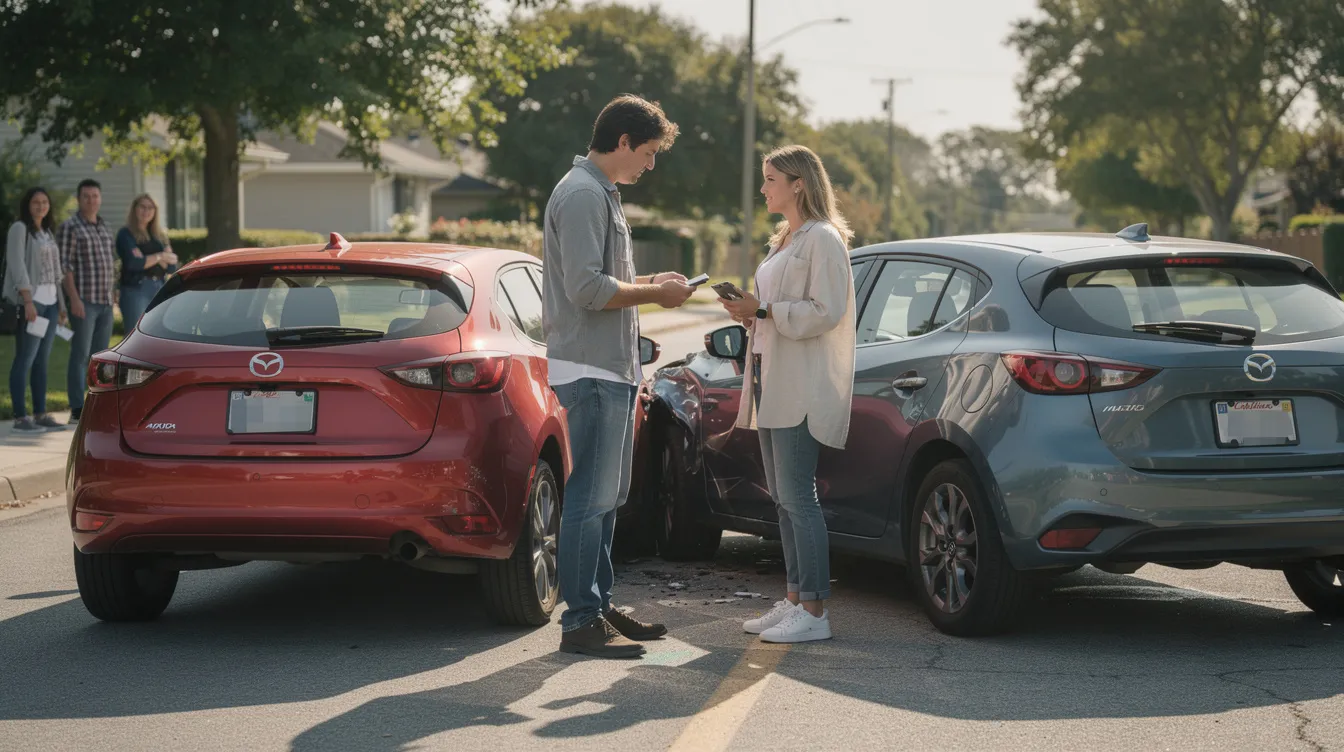
Suing is usually considered after attempting to resolve the matter through insurance and direct negotiation. Your primary legal options after a minor car accident include filing a property damage lawsuit, a personal injury lawsuit, or taking the case to small claims court.
Key situations where lawsuits are considered:
- Medical bills exceed what insurance covers
- Missed work leads to significant lost income
- Long-lasting pain affects daily activities
- Vehicle repair costs are disputed or inadequately covered
To win a lawsuit for a minor accident, you must generally prove four elements of negligence: duty, breach, causation, and damages. Lawyers or courts will investigate the incident to determine who is at fault, as establishing liability is crucial for your case. To succeed in a lawsuit, you must establish negligence and meet specific legal requirements including the statute of limitations and damages limits—typically 1-3 years for personal injury, though exact limits vary by state.
In Pennsylvania, if you are seeking damages for $12,000 or less, you can make a claim against the other driver in small claims court, but you must be able to prove certain details about the accident. Small Claims Court typically handles damages between $5,000 and $12,500, depending on state limits, and allows individuals to represent themselves without legal fees.
In Florida, the no-fault insurance laws mean that drivers usually cannot directly sue each other for damages following a car accident, but exceptions exist for serious injuries caused by negligence. In Florida, the no-fault insurance laws generally prevent drivers from suing each other for damages after a minor car accident, unless serious injuries are involved or negligence can be proven.
Most car accident lawsuits, including those from minor accidents, are settled outside of court through negotiations or alternative dispute resolution methods, rather than going to trial.
Passengers may have claims against the driver of the car they were in, the other driver, or both, depending on fault and insurance coverage.
Reasons to Sue After a Minor Car Accident
Many minor car accidents are resolved without court involvement. However, legal action may be pursued to cover medical bills, vehicle repairs, lost income, and pain and suffering when insurance offers are inadequate. In some cases, a lawsuit may be necessary to recover damages not covered by insurance. Hidden injuries and disputes over responsibility are common reasons for pursuing a lawsuit after a minor car accident instead of settling through insurance.
Factors leading to the need for a lawsuit include inadequate insurance coverage, significant medical costs from hidden injuries, and liability disputes.
Financial Loss After a Minor Car Accident
Costs from a minor auto accident can accumulate over weeks: ER visits averaging $2,200, physical therapy sessions at $100 each, prescription medications, and follow-up imaging. After a minor car accident, you may be able to recover compensation for medical expenses, property damage, lost wages, and pain and suffering.
Damages represent the actual financial or physical harm suffered as a result of the accident. Economic damages in a car accident claim can include medical bills, rehabilitation costs, and lost wages, while non-economic damages can cover pain and suffering and mental anguish. If insurance coverage is insufficient, accident victims may have to pay some of these expenses out of pocket.
In minor car accidents, damages can be categorized into economic damages, which are quantifiable costs, and non-economic damages, which are subjective and harder to quantify, such as emotional distress.
Property-related expenses extend beyond initial repair estimates to include rental car costs, rideshare expenses, and diminished vehicle value after repairs.
When Insurance Does Not Fully Cover a Minor Car Accident
Most minor car accidents are handled through an insurance claim with either the driver’s own insurer or the other party’s insurer. Common problems include denied claims, disputes over who caused the crash, and disagreements about whether injuries are accident-related. Disputes with the other party or their insurer may lead to legal action if a resolution cannot be reached.
If negotiations with the negligent party or their insurance company fail to result in a fair settlement, you may consider filing a lawsuit to recover your expenses. A lawsuit can help recover full compensation if insurance coverage is inadequate.
Coverage types that may apply include liability coverage, collision coverage, medical payments (MedPay), and Personal Injury Protection (PIP) in some states. When available coverage limits are too low to address losses from a “minor” crash, seeking damages through a lawsuit against the at fault driver or other party may be considered.
Clear communication with an insurance adjuster is important, and people may benefit from consulting a lawyer before accepting any final settlement offer.
Injuries and Pain After a “Minor” Crash
Even seemingly minor car accidents may lead to long-term pain, stiffness, headaches, or mobility limits affecting daily life. Examples of impacts that may support an injury claim include:
- Difficulty sleeping due to pain
- Limits on lifting children or groceries
- Missing family activities
- Giving up hobbies or exercise routines
Keeping a journal with pain scales and attending regular medical visits helps document these non-economic harms for a potential claim or lawsuit. Psychological effects such as anxiety about driving or reluctance to ride as a passenger also qualify as compensable harm in many states.
When the Other Driver Is Not the Only One Potentially Responsible
Fault for a minor car accident may involve multiple negligent parties beyond the two drivers. If the other driver is not completely at fault, such as in cases involving poor road conditions or vehicle defects, you may still have a valid reason to file a lawsuit.
Possible additional responsible parties include:
- Vehicle manufacturers (defective brakes or airbags)
- Repair shops (improper maintenance work)
- Entities responsible for unsafe road conditions, such as a government agency responsible for road maintenance or design flaws
For example, a passenger injured when a car’s brakes fail after a recent repair—leading to a low-speed collision—might have a claim against the repair shop. Identifying all potentially responsible parties matters when losses are serious but basic insurance coverage is limited.
An attorney can review police reports, photos, and maintenance records to evaluate potential liability under your state’s law.
What to Do If You Are Sued After a Minor Car Accident
A lawsuit is a formal legal process that requires a response, even after a minor car accident. Being “served” means receiving court papers (a complaint and summons) that require you to respond within a deadline—often 20-30 days depending on state law.
Immediate steps if you’re sued:
- Read all documents carefully and note deadlines
- Notify your auto insurance company immediately
- Do not ignore the lawsuit—failing to respond may result in a default judgment
- Consider consulting your own attorney if you have questions about personal exposure
In many cases, the insurance company may hire an attorney to defend you under your policy’s coverage. Passengers may also be named in lawsuits in rare situations, such as allegations of distracting the driver.
Understanding Fault and Evidence in a Minor Car Accident Lawsuit
Fault is evaluated using police reports, traffic laws, photos, vehicle damage patterns, witness statements, and sometimes expert analysis.
Duty requires the other driver to have a legal responsibility to drive safely. Breach refers to the failure of the other driver to drive safely, such as speeding or distracted driving. Causation indicates that the unsafe driving directly caused the accident.
Comparative negligence rules may reduce a claim if both drivers share responsibility. For example, if you are found 20% at fault, your recovery may be reduced by that percentage.
Passengers are usually not considered at fault, but their statements at the scene can still influence how insurers and courts view the case. Avoid admitting fault at the scene—focus on safety and honest information exchange instead.
How a Lawyer Can Help After a Minor Car Accident

Los Defensores is a legal advertising service that helps connect people with independent personal injury attorneys and law firms. Los Defensores does not provide legal representation directly; any legal services are provided by attorneys or law firms in our network.
An experienced personal injury lawyer or law firm may assist by:
- Reviewing insurance coverage and policy limits
- Calculating documented losses (medical expenses, lost wages, property damage)
- Communicating with an insurance adjuster on your behalf
- Preparing a lawsuit when appropriate
- Fighting for your rights and providing comprehensive legal assistance throughout your car accident case
Attorneys can advise both injured passengers and drivers about whether to pursue an insurance claim only, negotiate further, or file a lawsuit. Legal services for car accident cases are often offered on a contingency basis, meaning no attorney fee unless there is a recovery. However, clients may still be responsible for certain case costs.
No attorney can promise a specific result. Outcomes vary based on facts, evidence, and state law.
Why Passengers May Want Legal Advice Too
Passengers injured in minor car accidents sometimes feel caught between the driver of their vehicle and the other driver’s insurance company. A lawyer can review which insurance policies may apply: the driver’s policy, the other driver’s policy, or the passenger’s own coverage.
Passengers usually have more flexibility in bringing claims because they did not control the own vehicle and are rarely at fault. Passengers should keep their own records: medical visits, work missed, and any communications with insurers.
In many states, people may speak with attorneys about accident claims regardless of immigration status, but seeking specific legal advice is recommended for individual situations.
Steps to Take After a Minor Car Accident (Drivers and Passengers)
Taking the right steps immediately after a minor car accident can protect your health, safety, and potential legal rights.
Practical checklist:
- Ensure safety – Move to a safe location if possible
- Call 911 if needed – Report any injuries or significant damage
- Move vehicles – If safe and legal, move to avoid blocking traffic
- Check for injuries – Assess yourself and passengers
- Exchange information – Names, phone numbers, insurance company and policy numbers, license plates, driver’s license details
- Document the scene – Photos of damage, weather, traffic signals, skid marks
- Get witness contacts – Names and phone numbers of anyone who saw the collision
- Obtain police report – Request a copy or incident number
- Seek medical attention – Even if you feel fine initially
- Notify your insurer – Promptly report the accident
Avoid giving recorded statements or signing documents from an insurance company without understanding the implications. Consider consulting an attorney first.
Free Consultation and How Los Defensores Can Help Connect You with an Attorney
Individuals involved in a minor car accident, including passengers, often have questions that depend on their specific facts and state law. Los Defensores is a national legal advertising service that helps connect Spanish-speaking individuals in the U.S. with independent personal injury attorneys for a free consultation or free case evaluation.
Contacting Los Defensores does not create an attorney-client relationship. Any legal services are provided by independent attorneys in the network who can review your car accident cases and explain your legal rights under your state’s laws.
Reach out by phone or online to speak in Spanish or English with someone who can help connect you with a car accident attorney. Don’t wait too long—states have deadlines (statutes of limitations) for filing a lawsuit after a car accident.
Even after a minor car accident or fender bender, it may be helpful to learn your options before making decisions about insurance settlements or lawsuits. Moving forward with accurate information can help you and your family protect your interests.
This article is for general informational purposes only, is not legal advice and does not create an attorney-client relationship. Results vary based on the specific facts and law applicable to each case. This content was created with AI assistance and reviewed for accuracy, including the images contained herein. Hiring a lawyer is an important decision and should not be based solely on ads. No claim is made that participating attorneys are better than others.