



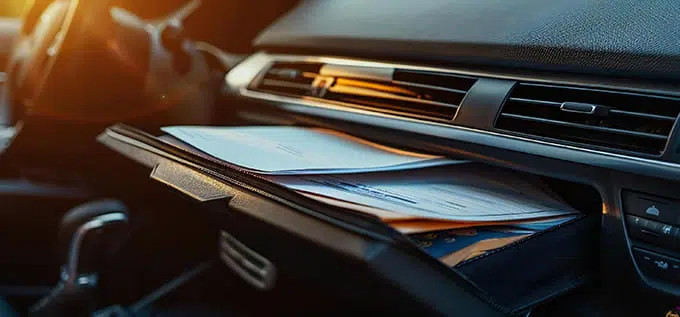

At a minimum, your glove box should contain the following documents: your vehicle registration, driver’s license, proof of insurance, and inspection document (if applicable in your state). It’s also a good idea to keep copies of important information like your insurance company’s contact details and emergency phone numbers, along with basic items like a first aid kit, flashlight, and disposable gloves. In this article, we cover the essential documents to keep in your glove box and why they should stay accessible.
For drivers in the United States — especially Spanish-speaking motorists who want to avoid fines, delays, and complications after a traffic stop or an accident — every driver should keep these items within reach if they’re pulled over or need them after a crash, since having them handy can save time, money, and legal headaches.
This practical guide brings together a clear checklist of required and recommended documents to keep in your glove box, useful items to add for trips and emergencies, how to organize the space, what you shouldn’t store there, and why being prepared can make all the difference when something unexpected happens. The glove compartment is a great spot for papers you may need quickly.
Essential Required Documents
In most states, these are the basic documents you should have available while driving and it’s recommended to always carry them:
Vehicle Registration
- What it is: A document that proves you own or have the right to operate the vehicle, and it helps show who the owner is, especially after purchase or when handling ownership questions.
- Why it matters: A police officer may request your registration during a stop because operating a motor vehicle requires proper documentation under state law, and you can be cited if you don’t have it.
- Where to get it: Your state’s Department of Motor Vehicles.
- Notes: Carry the current vehicle registration in the format accepted by your state.
Driver’s License
- What it is: Identification that proves you have permission to drive.
- Why it matters: Required at any traffic stop, and a police officer may ask to see it during a stop.
- Where to keep it: Keep it on your person while driving; don’t store it only in the glove box.
- Notes: Make sure it’s not expired. In some places, if you’re unable to show it right away, you may need to present your license at a police station within 7 days.
Proof of Car Insurance
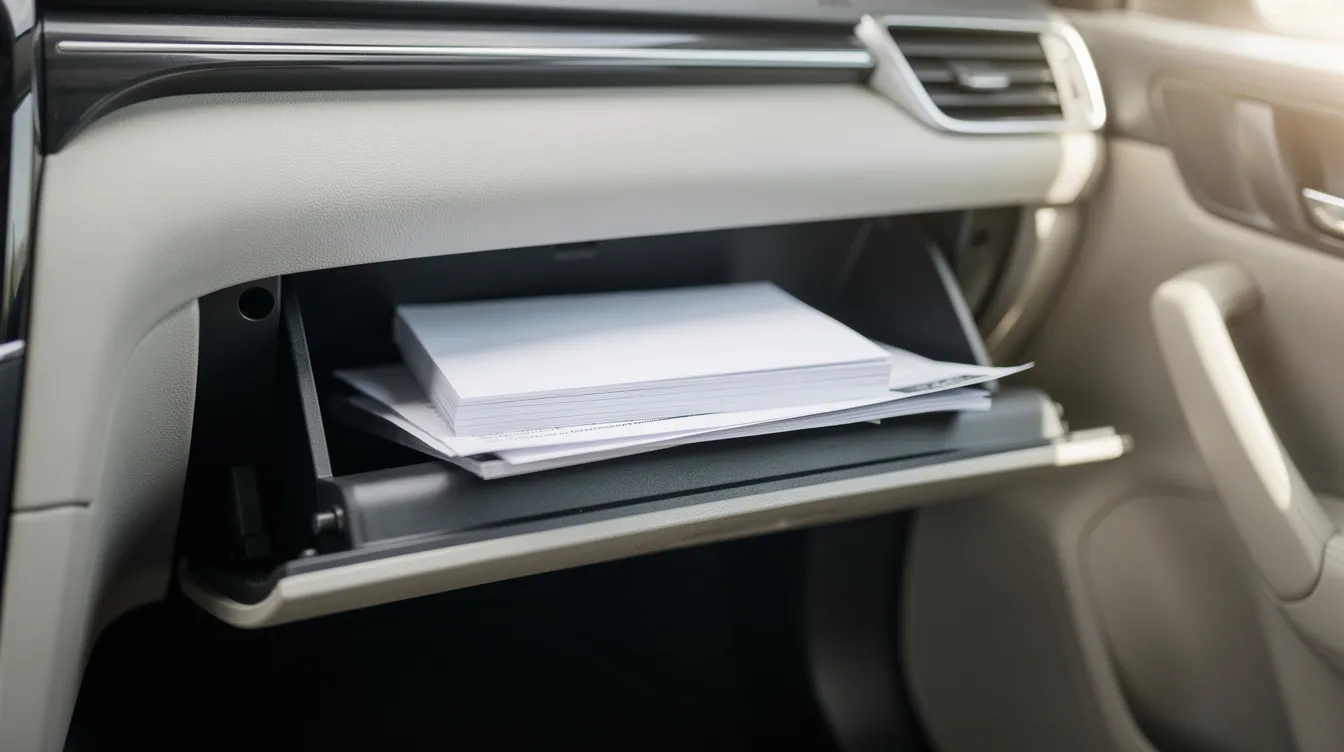
- What it is: An insurance card showing you have active liability insurance.
- Why it matters: Most states require proof of insurance or financial responsibility, and if you are hit or involved in an accident, it should be easy to access. Verify what format your state DMV accepts.
- Where to get it: Your insurance company provides it.
- Notes: Get multiple copies — keep one in the glove box and another in your wallet. Many drivers also keep a digital copy on their phone or insurer app if their state accepts it.
Vehicle inspection (smog/emissions) document
- What it is: Proof that your car passed the required emissions inspection.
- Why it matters: In some states, the inspection certificate may be necessary to legally drive and register the vehicle; the specifics vary depending on where you live.
- Where to get it: A certified inspection station.
- Notes: Check whether your state requires it.
Important Documents (Not Required but Recommended)
These documents aren’t legally required, but they can be useful:
Copy of the Vehicle Title
- What it is: A document that proves legal ownership of the vehicle.
- Why it matters: May be needed if you sell the car, transfer ownership, or handle certain DMV paperwork.
- Where to keep it: Don’t keep it in the glove box. Store the original at home in a safe place, such as a safe or another secure location, to protect it.
- Notes: You generally don’t need the vehicle title during a traffic stop or after a typical accident. Keeping it in the car increases risk if the vehicle or your documents are stolen. The same goes for highly sensitive items like a Social Security card or bank statements, which can be used for identity fraud.
Insurance Company Contact Information
- What it is: Phone number and contact details for your insurance company.
- Why it matters: You’ll need this after an accident to report the incident.
- How to store it: Write the number down and keep it handy in the glove box or center console for quick access during car trouble or after an accident.
- Notes: Include your policy number.
Roadside Assistance Information
- What it is: Contact for emergency service if your car breaks down.
- Why it matters: You’ll need help if you get a flat tire, dead battery, or breakdown.
- Options: AAA, your insurer’s roadside assistance, or an auto club service.
- Notes: Include your membership number if applicable.
Emergency Contact Information
- What it is: Phone numbers for family or close friends.
- Why it matters: If you’re in an accident or emergency and cannot communicate, first responders can quickly reach your loved ones.
- How to store it: Write it on paper or keep a card with numbers; digital storage on your phone is also common, but a written copy in the car is still helpful.
- Notes: Include at least two people.
Copies of Identification Documents
- What it is: Copies of your driver’s license and another ID.
- Why it matters: If you lose your wallet, you have backup identification, and another official ID can help verify your identity if requested.
- Where to keep them: Store in a separate envelope in the glove box.
- Notes: Don’t store copies of highly sensitive documents.
Useful Documents for Long Trips
If you’re planning long trips, consider keeping:
Vehicle Maintenance History
- What it is: maintenance records of oil changes, inspections, tune-ups, repairs, and service.
- Why it matters: Useful if you have a problem and need to explain the vehicle’s history.
- Where to keep it: A folder in the glove box.
- Notes: Helps mechanics track inspections, tune-ups, and repairs and understand the vehicle.
VIN (Vehicle Identification Number)
- What it is: The vehicle’s unique 17-digit serial number.
- Why it matters: Needed for accident reports, insurance, and technical support.
- Where to find it: Lower left corner of the windshield; on the vehicle title.
- How to store it: Write it down on paper or save a photo.
Manufacturer’s Warranty Information
- What it is: Details about your vehicle’s warranty coverage.
- Why it matters: If you have a covered issue, you’ll need proof of warranty.
- How to store it: Warranty booklet or information card.
- Notes: Check whether the warranty is still valid.
Emergency and Safety Items to Keep in Your Car
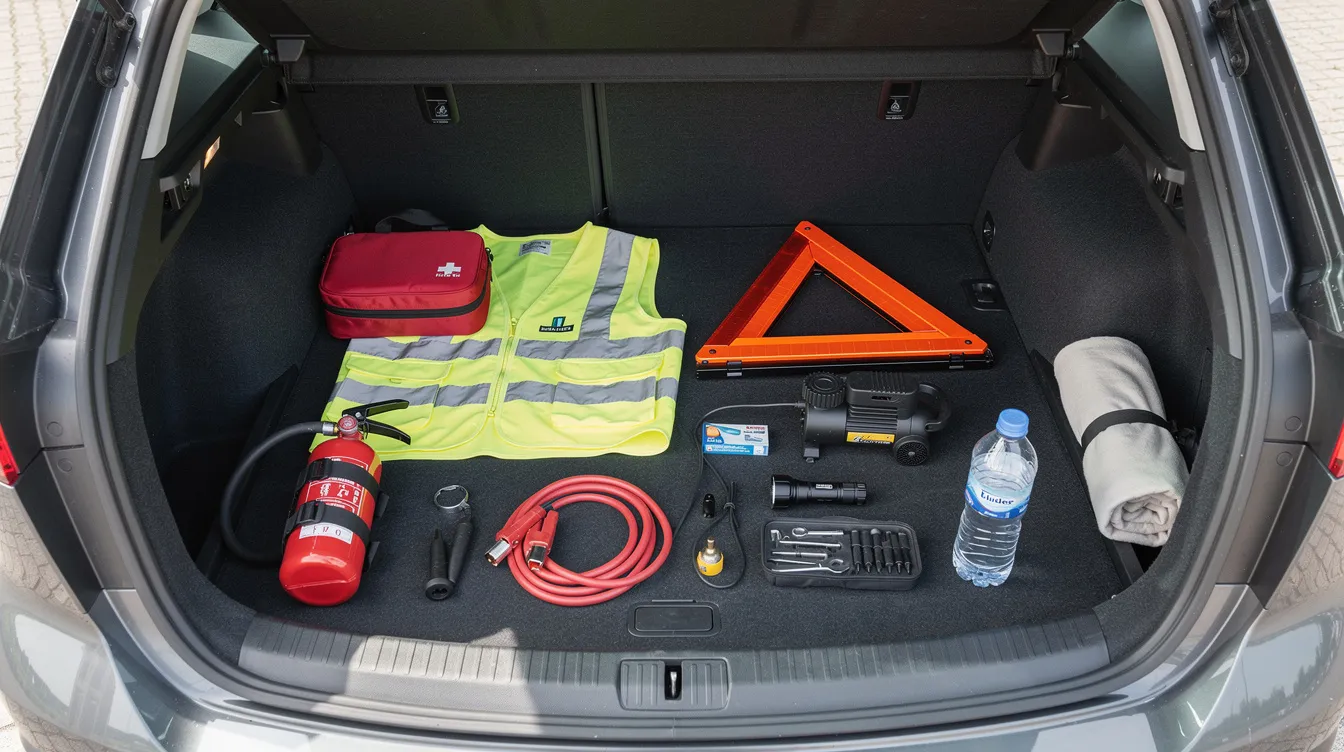
Beyond documents, the glove box is a good place to store emergency items. Some can go in the glove box; others may be better kept in the trunk or another secure compartment.
First Aid Kit
- What it is: A basic first aid kit to keep in the glove box.
- Includes: Gauze, bandages, antiseptic, pain relievers, and other items for immediate use.
- Why it matters: Minor injuries can be treated right away.
- Size: Keep it compact enough to fit in the glove box.
Flashlight or Emergency Light
- What it is: A small flashlight or LED light.
- Why it matters: Essential if you have a problem at night or in a tunnel.
- Type: An LED flashlight works best — lasts longer and uses less battery.
- Notes: Include spare batteries or get a rechargeable one.
Basic Tools
- What it is: A small basic tool kit.
- Includes: Screwdriver, pliers, small wrench, Swiss army knife.
- Why it matters: Many small problems can be fixed on the road.
- Size: Keep it compact.
Emergency Repair Tape
- What it is: Repair tape (like emergency vehicle repair tape).
- Why it matters: Temporary fixes until you can get to a mechanic.
- Options: Body tape or windshield repair tape.
Nitrile or Latex Gloves
- What it is: Disposable gloves.
- Why it matters: Keeps your hands clean when checking the engine or changing a tire.
- Quantity: Keep several pairs.
Wet Wipes or Paper Towels
- What it is: A small pack of wipes or paper towels.
- Why it matters: They’re useful for quick cleanup of hands or spills and can help keep the interior in pristine condition.
- Options: Baby wipes, cleaning wipes, or paper towels. It’s also a good idea to keep hand sanitizer in the glove box.
Plastic Bags
- What it is: Small reusable or disposable bags.
- Why it matters: Trash, wet items, emergencies.
- Quantity: Keep several bags. They can also be cloth or paper.
Pen and Paper
- What it is: Pens and a small notepad.
- Why it matters: Needed for exchanging information after accidents, leaving notes, writing down directions.
- Notes: Useful for writing down contact information.
Tissues
- What it is: A small pack of tissues.
- Why it matters: Quick cleanup, minor emergencies.
- Quantity: Keep several packs.
Basic Medications
- What it is: Pain relievers, antacids, antihistamines.
- Why it matters: Headaches, stomach issues, allergies during trips.
- Notes: Keep prescribed personal medications with you, not just in the glove box.
Cash
- What it is: Small denomination bills and change.
- Why it matters: Tolls, parking, emergencies where cards aren’t accepted.
- Amount: Keep $20–$50 in small bills if you feel comfortable doing so.
Optional Useful Items
Also consider keeping:
Route Information / Maps
- What it is: A physical map of your area or frequent route.
- Why it matters: If GPS fails, you have a backup.
- Notes: Not necessary if you have a phone with GPS, but useful as a backup.
Car Phone Charger
- What it is: A phone charger for the car that plugs into the cigarette lighter.
- Why it matters: A dead phone battery is a real problem in an emergency, and this charger is especially useful on long trips.
- Notes: Use it to keep your phone charged.
Jumper Cables
- What it is: Cables to jump-start a car with a dead battery.
- Why it matters: If the battery dies, you can restart it with another vehicle.
- Size: Compact format fits in the glove box.
Windshield Washer Fluid
- What it is: A small bottle of windshield washer fluid.
- Why it matters: Refill the reservoir if it’s empty.
- Size: A small backup bottle.
Owner’s Manual
- What it is: The manufacturer’s guide for your vehicle.
- Why it matters: Answers questions about features and troubleshooting.
- Where to keep it: Abbreviated version in the glove box; keep the full version at home.
Repair Receipts
- What it is: Receipts for work done on your vehicle.
- Why it matters: Proof of maintenance; useful for warranty or resale.
- How to store them: A small folder in the glove box.
Final Checklist: What to Keep in Your Glove Box
Required documents: Keep these essential documents accessible in your car:
- Vehicle registration
- Driver’s license
- Proof of car insurance
- Inspection document (if required in your state)
Note: Requirements may vary if you are driving in Mexico or crossing the border.
Recommended documents: Store only the papers you may realistically need in the car:
- Vehicle title (copy)
- Insurance company contact information
- Roadside assistance information
- Emergency information (phone numbers)
- Copies of identification
For long trips:
- Maintenance history
- VIN number
- Warranty information
Safety and emergency:
- First aid kit
- Flashlight / emergency light
- Basic tools
- Repair tape
- Disposable gloves
- Cleaning wipes
- Plastic bags
- Pen and paper
- Tissues
- Basic medications
- Cash
Optional:
- Maps / route information
- Car phone charger
- Jumper cables
- Backup windshield washer fluid
- Owner’s manual
- Repair receipts
Practical Tips for Organizing Your Glove Box
Keep it spacious: Don’t fill the glove compartment completely; important documents should be easy to access in the glove box.
Organize by category: Use envelopes or small folders to group items:
- Legal documents in a red envelope
- Emergency information in a yellow envelope
- First aid items in a separate box
The center console can also be a great spot for one small card with emergency or insurance details if that is easier to reach.
Label everything: Clearly write what each bag or folder contains.
Check regularly: Every 6 months, verify that:
- Documents aren’t expired
- Contact information is current
- Emergency items are in good condition
- Medications aren’t expired
Keep copies at home: Store the most valuable original documents (title) at home, not just in the glove box.
Duplicate critical documents: Keep a copy of your driver’s license and insurance in your wallet too.
Update information: If you change insurance companies, phone numbers, or emergency contacts, update what’s in the glove box.
Tip for drivers: This list may vary for those who drive in Mexico.
What NOT to Keep in Your Glove Box
Avoid storing:
- Large amounts of cash
- Valuable original documents (original title)
- House keys
- Full credit card information
- Social Security card
- bank statements
- Food or drinks (they can damage documents or end up next to the seat)
- Items that can melt (crayons, chocolate, candles)
- Flammable items
- Highly personal documents
Keeping highly personal documents out of the car helps protect against loss or identity fraud if items are stolen or lost.
About Sensitive or Controlled Medications
Don’t leave controlled, prescription, or heat-sensitive medications inside the glove box. The interior of a car can reach extremely high or low temperatures, which can affect the safety and effectiveness of some medications. Additionally, leaving prescription medications in the vehicle can increase the risk of loss, theft, or misuse.
If you need to carry medications during a trip, keep them with you, in their original container, and follow the storage instructions provided by your doctor, pharmacist, or the medication label.
Conclusion: Being Prepared Can Save Lives
Having the right documents and emergency items in your glove box is a small investment that can save you time, money, and trouble in an emergency.
Taking the time now to organize your glove box properly can help you be prepared for many situations on the road.
Final action step:
- Print this checklist
- Gather all the items from the list that you currently have
- Buy what’s missing
- Organize everything in your glove box today
- Discuss it with other people in your household who use the car
- Set a reminder to review every 6 months
Being prepared isn’t paranoia — it’s responsibility. You and your passengers deserve to be safe and ready for any situation.
Requirements for drivers may vary by state, county, or city where you live. This article is for informational purposes only and does not constitute legal advice. For guidance specific to your situation, please consult with a licensed attorney. Los Defensores is a legal advertising service and does not provide legal advice or representation. If you need guidance about an accident, we can help connect you with an independent attorney in our network. Your immigration status should not prevent you from seeking legal help or information.