



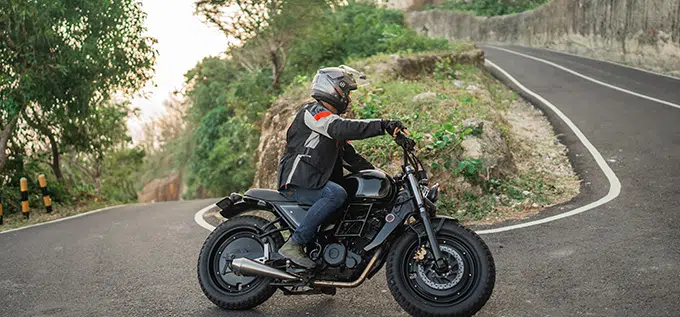

Motorcyclists generally have the same rights and responsibilities as other vehicle operators. The safest way to share the road with motorcycles is to treat them like full-size vehicles: give riders the entire lane, never attempt to drive alongside them within the same lane, check blind spots carefully before turning or changing lanes, maintain a following distance of at least four seconds, and slow down at intersections and in bad weather or poor road conditions.
These habits are especially important because motorcyclists face a much greater physical risk in a crash. Unlike occupants of passenger vehicles, riders are not surrounded by a protective structure.
In 2024, 6,228 motorcyclists were killed in U.S. traffic crashes, representing 16% of all traffic fatalities. Per vehicle mile traveled, motorcyclists were almost 27 times more likely to die and almost five times more likely to be injured in a crash than passenger car occupants.
This guide explains how motorcycles behave differently on the road, why drivers may fail to see them in blind spots, how much space to leave when following, how to navigate intersections and turns safely, when to adjust for weather and road conditions, why distracted driving is especially dangerous around motorcycles, and what to do if a motorcycle crash occurs. These practical habits can make the road safer for everyone.
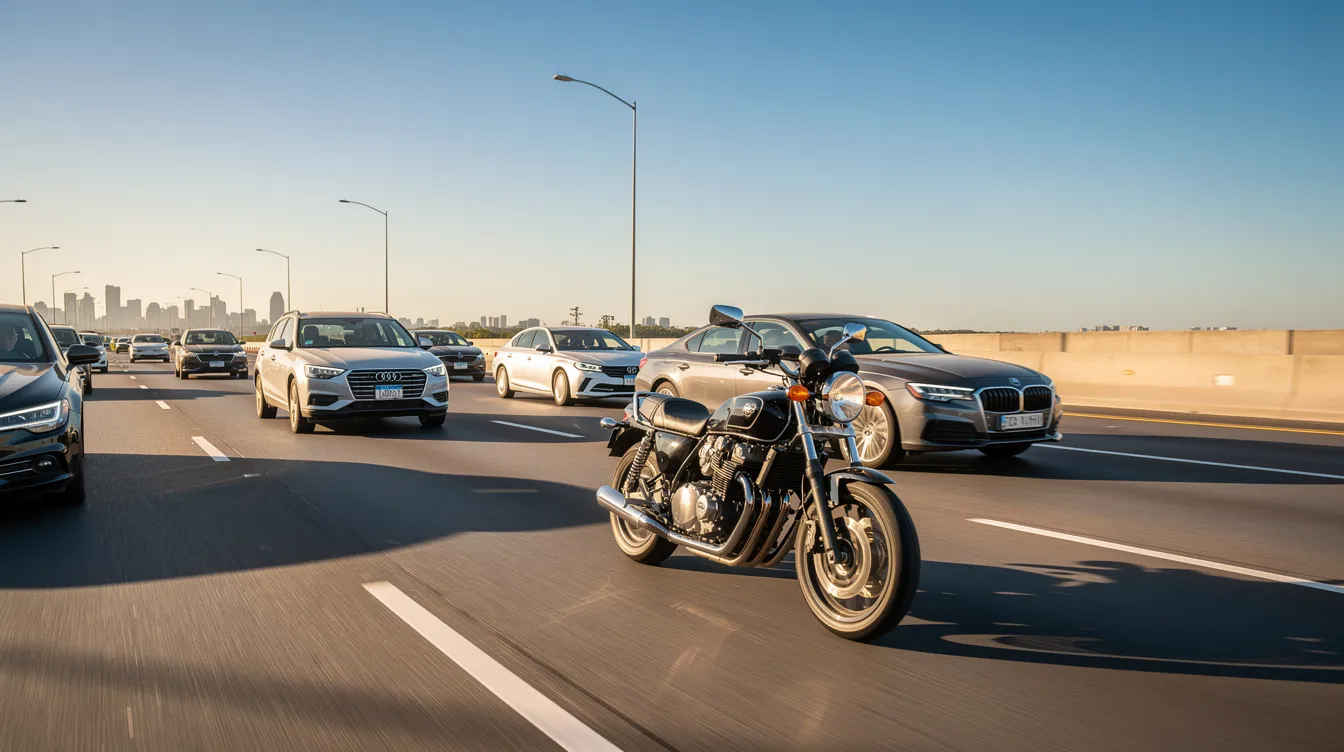
Understand How Motorcycles Behave Differently on the Road
Motorcycles are smaller and narrower than passenger vehicles. Their size can make them difficult to see in mirrors, and they may be hidden in blind spots, at intersections, or in areas partially blocked by trucks, SUVs, or other large vehicles.
Their narrow profile can also make their distance and speed difficult to judge. A motorcycle that appears far away may be closer or approaching faster than a driver realizes.
Motorcyclists may change position within a lane to avoid potholes, oil, gravel, pavement seams, standing water, or debris. These movements are generally intended to maintain traction, improve visibility, or avoid road hazards—not to ride aggressively. NHTSA encourages drivers to understand common motorcycle practices, including downshifting and changing lane position, so they can anticipate them and respond safely.
A motorcycle may also slow down without immediately activating its brake light. Riders sometimes reduce speed by releasing the throttle or downshifting rather than applying the brakes.
Treat a motorcycle as a full-size vehicle:
- Give the rider the entire lane and enough room to maintain a safe lane position.
- Never attempt to share a lane with a motorcycle.
- Do not crowd the rider when passing.
- Expect the motorcycle to adjust its position to avoid hazards.
Some states permit lane splitting or filtering under limited circumstances, while others prohibit it. Regardless of local law, drivers should maintain their lane position and avoid intentionally blocking or crowding a rider.
Check Your Blind Spots Before Moving
Because motorcycles can fit almost entirely within a vehicle’s blind spot, checking the mirrors alone may not be enough.
Before changing lanes:
- Signal well in advance to communicate your intentions.
- Check the rearview and side mirrors.
- Look over your shoulder to check the blind spot.
- Check again immediately before moving.
- Change lanes gradually when the space is clear.
On multilane roads and freeways, a motorcycle can approach quickly between the time you first check the mirror and the moment you begin moving. Take an extra moment to confirm that the lane remains open.
Avoid sudden lane changes, especially when traffic is moving quickly. On roads with higher speed limits, check your mirrors and blind spots especially carefully because motorcycles can close the distance quickly.
Many motorcycles do not have self-canceling turn signals. A flashing signal does not always mean that the rider is about to turn. Wait until the rider begins the maneuver before proceeding, and do not assume the motorcycle will turn based on the signal alone.
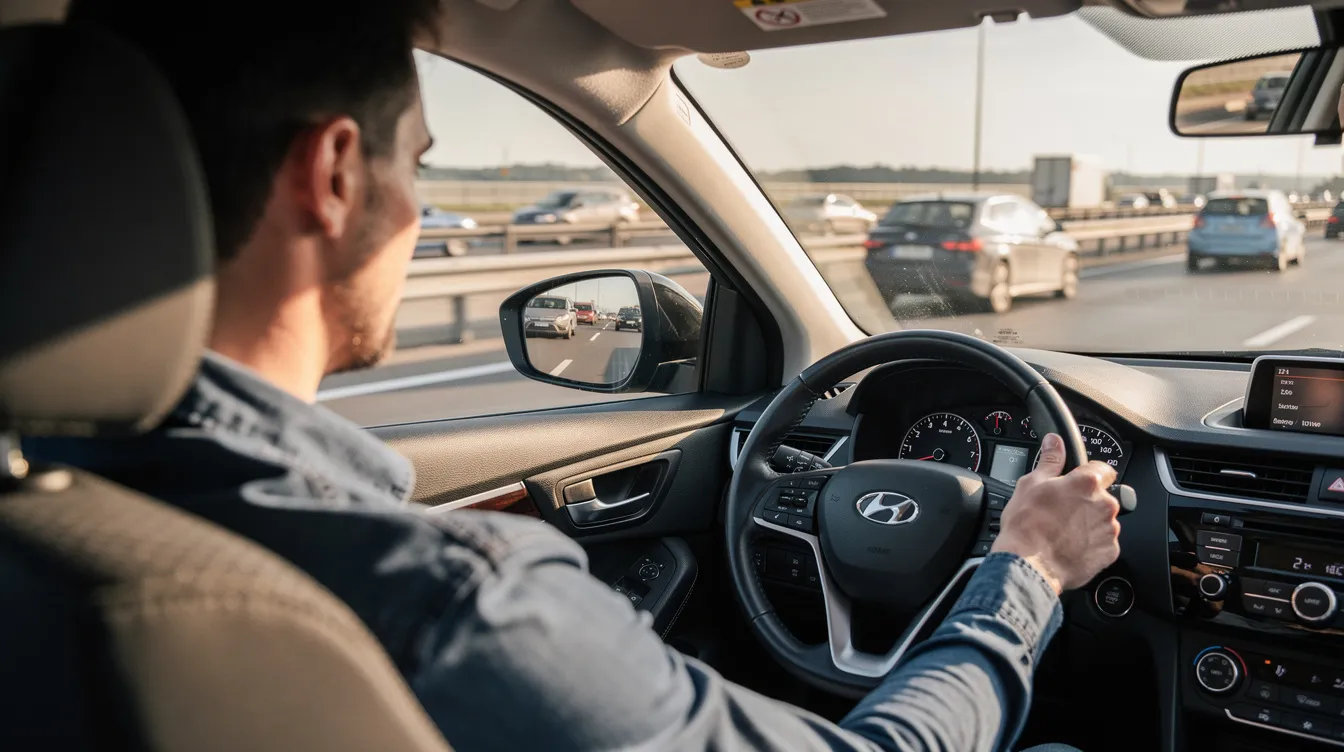
Maintain a Safe Following Distance
Following a motorcycle too closely leaves both you and the rider with less time to respond.
A collision that causes only limited damage between two passenger vehicles can cause catastrophic injuries when a motorcycle is involved. Riders may also need to slow down unexpectedly to avoid gravel, potholes, wet pavement, or objects that would present little danger to a car.
Maintain a following distance of at least four seconds behind a motorcycle in favorable conditions:
- Choose a fixed object next to the road.
- When the motorcycle passes it, begin counting.
- Your vehicle should not reach that object for at least four seconds.
Increase the distance in rain, darkness, heavy traffic, strong winds, or poor road conditions. Leave additional space whenever visibility or traction is reduced. Florida highway-safety guidance recommends a four-second buffer behind motorcycles and additional space during bad weather, on slippery surfaces, and near railroad crossings.
Extra distance gives you more time to recognize that the motorcycle is slowing, apply the brakes gradually, and avoid stopping suddenly.
Intersections, Left Turns, and Other High-Risk Situations
Intersections—and left turns in particular—can be especially dangerous for motorcyclists. An IIHS analysis of crashes from 2017 through 2021 found that collisions in which another vehicle turned left in front of an oncoming motorcycle accounted for 26% of fatal two-vehicle motorcycle crashes. This was the most common individual crash configuration identified in the study.
Treat every intersection with special care. Come to a complete stop when required, look left, right, and left again, and deliberately scan for motorcycles, bicyclists, and pedestrians—not just larger cars and trucks.
Before turning left, look carefully and judge an approaching motorcycle’s speed and distance cautiously. A motorcycle’s smaller profile can make it appear farther away or slower than it actually is. When you are uncertain whether there is enough time to turn safely, wait.
Use extra caution when turning right on red or entering the road from a driveway, parking lot, or side street. A motorcycle, cyclist, or pedestrian may be hidden behind parked vehicles, trees, signs, or larger trucks.
Avoid creeping into crosswalks, bike lanes, or the path of an approaching motorcycle while waiting to turn. Doing so can reduce the space available for riders, cyclists, pedestrians, and other road users to maneuver safely.
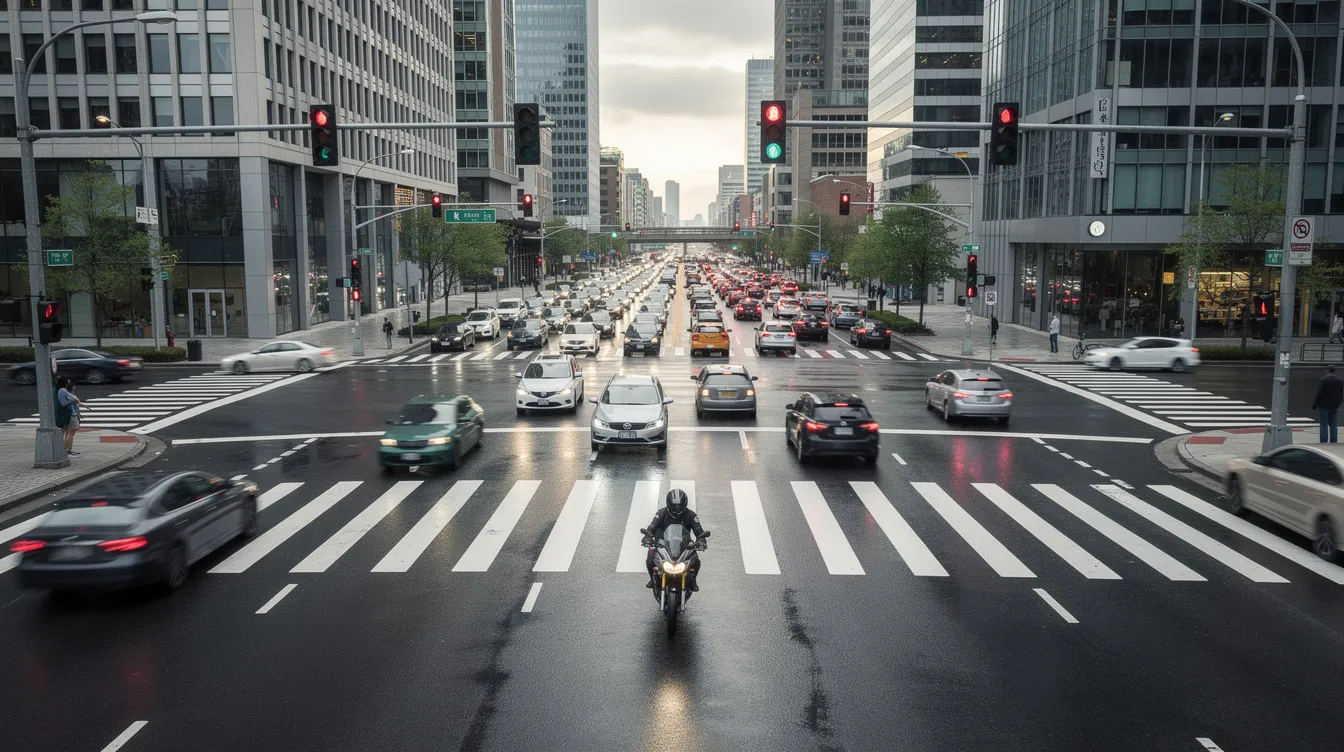
Adjust for Weather, Night Driving, and Poor Road Conditions
Rain, wind, darkness, and damaged pavement can affect motorcycles more severely than passenger vehicles. Drivers should account for these conditions and give riders additional time and space.
In wet conditions, oil residue, painted road markings, metal surfaces, and standing water can reduce traction for motorcycle riders. Slow down, increase your following distance, and avoid sudden lane changes or hard braking that could force a rider to react abruptly.
At night, motorcycles may be more difficult to see, even when their headlights are on. Switch to low beams when following or approaching a motorcycle to avoid creating glare that could interfere with the rider’s view of the road.
Watch for riders adjusting their lane position because of crosswinds, grooved pavement, pavement seams, metal bridge decks, or debris. Reduce your speed and leave enough room for those adjustments.
Near construction zones, railroad crossings, and streets with potholes, give riders additional space. A rider may slow down, change position within the lane, or briefly rise from the seat to absorb a bump. Avoid passing unless it is legal and there is enough room to do so safely.
Stay Focused and Avoid Distractions Around Motorcycles
Distracted driving—such as phone use, adjusting an in-dash screen, eating, or interacting with passengers—can make it more difficult to notice a motorcycle among larger vehicles.
Silence or limit phone notifications before driving. Program your GPS while parked, and keep music at a level that allows you to hear sirens, horns, and other important sounds.
At 55 mph, looking away for two seconds means traveling approximately 161 feet—more than half the length of a football field—without watching the road. During that time, a motorcycle could enter a blind spot, change lanes, or begin slowing down.
NHTSA warns that reading or sending a text typically takes a driver’s eyes off the road for about five seconds, which is equivalent to traveling the length of an entire football field at 55 mph.
Develop the habit of looking specifically for motorcycles at intersections, in blind spots, and near vehicles that may block your view. A deliberate second look may help you notice a rider who was hidden during your first scan.
If a Motorcycle Crash Happens: Document the Scene and Get Help
Even when drivers and riders take precautions, serious motorcycle crashes can still occur. Because motorcycles lack the protective structure of passenger vehicles, riders may suffer fractures, traumatic brain injuries, spinal injuries, and other serious harm.
Research summarized by NHTSA indicates that motorcycle helmets reduce rider fatalities by approximately 22% to 42% and brain injuries by 41% to 69%.
At the scene: Call 911 when someone is injured, traffic is blocked, or there is another immediate danger. Do not move an injured rider unless remaining in place presents an immediate threat. Turn on the hazard lights, stay out of active traffic, and avoid speculating about who caused the crash.
Document what happened: When it is safe, take photographs of the vehicles, roadway, skid marks, debris, traffic signals, and damage to the helmet or protective gear. Obtain the names and contact information of witnesses, as well as the investigating officer’s name and report number. This documentation may become important later.
Understand the possible options: Depending on the facts and applicable law, injured riders, passengers, or drivers may have legal options related to medical expenses, lost income, property damage, pain and suffering, or other losses. An attorney can review the circumstances, examine available evidence and explain which legal options may be available under the laws of your state.
Los Defensores can help connect you with an independent attorney in its network to request a free, confidential and no-obligation consultation in Spanish or English.
This content was created with the assistance of AI and is provided for general informational purposes only. It does not constitute legal advice. For guidance specific to your situation, please consult with a licensed attorney.