





To avoid distracted driving, eliminate visual, manual, and cognitive distractions before and during every trip: set your GPS first, put the phone away, avoid eating or grooming behind the wheel, and keep your attention on the road. Driving requires visual, manual, and mental focus. Yet every day, drivers divide their attention between phone screens, food, conversations, and wandering thoughts.
Distractions while driving fall into three categories. Visual distractions take your eyes off the road. Manual distractions take your hands off the wheel. Cognitive distractions take your mind off driving. These risks often overlap, and the danger increases when they do, especially in heavy rain, dense fog, or Los Angeles rush-hour congestion where reaction time can mean the difference between a close call and a serious crash.
Consider this: sending or reading a text takes about five seconds. At 55 mph, that is roughly the distance of a football field traveled without watching the road. That single glance at a cell phone can sharply increase the risk of accidentes automovilísticos and lesiones personales for the driver, passengers, pedestrians, and cyclists sharing the road, while also exposing drivers to fines, liability, and other legal consequences after a crash.
According to the National Highway Traffic Safety Administration (NHTSA), 3,208 people were killed and an estimated 315,167 were injured in crashes involving distracted drivers in 2024 across the United States.
In California alone, CHP data from 2020–2024 documented more than 60,000 crashes linked to driver inattention, resulting in over 350 deaths and approximately 43,000 injuries. These numbers likely understate the real scale, since many cognitive distractions go unreported. Results vary depending on report quality, region, and driver age.
For Spanish-speaking drivers in the U.S., this guide focuses on safer driving habits and the steps to take if a crash or workplace injury leads to questions about legal help. It explains the main types of distracted driving, practical ways to prevent them, examples of injuries these crashes can cause, the legal consequences drivers may face, and how Los Defensores connects people with independent attorneys for consultas legales gratuitas. Legal services are provided by independent attorneys.
Common Types of Distractions and How to Avoid Them
Understanding the three distraction categories – visual, manual, and cognitive – is the first step toward reducing risk behind the wheel. Each type pulls your focus away from the task of driving in a different way, and many everyday habits combine more than one.
Visual distractions include reading text messages, scrolling social media feeds, glancing at a GPS screen, or staring at a notification banner. These activities take your eyes off the road, even if only for a moment. To help avoid distractions of this kind, set your GPS device and program your route before you start driving.
At night, lower dashboard screen brightness and rely on audio directions instead of watching the map. If you need to read something, wait until you reach a red light or, better yet, pull over to a safe place. Checking your mirrors to stay aware of other drivers around you is a far better use of a quick glance than looking down at a phone screen.
Manual distractions happen whenever one or both hands leave the wheel. This includes things like eating a meal on the go, opening a bottled drink, reaching for items on the floor, grooming, or adjusting climate controls and the radio mid-drive.
Avoid eating, grooming, or multitasking behind the wheel so you can keep your attention on driving. A few practical tips: prepare snacks and drinking containers before the trip, pull over to open difficult packaging, and use steering-wheel controls where available so you can keep your grip steady.
Cognitive distractions are the hardest to recognize because your hands may be on the wheel and your eyes on the road while your mind is somewhere else entirely. Talking on the phone – even hands-free – is a cognitive distraction.
Daydreaming, stress about work, intense arguments with passengers, or feeling emotionally upset can all shift your mental focus away from driving. Driving while tired, stressed, or emotionally upset can make it harder to stay focused.
To manage cognitive distractions, try turning down the sound of music or talk radio in heavy traffic or bad weather, postponing serious conversations until you park, and taking deep breaths or making a quick stop to refocus when your mind starts to wander.
Texting is the most dangerous common distraction because it combines all three types at once – visual, manual, and cognitive. Texting while driving is a manual distraction that also forces you to read the screen and think about a reply. New teen drivers have the highest crash fatality rates, and CHP data shows that nearly 7% of drivers aged 15–20 involved in fatal crashes in California were distracted – the highest percentage by age group.
Parents and caregivers can make a real difference by talking with teen drivers about distracted driving tips, setting written family rules for device use, passengers, and music volume, and modeling focused behavior themselves. These conversations can shape habits that last well beyond school driving courses.
Set your GPS and adjust your controls before starting the vehicle. Avoiding distractions helps reduce the risk of accidentes automovilísticos, latigazo cervical (whiplash), and other injuries – but no precaution can eliminate all risk, because road conditions and the actions of other drivers remain unpredictable.
Practical Tips to Prevent Distracted Driving Every Time You Drive
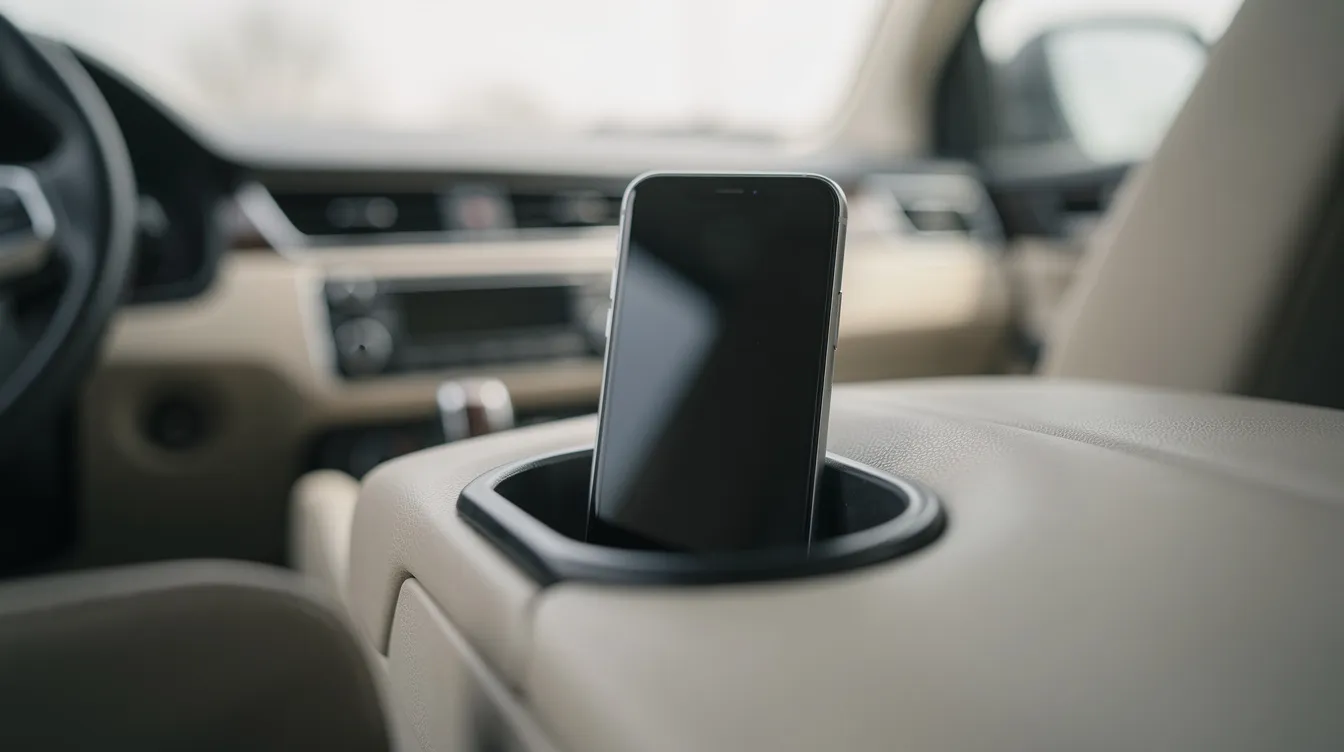
Preparation and removing temptation are essential to avoid distracted driving. The distracted driving tips below are organized by common real-world scenarios so you can apply them before and during every trip.
Cell Phone and Tech Habits
Turn your cell phone off while driving, or at minimum switch it to Do Not Disturb While Driving mode. On iPhones, this mode is called “Driving Focus”; on most Android phones, look for “Do Not Disturb” and enable the driving rule.
Using apps to block notifications while driving can help minimize distractions by keeping the screen dark and silent. If you are tempted to check a notification, put the phone somewhere out of reach – a bag, the glove box, or the back seat. When the phone is not in your hand, the urge to answer fades.
Automated Replies
Use automatic replies for incoming calls and messages. Most smartphones let you record a voicemail greeting or configure automatic text replies that let callers know you are driving and will return the call later.
Consider a simple bilingual greeting in English and Spanish. Some third-party apps can detect vehicle motion and send these replies without any input from you.
Handling an Important Call
If you receive an important call or urgent message, pulling over is necessary if attention to something other than driving is needed. Pull over safely to take important calls – choose a well-lit parking lot, a designated turnout, or another legal spot.
Using hands free devices reduces manual and visual distraction, but it does not fully remove cognitive distraction, so even hands-free conversations should be kept brief. No call is worth the risk of a collision. If you can wait, wait.
Using Passengers to Help
Passengers can assist in handling navigation or responding to messages while driving. Ask a trusted passenger to read or send text messages, control the music playlist, or manage GPS directions so your full attention stays on the road. For example, on a rainy night drive along the 405, having a friend handle route changes lets you focus entirely on wet lanes and reduced visibility instead of reading a screen.
Navigation and GPS
Program your GPS or map app and confirm your route before you drive away. If directions need to change mid-trip, pull into a parking lot or ask a passenger to adjust the route. Typing an address while vehicles are moving is a visual, manual, and cognitive distraction all at once.
Kids in the Car
Attend to kids before putting the car in gear: check snacks, diapers, toys, and seat-belt adjustments at home or in the driveway. If a child starts crying, drops a toy, or unbuckles a seat belt during the drive, pull over rather than twisting around while moving. These few extra minutes in a safe place can prevent a far more serious delay caused by a crash.
Pets and Loose Objects
Secure pets in the car to avoid distractions – harnesses, crates, or pet seat belts keep animals from jumping into the front seat or onto your lap. Securing loose items in the vehicle helps prevent distractions while driving as well. Stow groceries, backpacks, and work bags in the trunk or footwells so nothing rolls under the pedals or forces you to reach while in control of the car.
Driving in the Rain and Bad Weather
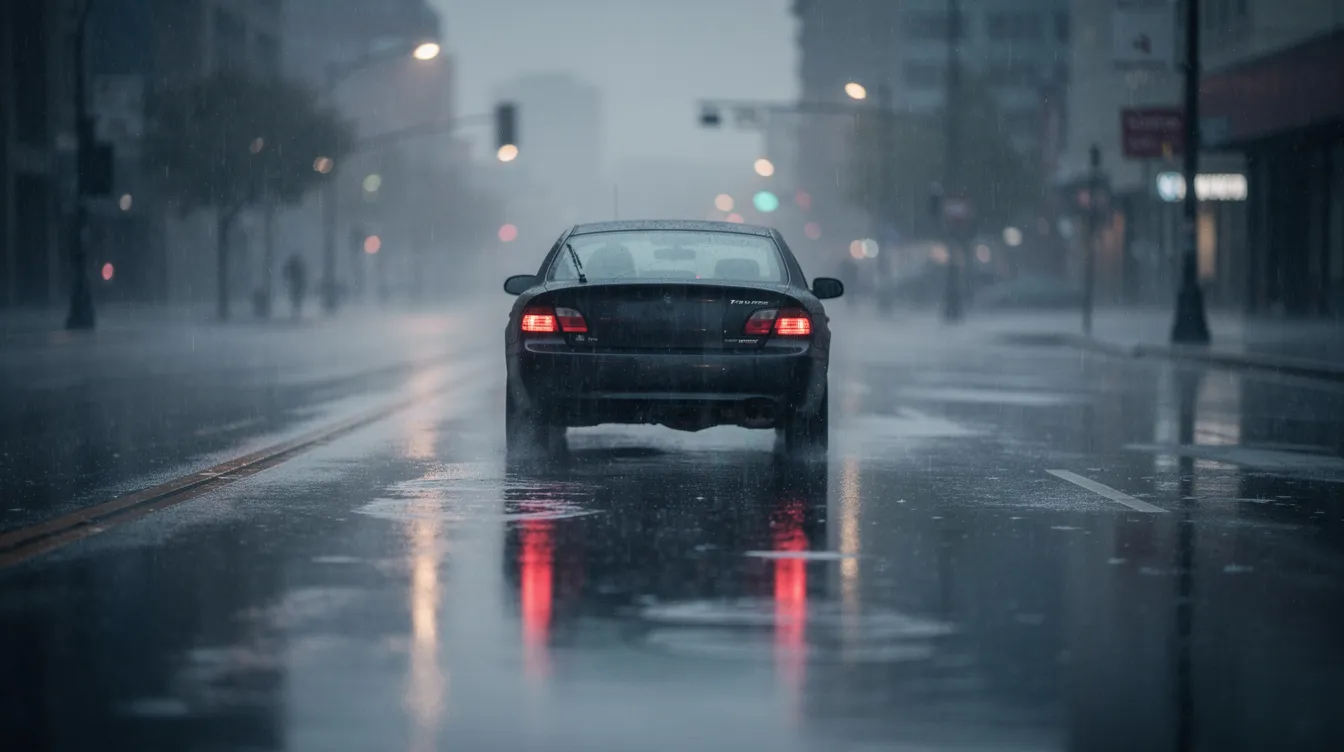
When roads are wet, slow down, increase following distance, and reduce in-car noise. Silence notifications, turn down the radio, and avoid any cell phone use when visibility drops. Use defrosters in advance so you are not adjusting climate controls while navigating a slick curve. Rain and fog amplify every distraction because stopping distance grows and road markings become harder to watch.
Food, Grooming, and Other Habits
Finish meals before leaving, or eat only when parked. Drinking coffee from an open cup, putting on makeup at a red light, or shaving behind the wheel are all manual distractions that split your focus. Complete grooming at home or at your destination – there is no shortcut worth the danger.
Daily Routines and Self-Reminders
Build habits that stick. Try a written reminder on the dashboard or a recurring lock-screen note – something as simple as “Eyes on the road” or “No texting while driving.” Over time, these cues help shift your default behavior so that giving the road your full attention becomes automatic rather than something you have to remind yourself to do. There is no excuse for distracted driving when so many lives depend on every driver’s focus.
Distracted Driving Laws, Crashes, and How Los Defensores May Help After an Accident
Many states – including California, New York, and Texas – have distracted driving laws that regulate how drivers use handheld devices and interact with phones behind the wheel. Distracted driving laws vary by state, so it is important to check current local rules from official government sources before every trip.
Legal Overview
Texting while driving is illegal in many jurisdictions. Most states prohibit texting for all drivers, and many also restrict handheld phone calls, particularly for teen and commercial drivers.
In California, for example, drivers can be ticketed for using handheld phones under Vehicle Code Section 23123.5 – even while stopped at a red light. A first offense carries a base fine of roughly $20, though penalty assessments raise the total cost.
Repeat offenses within 36 months may add points to a driver’s license. Ignorance of distracted driving laws is not an excuse; if a law exists, drivers are expected to know and follow it.
Consequences of Distracted Driving
Beyond traffic tickets and fines, the consequences of distracted driving crashes can include civil liability in accidentes automovilísticos, accidentes de motocicleta, and even accidentes de trabajo when a crash happens during work duties. Distracted drivers may face claims for medical costs, lost income, and other possible damages. Those killed in these collisions leave families dealing with grief and financial hardship.
Injury Examples
Collisions caused by distracted driving can lead to injuries such as latigazo cervical (whiplash), back and neck strains, head trauma, and spinal damage. In some cases, a driver who strikes a pedestrian or cyclist may also face claims related to serious injuries or other harm.
Work-Related and Employment Issues
If a distracted driving crash happens while someone is working, questions about workers’ compensation, employment rights, or retaliation may arise. These situations can be complex, and speaking with an independent attorney may help clarify a person’s options.
These situations can be complex, and speaking with an independent attorney may help clarify individual rights, including derechos laborales and derechos de los hispanos.
How Los Defensores May Help
After a distracted driving crash, Spanish-speaking drivers may wish to speak with an independent attorney about potential personal injury claims or employment-related concerns. Los Defensores is a legal advertising service that helps connect consumers with independent attorneys in its network for free consultations, often available in Spanish. People with questions about immigration status can still ask about their legal options.
If you believe distracted driving contributed to an accident that affected you or a family member, you may contact Los Defensores by phone or through the online consultation form to be connected with an independent attorney for an initial consultation in Spanish or English.
This content was created with the assistance of AI and is provided for general informational purposes only. It does not constitute legal advice. For guidance specific to your situation, please consult with a licensed attorney.