





As the school year begins, roads around schools become busier and more dangerous. Back to school driving safety tips start with obeying school zone speed limits, understanding school bus laws, staying alert for children, following safe drop-off and pick-up routines, and making sure your vehicle is ready for heavier school traffic. Buses, parents dropping off students, children walking and biking to school, and crossing guards all create a complex traffic situation.
Back-to-school season is the time to refocus on driving safety. For parents, commuters, and anyone driving near schools, these back to school safety and school safety tips cover school zone rules, bus traffic laws, pedestrian and bicycle awareness, congestion during morning and afternoon rush, and practical safety tips for drivers who need to help protect children on the road.
Obey School Zone Speed Limits
School zones have reduced speed limits for a reason. These lower limits give you more time to react if a child suddenly appears in the roadway.
Speed limit rules:
- Follow posted speed limits in school zones (typically 20-25 mph)
- Speed limits are enforced even if you don’t see children
- Fines for speeding in school zones are typically doubled
- Reduced speed gives you better reaction time and shorter braking distance
Drive slowly and stay alert. A child can appear suddenly—running between parked cars, chasing a ball, or simply not paying attention. At lower speeds, you have a better chance of stopping safely.
Understand School Bus Laws
School buses are specially marked vehicles with specific traffic laws. Understanding these laws is critical.
Yellow flashing lights:
- Indicate the bus is preparing to stop
- Slow down and prepare to stop
- Do not pass
Red flashing lights and stop arm extended:
- The bus has stopped and is loading or unloading children
- You must stop completely—even if you’re on the opposite side of a divided highway
- Remain stopped until the red lights stop flashing and the stop arm is retracted
- Passing a stopped school bus is illegal and dangerous
- Fines for passing a school bus can exceed $500 and may include license suspension
Never pass a school bus. The risk to children is not worth any inconvenience.
Stay Alert for Children
Children are unpredictable. They may not understand traffic laws, may be distracted, or may make sudden movements.
Watch for:
- Children walking to or from bus stops
- Children crossing streets, especially at intersections
- Children riding bicycles
- Children playing near the roadway
- Children who may suddenly step into the street
Stay focused:
- Avoid using your phone in school zones
- Avoid eating, adjusting the radio, or other distractions
- Keep your eyes constantly scanning for children
- Assume children may act unpredictably and be prepared to stop
Teach Children Pedestrian Safety
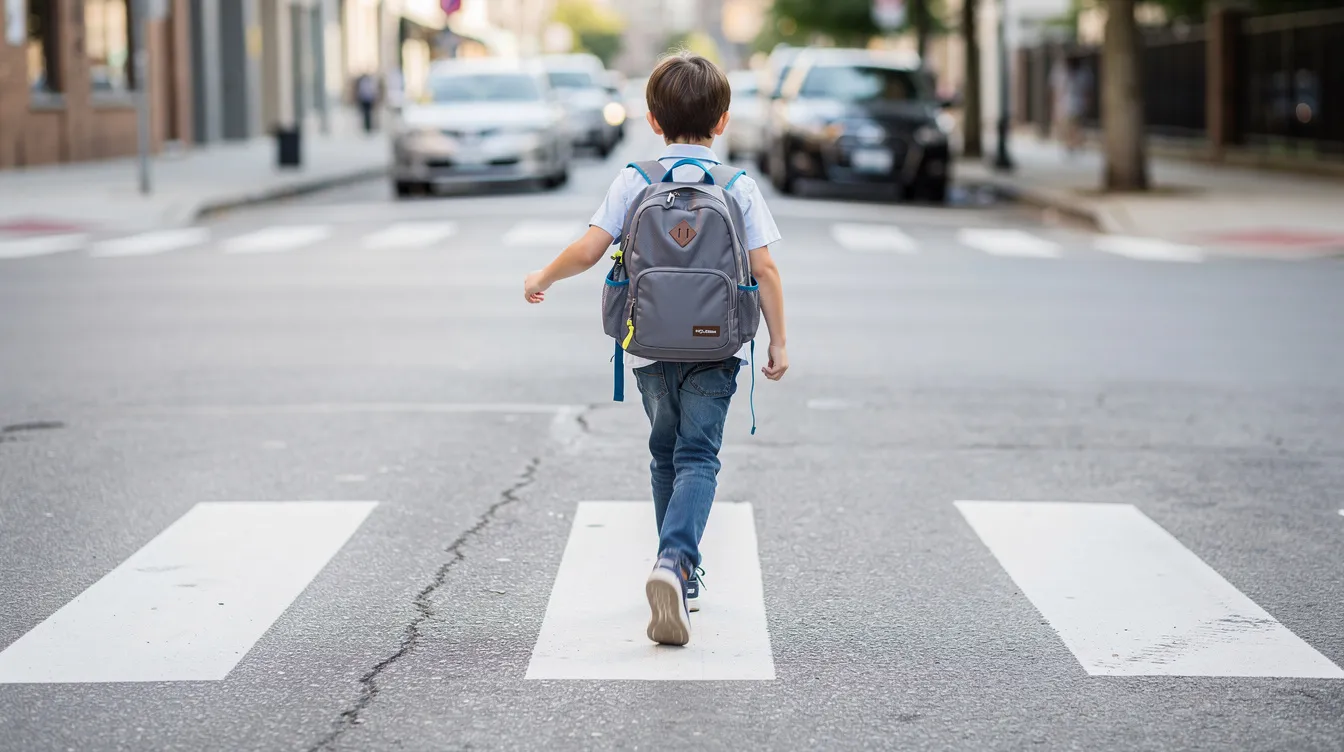
If your child walks to school, teach them safe practices.
Crossing streets:
- Use marked crosswalks whenever possible
- Look left, right, then left again before crossing
- Don’t assume cars can see you—make eye contact with drivers
- Be extra careful at every intersection, and drivers should yield to crossing guards and obey their instructions
- Never run into the street
- Don’t cross between parked cars
Walking safety:
- Walk on sidewalks, not in the street
- Wear bright clothing or reflective gear
- Carry a light if walking before sunrise
- Walk with friends when possible—safety in numbers
- Stay alert and avoid distractions like phones
- Keep your focus on the road and don’t check a cell phone or adjust the navigation system while driving nearby
- Other distractions matter too, including eating or applying makeup
Wait at bus stops:
- Stand on the sidewalk, not in the street
- Wait until the bus is completely stopped before approaching
- Never chase a bus that’s moving
- Allow the bus to come to a complete stop before boarding
If Your Child Rides a Bike
Bicycles and cars make a dangerous combination. Teach bike safety.
Bike safety rules:
- Always wear a helmet—no exceptions
- Use bike lanes when available
- Obey traffic signs and signals
- Use hand signals to indicate turns
- Be extra visible with lights and reflective gear
- Avoid riding during rush hour or heavy traffic times
Supervise young cyclists:
- Younger children should not bike alone
- Know the route they’ll take
- Practice safe routes together
- Remind kids that safety should always matter
- Monitor their skills and confidence level
Drop-Off and Pick-Up Safety
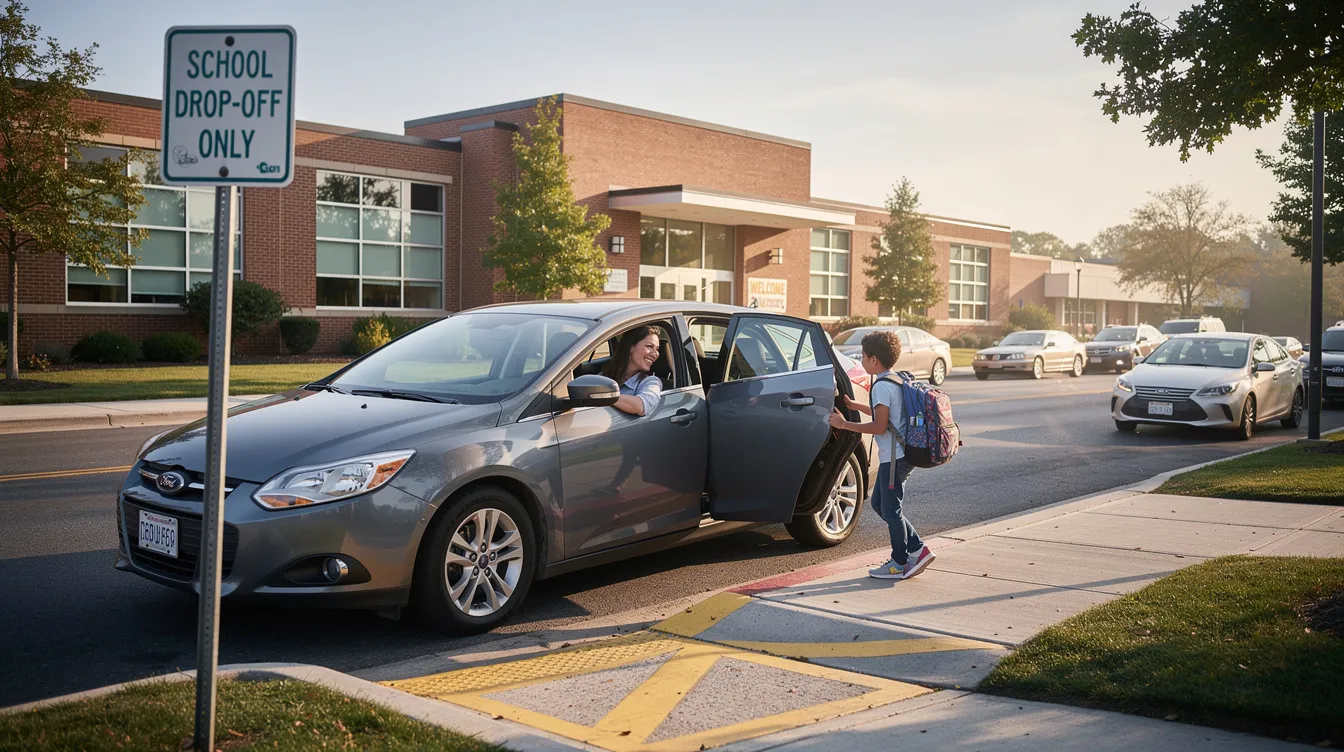
If you drop off or pick up students at school, follow safety guidelines.
At school:
- Use designated drop-off and pick-up zones
- Don’t park illegally or block traffic
- Keep the vehicle in gear with your foot on the brake—don’t just park
- Be ready to move quickly when students board or exit
- Watch for other vehicles, pedestrians, and cyclists
In traffic:
- Allow extra time—mornings are busy
- Avoid honking or distracting other drivers
- Don’t use your phone while waiting
- Keep children in seats with seatbelts until you’re completely stopped
Bikes and a car can be a dangerous combination.
Bike safety rules:
- Teach children to use hand signals and travel in the same direction as traffic
- Leave 3 feet when passing a bicyclist
- Make sure children know where it is safe to ride
- Watch carefully before opening doors or turning near cyclists
Drivers should be extra vigilant around bikes.
Morning and Afternoon Traffic
School start and end times create traffic congestion, so follow safety guidelines and practical tips for drivers.
Adjust your routine:
- Leave earlier to avoid rushing
- Don’t let time pressure cause unsafe driving
- Plan your route to avoid school zones if possible
- Expect slower traffic and more delays
Patience:
- Avoid aggressive driving or honking
- Don’t tailgate or try to pass unsafely
- Remember that slower traffic is worth safety
Prepare Your Vehicle
Make sure your vehicle is ready for back-to-school season in the fall, especially if you’re heading out during busy school commutes.
Vehicle maintenance:
- Check brakes—they’re critical for school zones
- Verify that all lights work
- Ensure windshield wipers function
- Check tire tread and pressure
- Maintain proper fluid levels
Adjust your routine:
- Leave earlier so you don’t rush, no matter where you’re going
- Plan routes that favor highways over residential roads when practical instead of cutting through residential areas
Conclusion: Safety Is Everyone’s Responsibility
Back-to-school season brings challenges to road safety. Every driver—not just parents—must adjust their driving to account for the increased presence of children.
Remember:
– Slow down in school zones
– Never pass a school bus
– Stay alert for children
– Teach children safe practices
– Avoid distractions while driving near schools
– Arrive early to avoid rushing
– Maintain your vehicle like professional drivers by checking tires, brakes, lights, and mirrors, and watching your turning direction
Before you start moving, don’t ignore hazards and give the road your full attention.
Children depend on adult drivers to keep them safe. Make conscious decisions to protect them. School zone safety is not inconvenient—it’s essential. One final point: drive safely, arrive safely, and help ensure every child makes it to school and back home safely.
This content was created with the assistance of AI and is provided for general informational purposes only. It does not constitute legal advice. For guidance specific to your situation, please consult with a licensed attorney.