



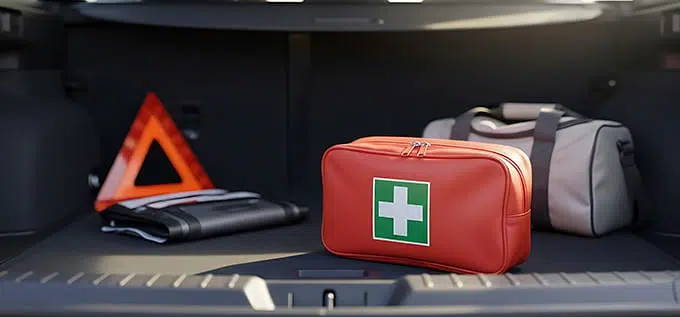

A flat tire, a dead battery, a breakdown on the road. A car emergency kit gives you the basic supplies you need to handle common roadside problems and stay safe if you get stranded.
No one leaves home thinking their tire will go flat, their battery will die, or they will get stuck on the shoulder. But it happens. And when it does, having an emergency kit in your car can mean the difference between solving the situation in minutes or waiting for hours under the sun — or worse, in the dark. This kind of preparation matters for any driver, whether you commute alone, travel with children or pets, or drive an electric, hybrid, or gas-powered vehicle.
According to the American Automobile Association (AAA), battery problems, the need for towing, flat tires, and lockouts are among the most common reasons drivers request roadside assistance. And according to reports based on Consumer Reports, many new cars no longer come with a traditional spare tire: since 2020, only about 10% come with a full-size spare, and fewer than half include a temporary “donut” spare.
A good kit does more than help you fix something. It helps you stay visible, connected, hydrated, and safe while help is on the way. Below, you will find what to keep in a car emergency kit, how to adjust it for summer and winter, extra items for families and pets, tips for electric or hybrid vehicles, where to store everything, how to maintain the kit, and what to do after a car accident.
Before using the kit: get to safety
Before using any tool, the first step is to get yourself to safety. If you can, move your car to a safe location, turn on your hazard lights, and stay away from traffic. If someone is injured, there is immediate danger, or you cannot get out of the vehicle safely, call 911.
If you are on a highway or a road with heavy traffic, do not try to change a tire or check the engine if doing so would put you at risk. During a roadside emergency, being visible, staying calm, and asking for help may be more important than trying to solve the problem on your own.
The essentials: what every car should have
These are the items that appear on nearly every emergency list from major safety organizations. It does not matter if you drive a new car or one that is 15 years old: these items should be in your vehicle.
Jumper cables or a portable jump starter
Battery problems are among the most common reasons drivers call for roadside assistance. Traditional jumper cables allow you to start the engine if the battery dies, but you need another vehicle to use them. A portable jump starter lets you start the car without anyone else’s help. Just make sure to charge it every few months. This device can help you handle a simple emergency without depending on another vehicle or immediate assistance.
First aid kit
TThe American Red Cross recommends keeping a basic first aid kit in every vehicle. It should include adhesive bandages in different sizes, sterile gauze pads, medical tape, antiseptic wipes, antibiotic ointment, disposable gloves, small scissors, tweezers, and basic pain relievers such as ibuprofen or acetaminophen.
A basic pharmacy kit works well for most situations. What matters is that it fits the needs of the driver and passengers, because not every family or every trip requires the same items. What matters is that it fits the needs of the driver and passengers, because not every family or every trip requires the same items, and the right kit can help with minor injuries and some medical emergencies while traveling.
Flashlight with extra batteries
This item appears on the lists of many major organizations: NHTSA, AAA, the Red Cross, and FEMA all emphasize the importance of having a flashlight. Do not rely only on your phone’s flashlight. You may need your phone battery to call for help and conserve power for other essential tasks.
A USB rechargeable flashlight is ideal. Keep it in the glove compartment, not in the trunk, so you can reach it easily. If the flashlight uses batteries, keep extra batteries in the car for emergencies.
Reflective triangles or LED flares
If your car stops on the side of the road, being visible to other drivers is critical. Safety organizations recommend carrying visible warning devices, such as reflective triangles, emergency lights, or flares, but LED versions are safer to store in a hot trunk because they do not create a fire risk.
Place the triangles behind your vehicle at staggered distances to alert approaching traffic.
Reflective vest
If you need to get out of the car on a dark road or in heavy traffic, a high-visibility vest can save your life. Keep it inside the car, within reach — not in the trunk.
Water and nonperishable snacks
Keep at least two sealed bottles of water per person and nonperishable, high-calorie foods that can withstand heat and cold, such as granola bars, nuts, and dried fruit. If you are stranded for hours — because of a crash, stopped traffic, or a breakdown — having water and something to eat can help you stay hydrated and maintain your energy during a long wait or delayed trip.
Portable phone charger
Your phone is your lifeline: you use it to call 911, take photos after a crash, use GPS, or request help. If the battery dies after a collision, you may lose access to calls, maps, photos, and important information. Always keep a car charger and a portable phone battery in your vehicle.
Emergency radio
On long trips, in rural areas, or during storm season, a small battery-powered or hand-crank radio can help you receive alerts if your phone has no signal or no battery.
Your phone is important, but it should not be your only plan for communicating or receiving information during an emergency.
Blankets
A blanket is useful if you get stranded in cold weather, especially in colder climates, but it can also help if you need to kneel while changing a tire or cover someone who is in shock after a crash. An emergency thermal blanket — the silver kind that folds up very small — takes up almost no space.
Basic tools
You do not need to be a mechanic to keep useful tools in your car. These items can help you handle minor repairs or stabilize the situation until help arrives. In addition to basic tools, your kit can also include essential supplies, such as a small fire extinguisher.
Jack, lug wrench, and spare tire
Check whether your car has basic tire-changing equipment, such as a spare tire and a jack, because many new cars no longer come with them. If your car does not have a spare tire, make sure you have at least a 12V portable air compressor and a tire repair kit to reduce the chance of needing a tow.
If your car does have a spare tire, check that it is properly inflated and has the correct pressure. A flat spare tire is useless in an emergency.
Tire pressure gauge
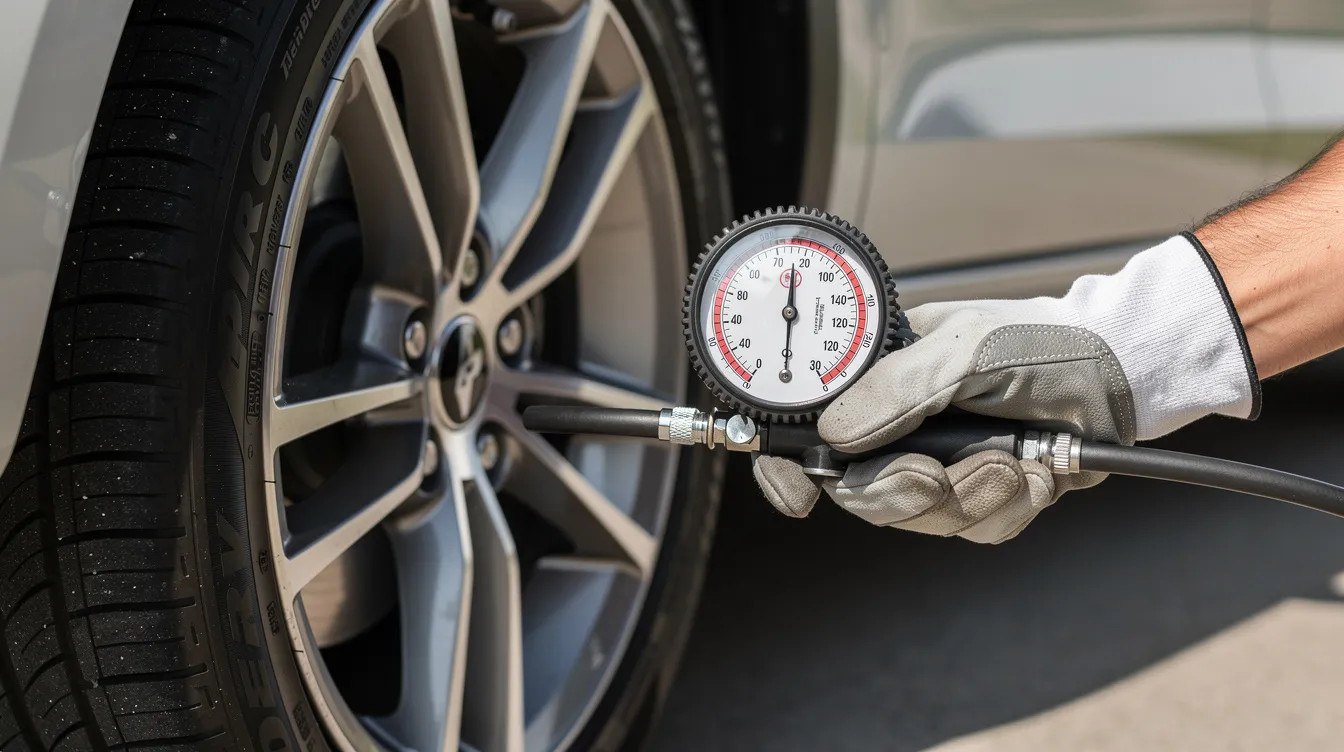
A tire pressure gauge takes up very little space and can help you check whether your tires — including the spare — have the right pressure. An underinflated tire can increase the risk of a flat or make the car harder to control.
Work gloves
Work gloves protect your hands if you need to change a tire, check the engine, move objects, or touch hot or sharp parts. They are not the same as the warm gloves you may carry in winter. These are meant to protect you while using tools.
Vehicle owner’s manual
Keep the owner’s manual in the glove compartment, since a printed copy still helps if your phone dies, or make sure you have access to a digital copy. It can help you find the correct jack points, check the recommended tire pressure, and understand what certain dashboard lights mean.
Duct tape and zip ties
NHTSA includes these items in its recommendations. They can temporarily fix loose parts, hold cables, or secure a fender that came loose after a minor impact.
Multi-tool
A good multi-tool includes pliers, a screwdriver, basic bits or drivers, wire cutters, and a knife in one device. It can be useful for minor on-the-spot repairs before calling for help and for unexpected situations, and may help with small issues that get you back on the road quickly when it’s safe to do so.
Seat belt cutter and window breaker
If a crash leaves you trapped inside the vehicle, these tools can save your life. AAA recommends choosing a cutter with a protected blade and mounting it within reach while you are seated — not in the trunk.
Window breakers work on tempered glass, but not on laminated glass. Check the corners of your windows to know what type of glass your car has.
Documents you should always keep in the car
In the glove compartment
- Vehicle registration
- Current insurance card
- Emergency contact list on paper
- Paper copies can help if your phone dies or loses signal
- A physical map, useful if you lose GPS signal in remote areas
- Your attorney’s phone number or Los Defensores’ number
Paper copies help if your phone dies or loses signal.
On your phone, as a backup
- Photos of your driver’s license, insurance, and registration
- Photos of the vehicle from every angle, so you have a record of the car’s condition before a crash
- Emergency contacts saved as favorites
Summer kit vs. winter kit
Conditions change with the seasons. Adjusting your kit can make a difference.
For summer
- Extra water, more than usual, because dehydration is a real risk
- Sunscreen
- Extra engine coolant
- Towel to help cool down
- Spare sunglasses
For winter
- Ice scraper and snow brush
- Gloves, hat, and extra warm clothing
- Sand or cat litter, for traction if you get stuck in snow
- Folding shovel
- Disposable hand warmers
- Extra blanket
According to the Federal Highway Administration (FHWA), about 12% of vehicle crashes are weather-related. Within those crashes, a smaller portion occurs during winter conditions such as snow, sleet, hail, or freezing rain, which makes safe driving and cold-weather preparation especially important in colder climates. Being prepared for the weather can prevent a difficult situation from becoming an emergency.
For rain or storms
In addition to preparing your kit for summer and winter, consider carrying items for rain, storms, or severe weather:
- Poncho or raincoat
- Paper towels
- Wet wipes
- Trash bags
- Extra windshield washer fluid
A poncho takes up little space and can help if you need to get out of the car in the rain while waiting for help or checking the vehicle during a storm.
For families with children or pets
If you regularly travel with children or pets, your kit needs additional items.
For children
- Emergency diapers and wipes
- An extra change of clothes
- Extra snacks
- A toy or book to keep children entertained while waiting
- Any medications they take regularly
For pets
- Extra water and a collapsible bowl
- Extra leash
- Waste bags
- Pet treats or food
NHTSA warns that children die every year from vehicular heatstroke after being left or becoming trapped in hot cars. Never leave a child or pet alone in the car, not even for a few minutes.
If you drive an electric or hybrid vehicle
If you drive an electric or hybrid vehicle, check the owner’s manual and adapt your kit to that type of car. Consider carrying the proper charging adapter, the manufacturer’s roadside assistance information, and a list of charging stations you frequently use along your routes.
Not every traditional emergency kit applies the same way to every vehicle, especially if your car does not use the same systems as a gas-powered vehicle.
Where to store your kit
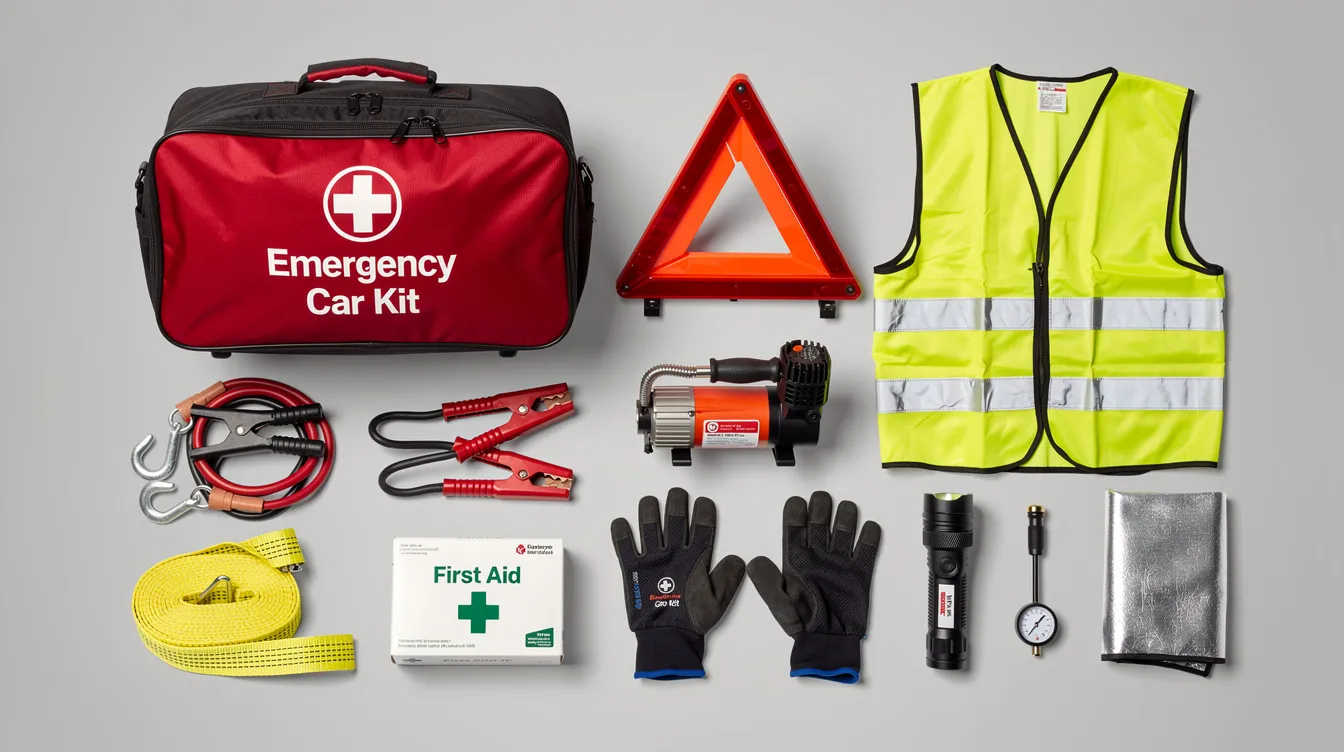
Not everything belongs in the trunk. Organization matters.
Inside the car, within reach
- Reflective vest
- Flashlight
- Seat belt cutter / window breaker
- Portable charger
- Documents
- Small first aid kit
In the trunk, organized in a container
- Tools
- Jumper cables or portable jump starter
- Reflective triangles
- Water and snacks
- Blanket
- Seasonal items
Use a clear container or organized bag to separate items by category. That way, you can find them faster in an emergency.
Check your kit every 6 months
Having a kit is not enough — you need to maintain it. Check it every six months, ideally when the seasons change. This can help you handle simple problems and avoid depending on expensive towing services.
- Check that the water is still sealed and in good condition
- Replace expired snacks
- Make sure the flashlight works and the batteries have a charge
- Confirm that the portable jump starter is charged
- Check that the spare tire is inflated
- Update documents if you changed insurance or moved
- Adjust the kit based on the season
- Check that any medications or items for children and pets have not expired
Quick checklist: check this today
Before you finish this article, go through these questions:
- Do you have a spare tire, jack, and lug wrench?
- Is the spare tire inflated?
- Is your portable jump starter charged?
- Does your flashlight work?
- Do you have a car charger and a portable battery for your phone?
- Are your documents up to date?
- Do you have water, snacks, and a blanket?
- Does your kit change with the season?
- Do you have extra items if you travel with children or pets?
An emergency kit does not have to be expensive or complicated. What matters is that it is complete, organized, and ready before you need it.
An emergency kit cannot prevent a crash, but it can prepare you for what comes next
No kit can stop someone from hitting your car or prevent a tire from going flat, but with thousands of crashes happening every day in the U.S., it is worth being prepared. Having the right items in your car puts you in a better position to handle the situation — document what happened, stay safe while waiting for help, protect your family during the most critical minutes, and have greater peace of mind and security after a car emergency.
And if a crash does happen, knowing what to do afterward is just as important as having the right kit. You can read our complete guide on what NOT to do in the first 24 hours after a car accident to protect your health, your rights, and your claim.
Were you in an accident and do not know what to do?
If you or someone in your family was in an accident, you can call us or complete this form now for a free, confidential consultation in Spanish. An independent attorney in our network may be able to explain your options.
Your immigration status should not prevent you from seeking legal guidance. We are here to help when you need it most.
Sources: American Red Cross, NHTSA, AAA, AARP, FHWA, Consumer Reports. The information presented is for educational purposes and may change after the date of publication.
Los Defensores is not a law firm and does not provide legal representation. Los Defensores may attempt to connect you with an independent attorney in its network. This article is for informational purposes only and does not constitute legal advice.