



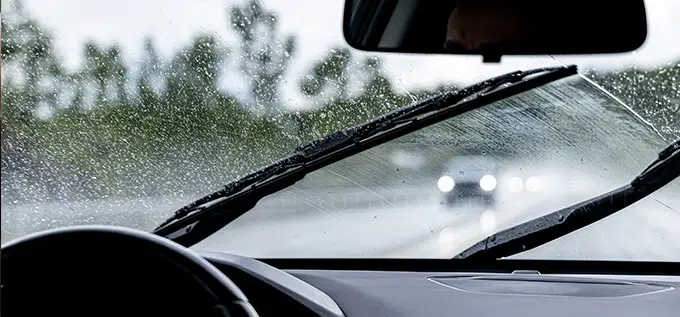

Driving safely in the rain starts with slowing down below the posted speed limit, leaving 4 to 6 seconds of following distance, avoiding cruise control, using low-beam headlights, making sure your windshield wipers and tires are in good condition, and watching for standing water so you do not hydroplane.
Driving in wet weather is more dangerous than many motorists realize. According to the Federal Highway Administration, more than 77% of weather-related crashes happen during rain or mist conditions. Even light rain in states like California, Texas, or Florida can reduce traction and visibility within moments-especially during the first 20 minutes of rain, when engine oil and road grime mix with water to create an exceptionally slick film on the surface.
Wet weather driving means any driving when the road is wet, whether from drizzle or downpours. Heavy rain refers to rainfall intense enough to limit visibility to a few seconds ahead and produce standing water faster than drainage can handle.
Below, you will find wet weather driving tips on speed adjustment, lights and wipers, tire maintenance, avoiding hydroplaning, planning safer routes during heavy rain, and what to do if a rain-related accident happens.
Wet conditions significantly reduce visibility and traction, and stopping distances increase because your tires have less grip on slick pavement. The goal of these wet weather driving tips is to help you drive safely, avoid hydroplaning, and reduce collision risk-not to promise any particular outcome.
If a crash does happen during a rainstorm, Los Defensores can help connect drivers with independent personal injury attorneys who provide the actual legal services, including free, confidential consultations.
Slow Down, Increase Following Distance, and Avoid Cruise Control
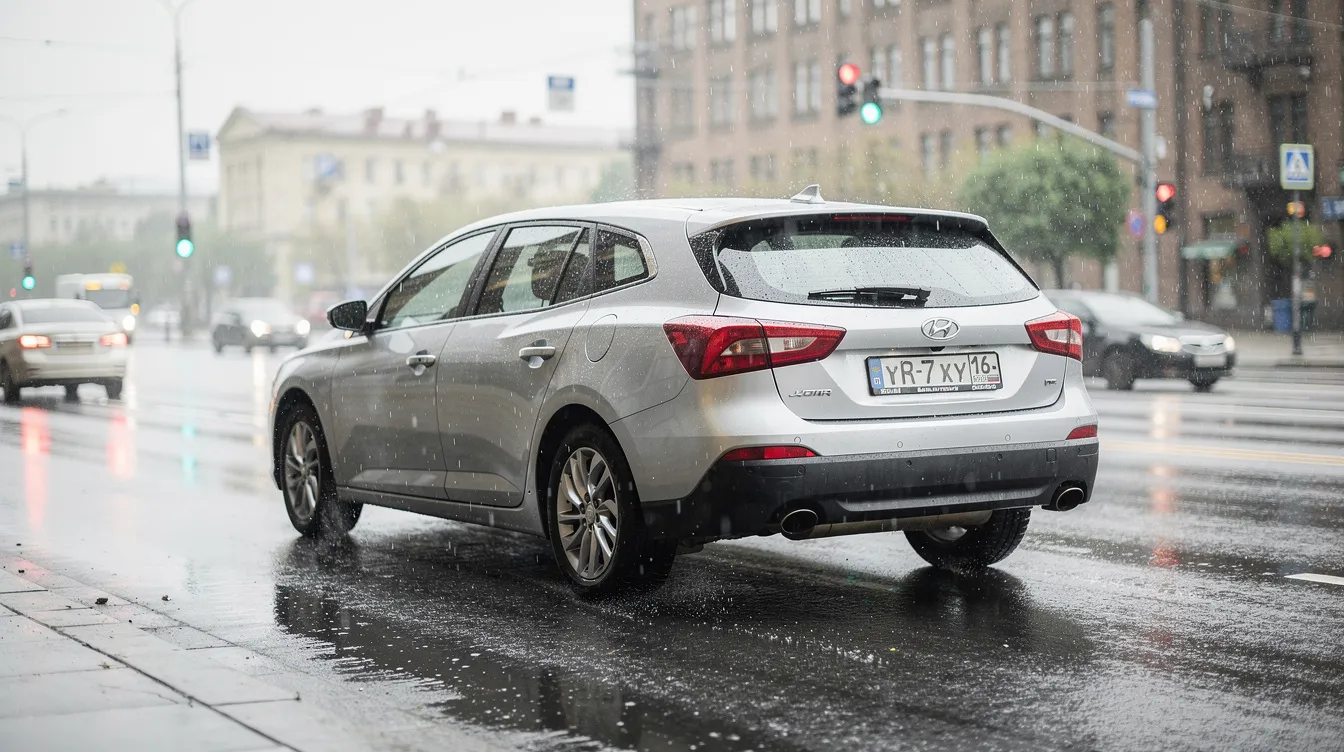
The single fastest way to improve safety on wet roads is adjusting your speed downward, leaving more space, and keeping full control of your vehicle.
In heavy rain or even light drizzle-on city streets, curved ramps, or freeways like I-5, I-95, or I-10-posted speed limits may be too fast for conditions. Even tires in good condition can lose traction when speed, water depth and road conditions combine in the wrong way.
Leave extra space between your car and other drivers: increase your following distance to 4 to 6 seconds on wet roads instead of the usual two, and when safe, follow the tire tracks of the vehicle ahead to reduce contact with standing water. Pick a fixed object, and count “one-one-thousand” after the vehicle ahead passes it.
Tests by consumer safety organizations have found that worn tires can take longer to stop on wet pavement than tires with deeper tread.
Avoid using cruise control in rainy conditions. Cruise control can worsen hydroplaning by causing acceleration when your tires lose traction, and it slows your ability to respond by easing off the gas pedal manually. Keep your foot near the brake so you can brake gently if needed.
Do this:
- Slow down well below posted limits
- Leave a safe distance of at least a few seconds
- Accelerate and steer smoothly
Avoid this:
- avoid hard braking or abrupt movements
- Quick lane changes through puddles
- Using cruise control on wet pavement
Use Lights, Wipers, and Tires Correctly to Improve Control
Visibility and tire grip are the foundation of safe wet weather driving. Without proper lighting, clear windows, and effective tires, even a modest rainstorm becomes a danger.
Turning on low-beam headlights improves visibility during rain-for you and for other drivers who need to see your vehicle. Many states require headlights any time wipers are on. Avoid high beams in heavy rain; light reflects off raindrops and wet surfaces, reducing what you can see. Use fog lights where legally allowed.
Adjust wiper speed to match rain intensity and replace blades when they streak or skip. Use your defogger or A/C to clear window fog, especially during cooler storms.
Proper tire maintenance is crucial for safe driving in wet weather. Although 2/32 inch is the minimum replacement point cited by NHTSA, deeper tread can improve wet-weather performance.
Tires worn below 2/32 inch tread depth cannot provide good wet traction, and tires with low tread depth increase hydroplaning risk. Proper tire inflation is crucial for wet weather performance, so tires should be checked regularly for proper inflation pressure.
Three checkpoints before driving in rain:
- Headlights: on, clean, low beams
- Wipers: blades in good condition, washer fluid full, defogger working
- Tires: proper tread depth, correct inflation, no bald spots
How to Avoid Hydroplaning and What to Do If Your Car Skids
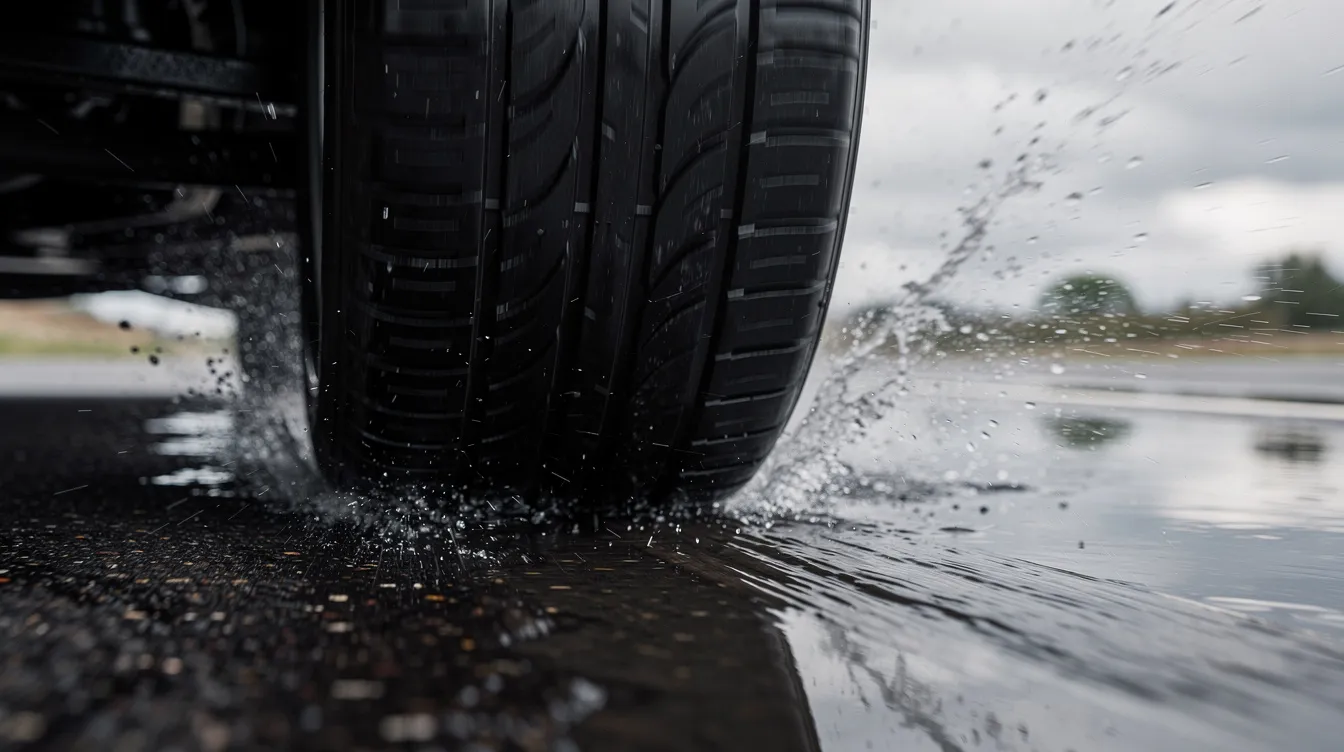
Hydroplaning occurs when tires lose contact with the road due to water-your car rides on a thin layer of water instead of the pavement, and you lose steering and braking control. Hydroplaning can happen with just 1/12 inch of water on the road. Even new tires can lose contact with the road at 35 mph under the right conditions.
Watch for standing water at underpasses, low spots, construction zones, and along the edges of older highways. Scan ahead for dark, shiny patches. Driving straight through deep puddles at speed can damage brakes, engine components, and electrical systems, and may hide potholes or debris beneath the water. Steer straight through unavoidable water rather than swerving.
If you hydroplane or skid, do this:
- Ease your foot off the accelerator slowly-do not brake suddenly
- Keep the steering wheel pointed toward your intended destination
- If the rear slides, gently steer into the skid until you regain control
- Wait for traction to return before braking or turning
- Do not jerk the wheel or slam the brakes-these abrupt movements can worsen a spin
If your vehicle leaves the road or you’re involved in a crash due to hydroplaning, prioritize medical care first. You may later consider speaking with an attorney about possible personal injury claims.
Plan Ahead: Route Choices, Heavy Rain, and When Not to Drive
Good planning helps you stay alert and avoid the most dangerous conditions before you even turn the engine on.
Check weather apps and local forecasts before heading out, especially during rainy seasons-late summer thunderstorms in Florida and Texas, winter fronts in California. Give yourself extra travel time so you don’t feel pressured to rush. Choose main roads with better drainage and lighting over poorly maintained side streets or unlit rural roads when possible.
If you need to pull over, move to a legal, safe location, stop away from traffic, and use hazard lights if appropriate and allowed in your state.
Planning actions:
- Check weather and traffic before driving
- Inspect your car: tires, headlights, wipers, defogger
- Choose safer routes with good drainage
- Give yourself extra time to reach your destination
- Know when to wait out a storm rather than continuing
Avoid driving through flooded roads, as even shallow water can sweep away a car. For rideshare or delivery drivers who depend on their vehicle for work, rescheduling during the strongest storms can help reduce accident risk.
If a Rain-Related Accident Happens: Safety, Documentation, and Legal Help
Even careful drivers can be involved in crashes during storms. Your first priority is personal safety and medical care for everyone in the vehicle.
After a crash, move to a safe location if possible, turn on hazard lights, and call 911 in emergencies. Once safe, document the scene: photograph road conditions-puddles, poor drainage, lack of lighting-along with vehicle damage, license plates, and witness contact information. This documentation may become relevant during the insurance claim process or conversations with an attorney.
Some injuries from wet weather collisions, like whiplash or back injuries, may not feel severe at first. Timely medical evaluation can be important for both your health and any future claim.
Los Defensores is a legal advertising service with a history of helping connect Spanish-speaking drivers in the United States with independent personal injury attorneys for free, confidential consultations about accidentes automovilísticos or related injuries. Legal services are provided by independent attorneys in the network, and outcomes vary based on the facts of each case. Los Defensores does not itself provide legal representation.
If you’ve been involved in a rain-related crash and have questions about your rights or medical bills, consider contacting Los Defensores to be connected with an attorney who can help evaluate your situation.
This content was created with the assistance of AI and is provided for general informational purposes only. It does not constitute legal advice. For guidance specific to your situation, please consult with a licensed attorney.