



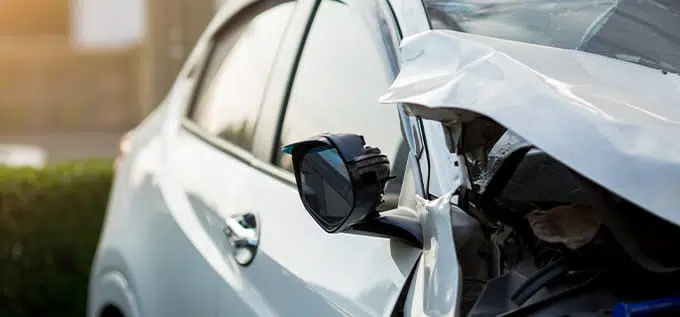

A car accident can happen in seconds-at an intersection, on the freeway, or even in a parking lot. Other vehicles, pedestrians, and cyclists share the road, and any lapse in attention from any person behind the wheel can lead to a crash with serious consequences.
Many accidents in the United States involve preventable causes: speeding, distraction, running stop signs, or ignoring a red light. In 2022, there were over 42,514 motor vehicle fatalities and nearly 5.93 million police-reported crashes nationwide, resulting in an estimated $481.2 billion in total costs. These numbers are staggering, but they also point to opportunity-because most of these collisions did not have to happen.
Avoiding accidents protects your life, your passengers, and your finances. It can also strengthen a later legal claim if a crash does occur, because documented safe habits and proper evidence help establish fault. This article offers practical tips for how to avoid a car accident and prevent collisions in everyday driving situations.
Los Defensores is a legal advertising service that helps connect car accident victims with independent personal injury attorneys. Los Defensores does not provide legal services — legal advice and representation come from independent lawyers in the network.
Can Most Car Accidents Be Prevented with Safer Habits?
Over 90% of car accidents are preventable with awareness and better habits. Research shows that roughly 94% of crashes involve driver-related causes, including recognition errors, decision errors, and performance failures. In 2023, over 22% of crashes in Montana involved driver errors-a pattern that repeats across states and years.
Even cautious drivers can still be hit by someone else’s negligence, so the goal is reducing risk rather than promising total safety. For new or teen drivers especially, safe driving habits should become daily routines, not one-time decisions.
Common preventable behaviors include:
- Running red lights or rolling through stop signs
- Tailgating or following too closely
- Using a phone behind the wheel
- Don’t drink and drive or get behind the wheel under the influence of alcohol or drugs
- Ignoring posted speed limits in school zones or construction areas
- Failing to check mirrors and blind spots before switching lanes
Defensive Driving Basics: Staying Alert Around Other Vehicles
Defensive driving means anticipating the unexpected maneuvers of other drivers, scanning far ahead, and leaving yourself enough room to react. Situational awareness is vital for preventing car accidents, and it starts with active scanning-constantly checking the road ahead and your mirrors for hazards. Drivers should scan at least 30 meters ahead while driving and extend that range on highways.
You should never assume other drivers will follow traffic rules. A driver might blow through a late-yellow light at a downtown intersection, or a vehicle on a side road might pull out without looking. Anticipating other drivers’ mistakes can help you avoid accidents before they develop.
Managing space around your vehicle is also crucial. Avoid driving in clusters of vehicles when possible-spread out so you have escape routes if someone brakes suddenly or swerves. Use your turn signals early, make predictable movements, and avoid sudden braking or swerving whenever possible.
Key defensive driving habits:
- Scan mirrors every 5–8 seconds and check your surroundings before any maneuver
- Watch for sudden lane changes from other cars and merging trucks
- Signal early and drive predictably so other vehicles can anticipate your movements
- Leave emotion out of driving-do not engage with aggressive drivers or race to beat a light turns green
- Stay aware of pedestrians, cyclists, and motorcyclists at intersections and driveways
- Keep both hands on the wheel for better control
Maintaining a Safe Following Distance to Prevent Rear-End Crashes
Key defensive driving strategies include maintaining a safe following distance. The three-second rule helps maintain that distance: after the vehicle ahead passes a fixed object like a sign or tree, count “one-one-thousand, two-one-thousand, three-one-thousand.” If you reach that object before finishing the count, you need more room.
Tailgating increases the chance of a rear end crash significantly. Here’s how to apply this in practice:
- In clear, dry conditions, keep at least three seconds of distance between you and the car ahead
- In rain, fog, or heavy traffic, increase to four to six seconds-wet pavement is a factor in about 75% of weather-related crashes
- In stop-and-go traffic near freeway exits or intersections, ease off the gas early instead of braking hard to reduce the chance of being hit from behind
- When following trucks or larger vehicles, add extra distance because they block your view of the road ahead
- If someone is tailgating you, slow gradually and let them pass rather than brake-checking
Using Mirrors and Checking Blind Spots Before Lane Changes
Blind spots exist alongside the rear quarter panels of most vehicles. SUVs and pickup trucks tend to have larger blind zones. Motorcycles and compact cars can disappear in these areas, especially on multi-lane highways where traffic moves closely together.
Proper mirror adjustment means each side mirror shows the adjacent lane and a sliver of your own car for reference. The rearview mirror should cover the full rear window. Blind-spot monitoring systems can help, but they should not replace a quick head check.
Safe lane-change checklist:
- Check your rearview mirror for vehicles approaching from behind
- Check the side mirror on the side you plan to move toward
- Turn your head quickly to verify the blind spot is clear
- Activate your turn signal before switching lanes
- Move smoothly into the new lane-avoid darting across multiple lanes at once
Avoiding Distracted, Speeding, and Impaired Driving
Distraction, speeding, and impairment are leading causes of serious and fatal car accidents. In 2022, distracted driving caused 3,308 fatalities, and distracted driving contributed to 3,275 crashes in Utah in 2023 alone. Eliminating distractions helps maintain focus on the road while driving.
The three main distraction types are visual (eyes off road), manual (hands off wheel), and cognitive (mind off driving). Cognitive distractions include using smartphones and eating while driving. Common distractions include texting, adjusting music, and eating. Texting while driving makes a crash 2 to 8 times more likely because it combines all three distraction types simultaneously.
Consider this: a car at 55 mph travels the length of a football field in five seconds. That is how far you travel essentially blind when looking at a phone screen.
Speeding is a factor in 29% of all fatal crashes nationwide. Each increase in speed lengthens your stopping distance and shortens your reaction time, especially on wet or uneven pavement. In 2022, speeding was a factor in 29% of fatal crashes-a persistent problem that affects every state.
Never drive impaired by alcohol, drugs, or severe fatigue. Alcohol impairment was involved in roughly 32% of fatal crashes in 2022. Even certain prescription medications can affect judgment and control behind the wheel.
Behaviors to avoid:
- Texting, reading messages, or scrolling while driving
- Eating complicated meals that require both hands
- Driving after heavy drinking or using drugs that affect your ability to drive responsibly
- Getting behind the wheel when severely fatigued
- Allowing passengers to distract you during difficult driving situations
Practical Tips to Put the Phone Away
Most smartphones now include a “Do Not Disturb While Driving” mode. Turn it on before you start the car to remove temptation.
- Place your phone in the glove box, center console, or back seat where it is not easily reachable
- Set up hands-free navigation before the trip begins, not while the car is moving
- Ask passengers to handle urgent calls or texts if communication cannot wait
- If you need to make a call, pull over to a safer place first
- Practice leaving the phone untouched during short trips until it becomes habit
Controlling Your Speed and Adjusting for Conditions
The posted speed limit is set for ideal conditions. Obey the posted speed limit, then slow further in rain, fog, heavy traffic, or at night when conditions require it. For example, reduce your speed when approaching a busy school zone at 3 p.m. or when passing through construction zones with narrowed lanes.
Stopping distance increases significantly on wet or sandy roads, making rear-end crashes more likely if you follow too closely. Adjust your driving to road conditions like rain or snow, and watch for upcoming curves, freeway exits, and downhill stretches where speed can creep up without you noticing.
Scenarios where reducing speed helps avoid accidents:
- Wet roads after the first rain in weeks (oil buildup makes pavement slick)
- Foggy mornings with visibility under 200 feet
- Heavy traffic where other cars are braking unpredictably
- Night driving on unfamiliar roads without streetlights
- Near parking lots where pedestrians may step out between parked cars
Intersection Safety: Stop Signs, Red Lights, and Crosswalks
Intersections are potential high-risk zones for accidents and require extra caution. Side-impact and rear-end crashes frequently occur when drivers rush through yellow lights or ignore a red light altogether.
Come to a complete stop at stop signs-not a rolling pause-and look left, right, then left again. Check crosswalks for pedestrians and cyclists before proceeding. When a light turns green, wait a brief moment and scan the cross street to confirm no vehicle is running their red light.
Unprotected left turns are especially dangerous. You need to yield to oncoming traffic and watch for smaller vehicles like motorcycles and bicycles that can be harder to see. At night or in unfamiliar neighborhoods, visibility of signs and markings may be reduced-slow down and pay extra attention.
Intersection behaviors that help prevent accidents:
- Stop fully at every stop sign, even if no one appears to be coming
- Look for pedestrians and cyclists in crosswalks before turning
- Yield to oncoming traffic during left turns, even if you feel you have enough room
- Use headlights at dusk and dawn so other drivers can see your vehicle
- Avoid blocking the intersection if traffic ahead is not moving
Watching for Pedestrians, Cyclists, and Motorcyclists
Pedestrians and cyclists are more vulnerable in any collision, and drivers share responsibility to look for them. Check crosswalks and sidewalks before turning right on red or pulling out of a parking lot. Cyclists may legally use traffic lanes in many U.S. cities and can appear in blind spots near parked cars.
- Allow at least three feet of space when you pass cyclists
- Avoid sudden right turns across a bike lane
- Watch for motorcycles, which can be harder to see due to their narrow profile and may approach faster than they appear
- Be especially aware in downtown areas where more people walk, bike, and ride
Vehicle Condition and Weather: Preparing Your Car to Help Avoid Accidents
Mechanical failure causes about 2 percent of crashes in the U.S., and in Idaho, over 900 crash incidents in 2022 were linked to poor vehicle condition. While that share is smaller than human error, basic maintenance on your own car is one of the simplest ways to reduce risk.
Bald tires and bad brakes increase accident likelihood by extending stopping distance and reducing control. Worn-out wipers can lead to visibility issues and accidents during rain. Check your vehicle’s fluids, tires, lights, and wipers monthly-or at minimum before any long trip.
Key systems to maintain:
- Tires: Check tread depth and pressure monthly; replace when tread is worn
- Brakes: Listen for grinding or squealing; have them inspected if stopping feels soft
- Headlights and brake lights: Replace burned-out bulbs immediately so other vehicles can see you
- Turn signals: Confirm all signals work; a missing signal can cause collisions during lane changes
- Windshield wipers and fluid: Replace wipers that streak; keep washer fluid full
- Mirrors: Adjust properly and replace cracked mirrors
Adjusting Driving for Rain, Fog, and Nighttime
Rain reduces traction and increases stopping distance. Nearly 5,700 deaths and over 544,700 injuries occur annually in crashes on wet pavement. Hydroplaning can happen at speeds as low as 35 mph if water accumulates on the road.
In fog, depth perception and contrast drop sharply, making it a difficult time to judge distance and speed. At night, glare from oncoming headlights and reduced peripheral vision make it harder to see other vehicles, pedestrians, and road hazards.
- Slow down and turn on low-beam headlights in rain and fog
- Increase your safe following distance to at least double what you use in dry conditions
- Avoid cruise control in heavy rain-you need full brake and throttle control
- Steer smoothly through curves; sudden inputs can cause loss of grip
- If visibility drops severely, consider pulling off to a safer place and waiting for conditions to improve
Handling Aggressive Drivers and Road Hazards Without Causing a Crash
Aggressive driving is unpredictable and can be dangerous. Aggressive drivers often engage in speeding, sudden lane changes, tailgating, and running red lights. In 2021, Utah reported nearly 6,500 aggressive driving-related crashes-a reminder that this behavior is widespread.
Aggressive encounters on the road should be de-escalated to avoid conflicts. Don’t engage or make eye contact with aggressive drivers. Let them pass, change lanes when safe, and keep your focus on the road rather than on them. If threatened, pull over in a public area and call police.
Common road hazards-debris, potholes, stalled vehicles, animals-require quick but controlled responses. Sudden swerving can be more dangerous than the hazard itself if you move into lanes occupied by other cars.
Safe responses to aggressive drivers and hazards:
- Let tailgaters pass by moving to another lane when you can do so safely
- Do not speed up or brake-check in response to aggressive behavior
- Check mirrors and blind spots before steering around any obstacle
- Brake smoothly rather than slamming the pedal, which could cause a loss of control
- Report dangerous drivers to police if you can do so safely with a hands-free phone or with help from a passenger
Rear-End, Backing, and Parking Lot Situations
Many collisions happen at low speeds in parking lots and driveways, often when drivers are distracted by paying attention to their phone or passengers. These incidents can still cause injuries like whiplash and may lead to insurance claims.
- Look both ways before backing out of a driveway or parking space; check mirrors, cameras, and over your shoulder
- Park in pull-through spots when possible to avoid reversing into busy lanes
- Drive slowly through parking lots-pedestrians, cyclists, and other cars can appear suddenly
- Watch for children who may be too short to see from behind the wheel
- When possible, back into parking spots on arrival so you can pull forward when leaving
What to Do If a Car Accident Happens Anyway
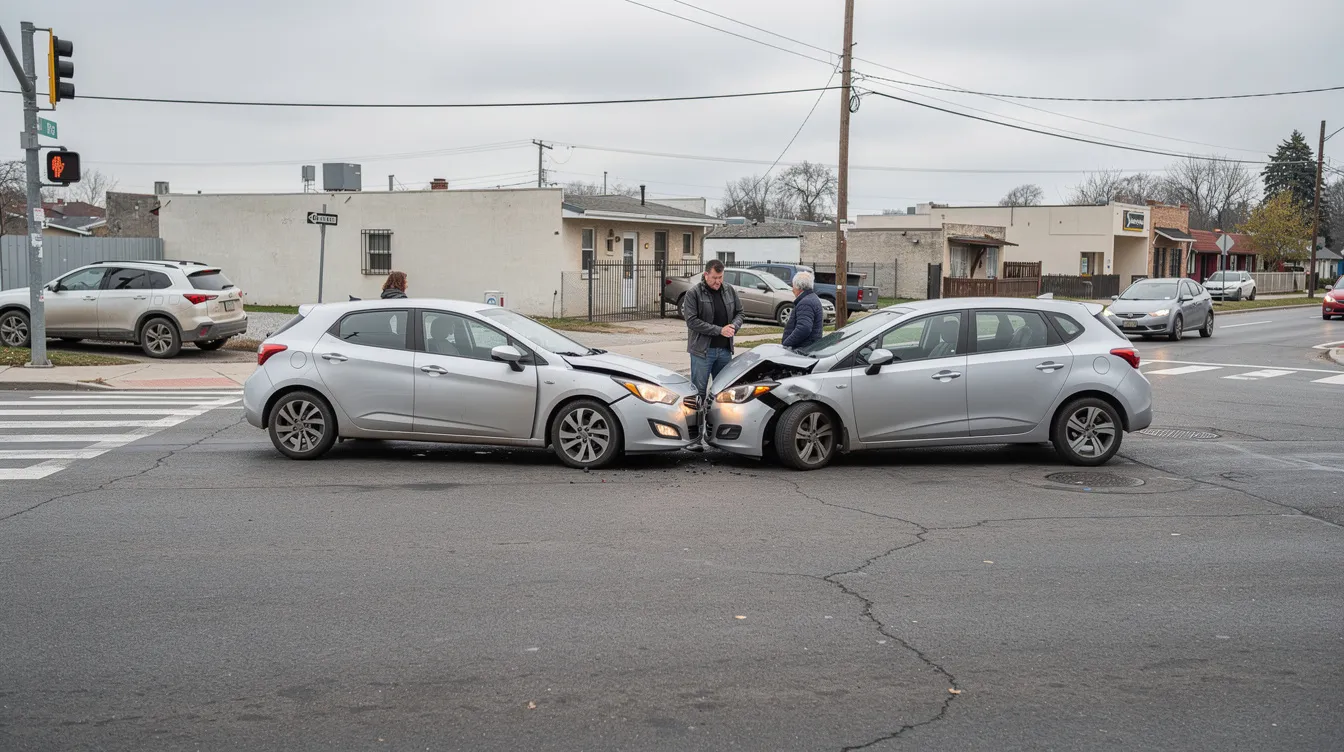
Even when you drive defensively and try to prevent collisions, other drivers’ negligence can still cause a crash. If you are involved in an accident, staying calm and following a few key steps can protect your health and your legal options.
- Check for injuries: Assess yourself, your passengers, and anyone else involved. Call 911 for serious injuries or major damage.
- Move to safety: If your vehicle is drivable and it is safe to do so, move it out of traffic to reduce the risk of additional collisions.
- Exchange information: Get the other driver’s name, phone numbers, insurance card details, and license plate number. Note the make and model of every vehicle involved.
- Document the scene: Take photos of damage, road conditions, traffic signals, and any visible injuries. Get contact details from witnesses.
- Seek medical attention: Some injuries-like whiplash or internal damage-may not appear for hours or days. Seeing a doctor promptly creates a medical record that may support a later claim.
- Report to your insurance company: Contact them to report the accident. Keep copies of all documents, bills, and correspondence.
If someone else’s negligence caused the crash, having this documentation may be important if you decide to speak with an attorney about your options.
How Los Defensores Helps After a Car Accident
Los Defensores is a national legal advertising service that helps connect Spanish-speaking individuals in the U.S. with independent personal injury attorneys after car accidents. Los Defensores is not a law firm and does not provide legal services-legal advice and representation are provided by independent attorneys in the network.
Many people who are injured in a car accident face questions about medical bills, lost wages, and the claims process. Some prefer to discuss their situation with a lawyer in Spanish, which is where Los Defensores can help.
- Readers can request a free, confidential consultation to discuss their situation with an attorney, regardless of immigration status
- Clients may be responsible for legal costs depending on the representation agreement with the attorney
- Consultations are available by phone or online
- Lives depend on getting the right information at the right time-if you or a family member has been hurt in a car accident, reaching out early can help you understand what steps to consider next
If you have been injured in a recent car accident, contact Los Defensores by phone or online to help connect with an attorney who can explain your options.