



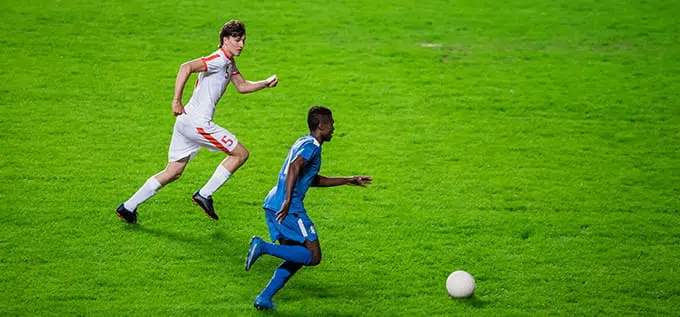

From deep defending to the coordinated offside trap, these are the defensive plays that transformed the way the game is played.
When people talk about soccer, they almost always talk about goals. About attacking plays, dribbling, spectacular strikes.
But the history of soccer has also been written from the other side of the field — with defensive plays that completely changed the way the sport is understood. Systems, schemes, and movements that were born as solutions to tactical problems and ended up transforming the game forever.
These are the most influential defensive plays in soccer history: concepts that every coach knows today, but that were revolutionary when they first appeared.
The Coordinated Offside Trap
One of the most influential defensive plays in modern soccer history is the offside trap executed in a coordinated way by the entire defensive unit.
It’s not about one defender watching their position — it’s about an entire back line moving as a single unit, stepping up together to catch the opposing forward offside.
This concept was popularized on a massive scale by Sacchi’s AC Milan of the late 1980s, managed by Arrigo Sacchi. Milan’s defense — Paolo Maldini, Franco Baresi, Alessandro Costacurta, and Mauro Tassotti — drilled this movement obsessively in training, stepping up and dropping back as if connected by an invisible rope.
The play changed how teams defended all over the world. Before this era, defenders tended to mark individually, each one responsible for their direct opponent. After Sacchi and his Milan, the concept of coordinated zonal defending spread across the top leagues in Europe and Latin America, and today it’s the foundation of how defense is understood in modern soccer.
The Sweeper Who Orchestrates from the Back
Another defensive play that transformed soccer history is the sweeper (líbero) — a center-back who plays slightly behind the defensive line, without a direct marking assignment, with the responsibility of covering space, anticipating danger, and above all, launching the team’s attack from the very last line.
In traditional defending, the stopper was responsible for direct marking and physical duels with the opposing striker. The sweeper, by contrast, operated with more freedom behind the defense — covering gaps and organizing the team’s build-up play.
Franz Beckenbauer took this concept to its highest expression in the 1970s with West Germany and Bayern Munich.
While the sweeper role already existed, Beckenbauer took it to another level. He showed that a defender could be much more than a reactive player whose job was to stop, clear, and prevent goals.
Beckenbauer proved that the same player could be the team’s brain — the one who received the ball from teammates, surveyed the entire field, and decided where to direct the attack.
In South America, Daniel Passarella adapted this concept to his own style with the Argentine squad that won the 1978 World Cup, combining the sweeper’s organizational role with a goal-scoring ability that few defenders in history have ever matched.
The image of a sweeper playing out from the back remains, decades later, one of the most studied tactical foundations in world soccer.
High Pressing, Defensive Tackles, and Immediate Ball Recovery
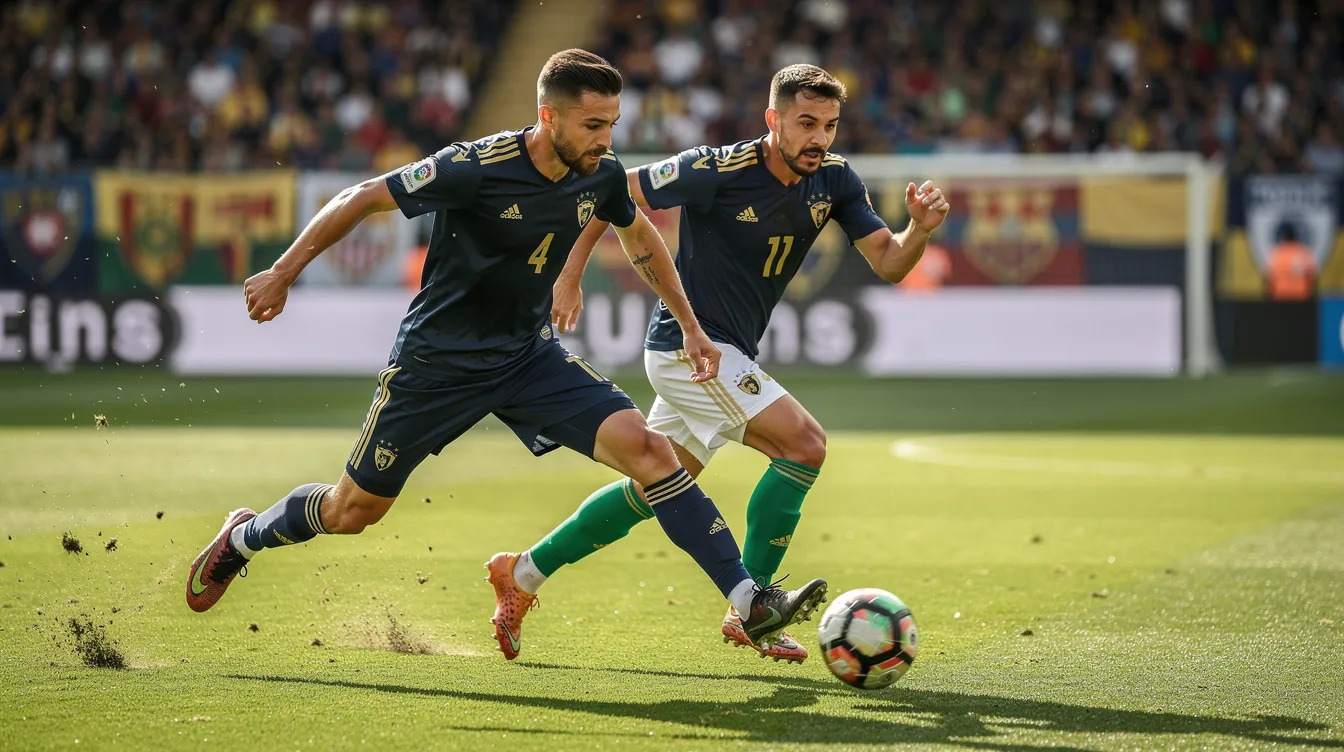
For many decades, defending was understood as something that happened near your own goal. That changed radically when pressing began to be understood as high, medium, or low depending on the opponent — and as a collective defensive play where the entire team presses the moment the ball is lost, regardless of where on the field they are.
The Ajax of the 1970s, managed by Rinus Michels, was one of the great pioneers of this idea within what became known as “Total Football.” The concept was simple in theory and extraordinarily complex in execution:
Every player, regardless of their original position, had to be able to defend and attack based on the needs of the moment within a dynamic formation, pressing the opponent immediately and collectively the instant possession was lost. This demanded players capable of adapting to different situations and responding to every shift in the game.
Years later, this concept evolved into what is now known as gegenpressing, associated especially with German coaches like Ralf Rangnick and Jürgen Klopp. Klopp’s Liverpool demonstrated the power of this approach in the 2019 Champions League semifinal comeback against Barcelona. Liverpool pressed from the opening whistle, won the ball back in advanced positions, and turned every recovery into immediate danger. They won 4-0 after losing 3-0 in the first leg.
This style of pressing is activated based on the team’s shape and the opponent’s response, with the goal of winning the ball back within the first few seconds of losing it, pressing in advanced areas of the field.
It has completely changed how elite teams understand the transition between defending and attacking. They’re no longer two separate phases of the game — they’re one, with the midfield as the key zone for immediate recovery.
The Defensive Wall on Free Kicks
One of the most universal and recognizable defensive plays in soccer is the wall of players that forms in front of a free kick near the box. What seems like an automatic, obvious gesture today had, at one point, a significant tactical development behind it.
The wall doesn’t just block a portion of the goal — it also forces the free kick taker to find more difficult angles, reducing their options for a direct shot. The coordination of the wall — how many players are needed based on distance and angle, the exact positioning relative to the ball, the synchronized jump at the moment of the strike — became a tactical discipline that every team trains specifically.
The greatest free kick specialists in history, from Juninho Pernambucano and David Beckham to Lionel Messi, have had to face increasingly sophisticated walls, which in turn has forced them to develop increasingly creative shooting techniques.
It’s a perfect example of how a defensive play raises the level of the offensive play it’s trying to neutralize.
Doubling Up and Wing Coverage
In modern soccer, one of the most important team-level defensive plays is doubling up on the wing: the combination of the full-back and the winger or midfielder who come together to close down space when the opponent attacks down the flank.
This play became essential as soccer evolved into a faster game with wingers who are increasingly quick and technically gifted. The full-back — traditionally identified with the number 2 (right-back) and 3 (left-back), while the 4 and 6 are typically associated with center-backs or defensive midfielders — often can’t handle a world-class attacker alone in a one-on-one duel on the wing. The speed, technique, and ability to change direction that modern wingers possess means you need two players covering each other, closing passing lanes, and reducing the opponent’s options with the ball.
Among the different types of wing coverage, doubling up is one of the most widely used tactical variations.
Atlético Madrid under Diego Simeone perfected this approach like few teams in European soccer had before. In matches against Barcelona and Real Madrid, Atlético’s full-backs never faced Messi or Cristiano Ronaldo alone — there was always a midfielder closing down the space, reducing the opponent’s options to a minimum. This strategy was key to the campaigns that took Atlético to two Champions League finals (2014 and 2016).
Today, it’s one of the plays that any modern soccer coach teaches starting at the youth level.
Compressing Space Between the Lines
Compressing space — the deliberate reduction of the gap between the defensive line and the midfield line — is another tactical play that changed how soccer is defended.
The idea is simple: the less space there is between a team’s lines, the fewer options the opponent has to combine short passes and create danger between the different zones of the field.
This defensive play requires extraordinary coordination. The entire team must move at the same time, pushing up or dropping back as a compact block depending on where the ball is on the field.
Teams that master space compression dramatically reduce the opponent’s options, forcing them to play long balls or attempt individual plays in tight spaces — much easier to defend than collective combinations.
Italian soccer, historically known for its defensive tradition, helped refine this concept through teams that emphasized compact lines, coordinated movement, and reduced space between units. Teams like Juventus and AC Milan built much of their success on the ability of their lines to move as a single unit, shrinking the opponent’s playing area to a minimum.
The Collective Retreat in Defensive Transition
When a team loses the ball, the collective retreat is the defensive play that determines whether that turnover becomes a dangerous situation or a simple transition without major consequences.
It requires all players, including the forwards, to drop back in an organized way to reinforce the defensive line while the team recovers its shape.
This play sounds simple in description but requires enormous tactical discipline. Forwards, who are normally focused on attacking, have to understand that their defensive work at the moment the ball is lost is just as important as their offensive contribution.
The great championship-winning teams of recent decades — from Pep Guardiola’s Barcelona to the Argentina squad that won the 2022 World Cup — have built part of their success on the ability of every single player, without exception, to retreat immediately and in an organized way the moment possession is lost.
In the 2022 World Cup final, Argentina showed how important collective defensive work can be in high-pressure moments, with players across the team dropping back to protect space and limit France’s attacks. That collective discipline was part of what helped Argentina survive difficult stretches of the match and ultimately win the title on penalties.
Defensive Plays as Collective Art
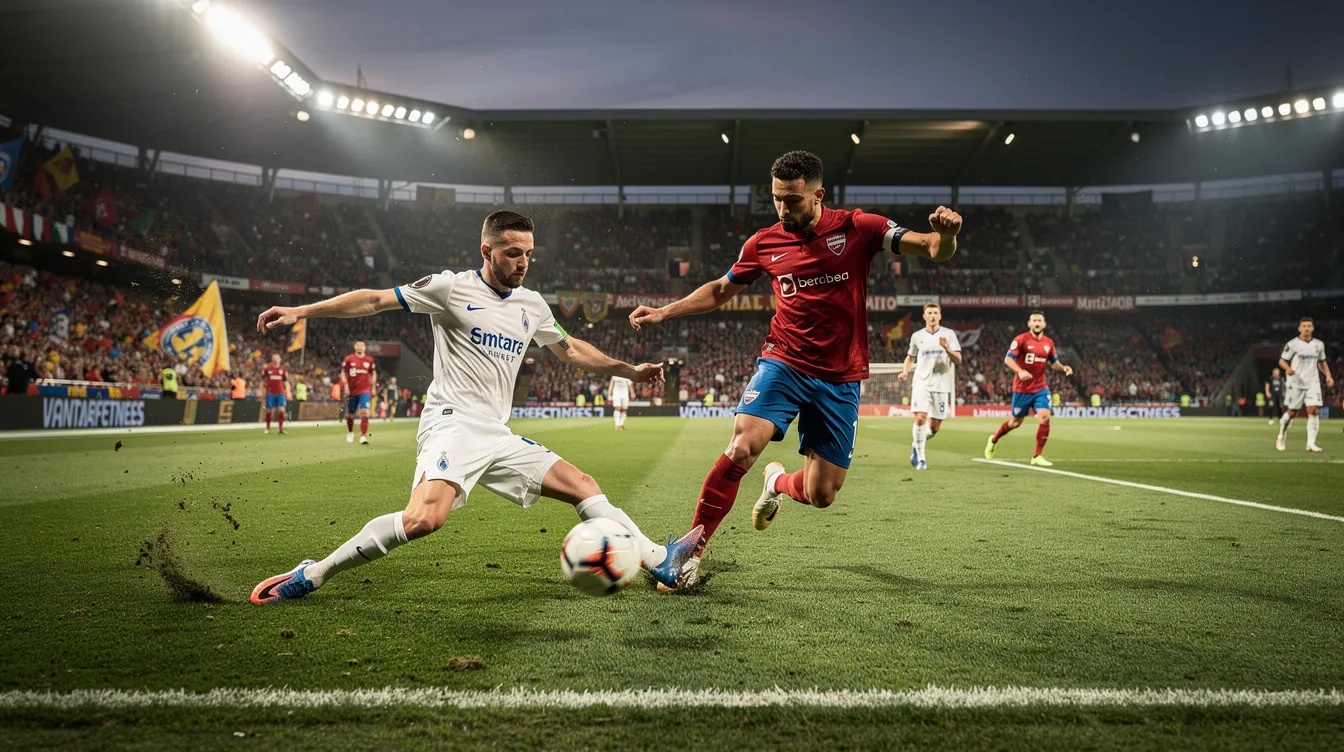
What all of these defensive plays have in common is that none of them depend on a single player. The offside line needs four defenders moving in perfect sync, with no room for a tactical error that breaks the rhythm.
High pressing needs the entire team pressing at the same time. The collective retreat needs even the striker to understand their defensive responsibility.
Soccer, in its most evolved form, stopped treating defense as an individual task and turned it into a collective discipline — almost choreographic — where every player depends on their teammates, and a single coordination error can undo the work of an entire team.
These defensive plays didn’t just change the way soccer is played. They also explain why many of the best plays are born from reading the game, timing, and coordination. In South America, Elías Figueroa — named by the IFFHS to the South American team of the 20th century — showed with the Chilean national team and at clubs like Peñarol and Internacional de Porto Alegre that a Latin American center-back could compete at the highest level. His ability to read the game, anticipate danger, and play out from the back made him a continental reference for the position.
Because in the end, titles aren’t just won with the goals you score — they’re also won with the ones you prevent.
This article presents a selection of defensive plays, concepts, and tactical tools that shaped the evolution of soccer. It does not seek to establish a definitive ranking or include every relevant tactical system, but rather to highlight some of the most influential in the history of the game.