



Soccer is a sport that celebrates goal scorers. Strikers fill the headlines, their names adorn jerseys, and their goals are etched into the collective memory of entire generations. But behind every great championship-winning team, there’s a truth that true students of the game never forget: matches are won with solid defending.
Throughout the history of world soccer, there have been defenders who didn’t just stop opponents — they redefined what it means to play at the back. Players who combined anticipation, tactical intelligence, physical strength, and a reading of the game that bordered on the supernatural.
Many of them came from Latin America, a region that has given the world not only attacking geniuses but also human walls who held firm against the best forwards of their era.
In this article, we look back at the greatest defenders in soccer history, with special attention to the legendary Latin American names who defined their eras.
What Makes a Defender the Best in History?
Before we get to the names, it’s worth clarifying that this article works as a ranking based on comparable criteria and historical context — not as an absolute truth about who was the best:
- Positional awareness: The ability to read the game before it happens, anticipate the next move, and be in the right position before danger fully develops.
- Individual duels: Effectiveness in one-on-one situations, both in the air and on the ground; aerial dominance is essential for winning headers in defensive clearances, and true aerial ability separates elite defenders.
- Leadership: The ability to organize teammates and serve as the foundation the team builds from, with the leadership qualities to guide the line under pressure.
- Consistency: Maintaining elite-level play across multiple seasons, regardless of the opponent or competition, with the composure to stay calm under high pressure.
- Impact on titles: Direct contribution to national, continental, and world championships.
- Tactical influence: Having left a lasting mark on how the position is understood and played.
This is also, in part, an opinion supported by career trajectory, context, and historical significance.
The center-back is a key position in soccer because it anchors the defensive line, anticipating and cutting off opposing attacks.
The sweeper (líbero) operates with more freedom to move, cover gaps, and even push forward to support build-up play or break up attacks.
The stopper is typically a center-back tasked with stepping up, closing down space, and marking the opposing attacker tightly.
Full-backs, meanwhile, protect the flanks, and the role of modern full-backs is extremely demanding. Wing-backs cover the entire touchline, requiring stamina, speed, and technical skill to influence the game in both directions, and elite players need endurance comparable to marathon runners.
With those criteria in mind, let’s take a look at the best defenders the game has ever produced.
Roberto Carlos — The Most Powerful Left-Back in History
Brazil | 1992–2011
Real Madrid and Brazil’s left-back redefined what a defender could do from his position — and he did it with a naturalness and intensity that left opponents helpless for over a decade.
Roberto Carlos was physically extraordinary. His long-range shot was one of the most feared in the world — his famous free kick against France in 1997 remains one of the most talked-about goals in soccer history — and his ability to fly up the left flank like a winger, then get back to defend with equal intensity, was simply unique. On top of that, he had an exceptional gift for free kicks.
At Real Madrid, he was part of the legendary “Galácticos” era, winning four La Liga titles and three Champions League trophies, further strengthening his international résumé with the European Cup and the Club World Cup. With Brazil, he won the 2002 World Cup and was runner-up in 1998, starting at left-back in both tournaments.
What sets Roberto Carlos apart is that he was both a defender and an attacker in every match he played. His impact on modern soccer was enormous: he paved the way for full-backs to be more than just defenders — complete players capable of influencing the game in both halves of the pitch. Every left-back of the 21st century owes something to Roberto Carlos.
Cafu — Brazil’s Eternal Right-Back
Brazil | 1990–2008
If Roberto Carlos owned the left flank, Cafu did the same on the right during the same era.
Together with Roberto Carlos, he formed one of the most celebrated full-back pairings in the history of the Brazilian national team. Cafu was the most complete right-back of his generation: tireless, technically sound, with an extraordinary work rate and a competitive spirit that drove him to give everything in every minute of every match.
His career was extensive and successful: São Paulo, Roma, Parma, and finally AC Milan, where he won the Serie A title and the Champions League. With Brazil, he reached three World Cup finals — 1994, 1998, and 2002 — winning two of them, making him the only player in history to appear in three consecutive World Cup finals.
Cafu was the full-back who never tired. In the 90th minute, his pace was the same as in the first. That physical capacity, combined with excellent tactical awareness and a natural leadership personality, made him captain of both his national team and his clubs. He was the kind of player who elevated everyone around him.
Rafael Márquez — Mexico’s Kaiser Who Conquered Europe
Mexico | 1996–2018
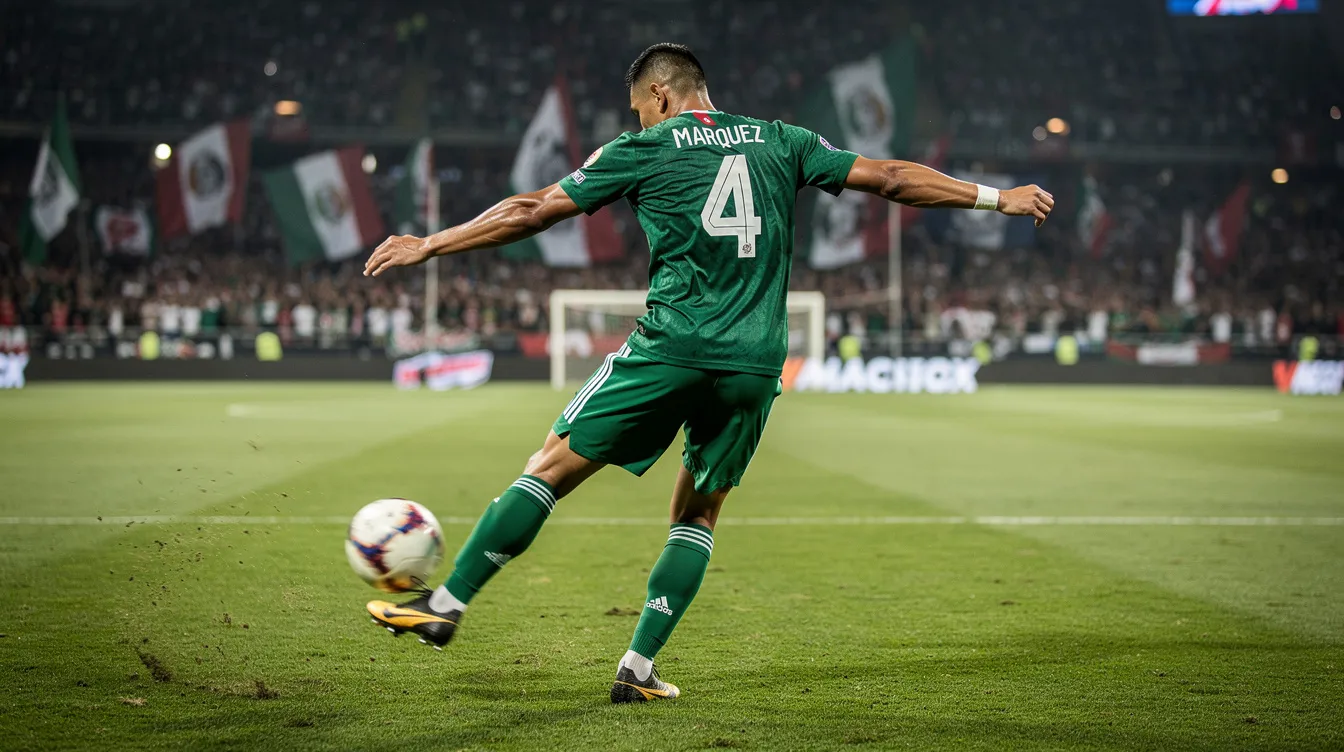
In the history of Mexican soccer, one name is spoken with special reverence: Rafael Márquez. The center-back born in Zamora, Michoacán, was not only the best defender Mexico has ever produced, but one of the best in the world during the first decade of the 21st century. His career in Europe with AS Monaco and, especially, FC Barcelona made him the most successful Latin American defender of his generation in European soccer.
What set Márquez apart from other defenders was his exceptional tactical intelligence. He wasn’t the fastest or the tallest, but he read the game with a clarity that allowed him to anticipate plays before they developed. He was clean in the tackle, precise in his passing, and capable of initiating build-up play with a technical quality that fit perfectly into the possession style Barcelona would perfect under Pep Guardiola.
With the Mexican national team, Márquez is an undisputed legend. He appeared in five World Cups — Korea-Japan 2002, Germany 2006, South Africa 2010, Brazil 2014, and Russia 2018 — becoming one of the few players in history to achieve that milestone and the first Mexican to do so. He captained the national team for much of that era, leading Mexico through some of the most important moments in its soccer history.
Oscar Ruggeri — Argentina’s Defensive Warrior
Argentina | 1983–1997
No list of great Latin American defenders would be complete without Oscar Ruggeri. Known as “El Cabezón,” Ruggeri was the most feared defender of his generation in Argentina: aggressive, dominant in the air, and a natural leader who served as the backbone of every defense he was part of.
With the Argentine national team, he was a world champion at Mexico 1986, lifting the trophy alongside Diego Maradona in what many consider the greatest achievement in Argentine soccer history. He was also part of the team that reached the final at Italy 1990, where Argentina fell to West Germany in one of the most tense matches in World Cup history.
At club level, he played for River Plate, Vélez Sársfield, Real Madrid, América de México, and several other teams, always a dominant presence at the back. His name is synonymous with commitment, intensity, and that defensive mentality that refuses to accept defeat without fighting until the very last second.
Iván Córdoba — Colombia at the Heart of Inter Milan
Colombia | 1995–2013
Among the Latin American defenders who made history in Europe, Iván Córdoba deserves a special place. The Colombian center-back arrived at Inter Milan relatively young and became an institution at the Nerazzurri for over a decade, playing a key role in one of the most glorious chapters in the club’s history: the 2010 treble under José Mourinho.
Córdoba was the kind of defender coaches love: disciplined, intelligent, capable of playing both at center-back and full-back, with a reading of the game that made up for what he sometimes lacked in pace. He was the type of player who stayed a step ahead of every situation, who organized the defense, who constantly communicated with his teammates.
In 2010, his season was historic: he won the Serie A, the Coppa Italia, and the Champions League with Inter, as part of a defense that was fundamental to their European conquest. For Colombia, it meant seeing one of their own at the summit of continental soccer — an image that inspired an entire generation of Colombian defenders to come.
Carlos Gamarra — Paraguay’s Wall
Paraguay | 1992–2010
Paraguayan soccer has a defensive tradition recognized across the continent, and Carlos Gamarra is the highest representative of that tradition. Nicknamed “The Wall,” Gamarra was for over a decade Paraguay’s best defender and one of the most solid in South America, combining imposing physical strength with tactical intelligence that made him effective against any type of attacker.
His career in Brazil with Palmeiras, Atlético Mineiro, and Corinthians made him a respected figure in South American soccer, and his subsequent stints in Europe and Mexico confirmed that his level was world class. With the Paraguayan national team, he competed in several World Cups, including France 1998, Korea-Japan 2002, and Germany 2006.
For years, Gamarra represented the classic South American defender: tough, decisive in one-on-one situations, dominant in the air, and with a positional sense that brought clarity to the game when others saw only chaos.
Roque Júnior — Elegance and Talent in Brazil’s Defense
Brazil | 1996–2008
Roque Júnior didn’t have the long, steady career that others on this list enjoyed, but during his peak he was an important defender on teams that won titles at both the world and European level. He was part of the historic 2002 World Cup-winning squad, forming a compact defense that allowed Brazil to claim their fifth world title.
At AC Milan, he was part of the team that won the 2003 Champions League, making him one of the few players to win both a World Cup and a Champions League in a short span. His year at Leeds United in England was less successful, but his earlier achievements secure his place in any conversation about great Latin American defenders.
What made Roque Júnior special was his technical quality. He was a defender who could play out from the back, who felt comfortable with the ball at his feet, who anticipated without needing to dive in recklessly. A modern defender in the best sense of the word.
Franz Beckenbauer — The Kaiser Who Changed the Position Forever
Germany | 1963–1983
It would be impossible to make a list of the greatest defenders in soccer history without Franz Beckenbauer, widely considered the gold standard among center-backs and one of the greatest defenders of all time. The German was the most influential defender of the 20th century, a player who invented the concept of the modern sweeper and proved that a defender could be the best player on the team without scoring goals every week.
Beckenbauer won everything there was to win. With Bayern Munich, he won three consecutive European Cups, and with West Germany, the 1972 European Championship, the 1974 World Cup, and two Ballon d’Or awards. Later, as a manager, he won another World Cup in 1990 with Germany, making him one of the few people to win the tournament both as a player and as a coach.
His influence on the defensive position was revolutionary. Beckenbauer showed that a defender could be the one to initiate the attack, the axis around which the entire team built its play. That vision transformed soccer forever, and every modern defender who plays out from the back owes something to the Kaiser. Alongside Paolo Maldini and Franco Baresi, he turned defense into a platform for creativity and tactical leadership.
Paolo Maldini — Italian Perfection Made Defender
Italy | 1984–2009
If Beckenbauer redefined the position, Paolo Maldini elevated it to an art form. The left-back — and later center-back — for AC Milan and the Italian national team was for over two decades one of the game’s greatest defensive stars and the ultimate reference for what a defender should be at the highest level. Elegant, intelligent, technically flawless, with a reading of the game that made him seem out of sync when in reality he was always exactly where he needed to be and rarely put a foot wrong, much like Franco Baresi, an extraordinary sweeper known for his game-reading ability.
At Milan, he made over 1,000 official appearances and won 26 trophies, including seven Serie A titles and five UEFA Champions League titles, cementing his status as one of the greatest defenders of all time.
With Italy, he played in four World Cups and reached the final in 1994, where the Azzurri fell to Brazil — although the world title eluded him as a player.
What makes Maldini unique is that he played at the highest level until age 40 without any significant drop in performance. That speaks to a soccer intelligence that was truly extraordinary: as speed naturally declined with age, Maldini compensated with an increasingly refined reading of the game. He is the model of defensive longevity that every defender in the world aspires to. Bobby Moore offers a similar example of calm and leadership, having captained England to World Cup victory in 1966, and Pelé considered him the best defender.
Sergio Ramos — The Defender of the 21st Century
Spain | 2003–present
No list of the greatest defenders in history would be complete without Sergio Ramos. The Spanish center-back spent over fifteen years as the most important defender in world soccer, winning practically everything: four Champions League titles, two La Liga titles, two European Championships, and a World Cup with Spain.
Ramos, who began his career as a right-back before establishing himself at center-back, represented a new archetype of the modern tenacious defender: aggressive yet technical, capable of playing out from the back, with a goal-scoring instinct that made him one of the highest-scoring defenders in history. His winning record and his goals in crucial moments — especially in Champions League finals, when he could also score decisively — are already part of the sport’s folklore.
With nearly 200 career goals and over 180 caps for Spain, the numbers speak for themselves. But beyond statistics, what defines Ramos is his competitive mentality: the conviction that no match is lost while there’s time on the clock, the ability to perform under maximum pressure, and the leadership qualities with which he directed his teammates.
Fabio Cannavaro — The World Champion Who Beat Every Striker
Italy | 1993–2011
Fabio Cannavaro has something in his résumé that very few defenders in history can claim: the Ballon d’Or, and he remains the only defender to win it in the modern era. In 2006, the year Italy won the World Cup in Germany, Cannavaro was named the best player in the world — effectively the player of the year, an award that typically goes to forwards or creative midfielders, but which on that occasion recognized the greatness of a pure center-back.
Cannavaro captained the Italy team that won the 2006 World Cup, leading a defense that conceded only two goals in seven matches throughout the entire tournament — an own goal and a penalty in the final. It was a historic defensive performance, and Cannavaro was the brain and heart of that wall.
His club career was equally brilliant: Napoli, Parma, Inter Milan, Juventus, and Real Madrid are among the teams where he left his mark. At Madrid, he won two consecutive La Liga titles as a veteran, proving that his level was compatible with the most demanding soccer in the world even in the twilight of his career.
What makes Cannavaro great is his ability to lead by example. He wasn’t the tallest or the fastest, but he made up for those physical limitations with anticipation, game intelligence, timing, and an explosive leap as a center-back, plus a determination that made him nearly unbeatable in most duels he contested.
Defenders Who Changed Their Era: A Tactical Perspective
Each period in soccer history has produced defenders who were not only the best of their time, but changed the way the position was understood:
The 1970s: The birth of the modern sweeper. Beckenbauer pioneered the concept of a defender who dictates play from the back. Passarella, in Argentina, applied similar principles with a more physical and aggressive style.
The 1980s: Defense as a collective. Teams like Argentina in 1986 and Italy throughout the decade proved that a perfectly organized defense could neutralize the best forwards in the world. Ruggeri and Passarella in Argentina, Maldini in Italy, were the standard-bearers of this philosophy.
The 1990s: The modern full-back emerges. Roberto Carlos and Cafu redefined what a full-back could contribute to the team. The 1994 World Cup and European clubs in the late nineties began to value the attacking ability of wide defenders.
The 2000s: The technical defender. The tactical demands of modern soccer began requiring defenders who could play with the ball, build from the back with precision. Ayala, Lúcio, Roque Júnior, and Cannavaro represented that profile.
The 2010s and beyond: The complete defender. Sergio Ramos took the concept of the complete defender to its fullest expression: aggressive, technical, a goal threat, a leader, capable of deciding matches in the biggest moments.
Defense and the Art of Soccer
Soccer is a sport of eleven players, but the headlines usually belong to the goal scorers. This guide to the greatest defenders in soccer history, and some of the best defenders ever to play, is in part a tribute to the quiet but essential work done by the players in the back line.
A 1-0 win built on an impenetrable defensive wall deserves just as much respect as a spectacular blowout. The game owes a great deal to these players and to every great soccer defensive player who gives a team balance.
Latin America, in particular, can take pride in having given the world some of the greatest defenders this sport has ever seen. And everything suggests that history will keep producing new names to add to this list of legends, while soccer history also remembers names such as Carlos Alberto, Dani Alves, Gerard Piqué, Rio Ferdinand, and Alan Hansen among the game’s most decorated players; Carlos Alberto defined the right flank for Brazil, Dani Alves also stands out for club honors that included the Copa del Rey, and Alan Hansen won three European Cups as well as the FA Cup.
Note: This article is for informational and entertainment purposes. The selection of players reflects an editorial perspective based on career trajectory, historical impact, and soccer relevance, and is not intended to be a definitive list. Information may change after the date of publication.