



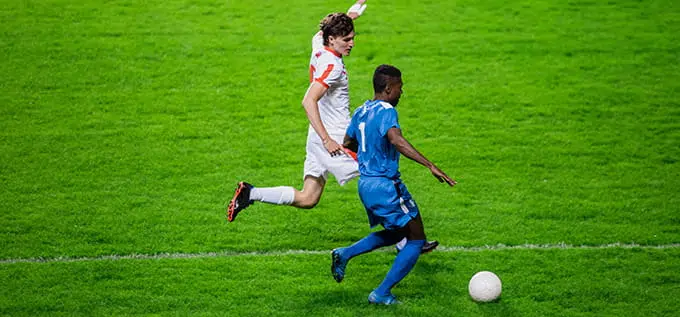

Modern soccer has transformed the role of the defender. It’s no longer enough to just stop the opponent: today’s best defenders play out from the back with the precision of a midfielder, anticipate without committing fouls, lead from the back, and at their best, show up in decisive moments to change the outcome of a match.
At the World Cup, where margins are razor-thin and every mistake can mean the end of the road, defense isn’t a secondary position — it’s the backbone of the teams that go the distance.
The 2026 World Cup, to be held across the United States, Mexico, and Canada, will bring together 48 national teams and the best players on the planet. Among them will be strikers who dominate the headlines, midfielders who control the tempo, and goalkeepers who make unforgettable saves. But the ones who often decide the tournament are the ones who work quietly from the back line: the defenders.
In this article, we break down the most important defenders to follow this summer — their current form, their impact on their national teams, and why they could be the defining figures on the road to World Cup glory.
Virgil van Dijk — The Dutch Captain
When the conversation turns to the best defenders in the world right now, Virgil van Dijk’s name inevitably comes up near the top.
Liverpool’s center-back has been the global standard for what an elite central defender should be: physically imposing, extraordinary in the air, with a reading of the game that allows him to anticipate situations without needing to engage in unnecessary challenges.
Van Dijk arrives at the 2026 World Cup with a special motivation. The Netherlands have proven in recent years that they’re a competitive international side, and Liverpool’s center-back knows this could be his last major tournament at the national team level. Over 30 and the undisputed captain of the Oranje, the Dutchman will want to leave a lasting mark on the world’s biggest stage.
What makes Van Dijk so well-suited for the World Cup is exactly what these tournaments demand most: consistency under pressure. In the Premier League and Champions League, he’s shown season after season that his level doesn’t drop in the biggest matches. If anything, in the highest-pressure moments, his composure becomes his team’s greatest asset.
His matchups against the world’s best forwards will be one of the tournament’s great storylines. If the Netherlands want to reach the final stages, Van Dijk will have to be the wall that makes it possible.
Rúben Dias — Portugal’s Quest for a First World Cup Title
Rúben Dias is the best center-back in Manchester City’s recent history and one of the most respected in European soccer.
The Portuguese defender arrived at City in 2020 and completely transformed Pep Guardiola’s back line, becoming a key piece in their Premier League titles and the 2023 Champions League triumph.
With Portugal, Dias has the chance to do something no Portuguese team has ever done: win the World Cup. Portugal enters the 2026 tournament as one of the most intriguing teams in the field, with a talented generation of players that needs the defensive solidity Dias provides to compete for the biggest trophies.
What sets Dias apart from other defenders is his positional intelligence and leadership. He’s not the fastest or the tallest, but he’s always in the right place, organizes his teammates with authority, and rarely makes mistakes in decisive moments. In a tournament where defensive errors are punished harshly, that reliability can be invaluable.
At 29 during the tournament, Dias is in the prime of his career. The 2026 World Cup could be his defining stage.
Antonio Rüdiger — Real Madrid’s Wall on the World Stage
Antonio Rüdiger has gone from being a solid Premier League defender to one of the best center-backs in the world since joining Real Madrid.
The German has shown an improved and more complete version of himself at the Spanish club: more confident on the ball, dominant in aerial duels, and with a defensive intensity that few forwards in the world can handle.
With Germany, Rüdiger has unfinished business at major tournaments. Germany have disappointed at recent World Cups and European Championships, getting knocked out in early rounds and falling well short of expectations for a historic soccer powerhouse. The 2026 World Cup, played partly on North American soil, could be the chance for redemption for a generation that needs to prove what it’s made of.
Rüdiger’s role in that rebuild is central. His presence in Germany’s defense brings not only individual quality but also character — he’s a player who commands respect from opponents and transmits confidence to his teammates. In the most demanding tournaments, that kind of defensive leadership makes all the difference.
William Saliba — France’s New Generation Chasing Glory
If there’s one name that has broken through in European soccer in recent years, it’s William Saliba.
Arsenal’s center-back and France international represents the new generation of defenders: young, technical, fast, with a ball-playing ability that resembles a midfielder more than a traditional center-back.
Saliba was part of the French squad that reached the 2022 World Cup final in Qatar, and he’ll arrive at the 2026 tournament with more experience and his individual level at its peak. At Arsenal, he’s been one of the best defenders in the Premier League for two consecutive seasons, earning individual awards and recognition from experts as one of the most promising center-backs in the world.
What makes Saliba so exciting for the World Cup is that France has a long-term defensive anchor in him. With potentially more than a decade of international soccer ahead of him, Arsenal’s center-back has the added motivation of proving he’s ready to be the defensive leader of the world champions. If France wants to repeat 2018 or go as far as they did in 2022, Saliba will be an indispensable piece.
Alejandro Grimaldo — Europe’s Most Dangerous Left-Back
Not all of the great defenders at the 2026 World Cup will be center-backs. Alejandro Grimaldo, Bayer Leverkusen’s left-back and a Spain international, arrives at the tournament after two of the best seasons of his career.
On the German team that won the Bundesliga unbeaten in 2023-24 under Xabi Alonso, Grimaldo was one of the standout players — not just defensively, but going forward as well.
His numbers are exceptional for a full-back: double digits in assists, goals in key matches, and an attacking output that rivals any winger in the league. And he does it without neglecting his defensive duties, making him an incredibly valuable profile for any national team.
With Spain, Grimaldo has the chance to lock down the starting left-back spot on one of the tournament’s most competitive squads. Spain enters the 2026 World Cup as European champions after winning Euro 2024, with a playing style that demands full-backs of the highest technical and physical caliber. Grimaldo fits that profile perfectly.
Ronald Araújo — Uruguay’s Best Defender in Years
Ronald Araújo is the most important center-back Uruguay has had in a long time. Barcelona’s defender combines imposing physical strength with the technical quality needed to play at one of the most demanding clubs in the world without being overwhelmed.
With the Celeste, Araújo is the foundation of the defensive system. Uruguay has a historic tradition of great defenders — from Obdulio Varela to José María Giménez in more recent years — and Araújo lives up to that legacy.
The challenge for the Uruguayan center-back at the 2026 World Cup is staying fit. Injuries have affected his availability and performance in recent stretches, so he’ll arrive at the tournament after months of work to get back to his best physical form.
If Araújo is fully fit, Uruguay has a defender capable of neutralizing any forward in the world. He wins aerial duels with authority, is fearless in one-on-one situations, and plays out from the back with precision.
Achraf Hakimi — Morocco and the Best Right-Back in the World
The 2022 World Cup in Qatar was where Morocco stunned the world by reaching the semifinals — something no African nation had ever achieved before. In that historic run, Achraf Hakimi was the engine on the right flank and showed why he is considered one of the top right-backs in the game, with his range, two-way play, and impact in both defense and attack.
For the 2026 World Cup, Hakimi arrives at the peak of his career. PSG’s right-back is considered by many experts to be the best in his position in the world, combining speed, technical skill, and an attacking contribution that few full-backs can match. With Morocco, he has the chance to repeat or surpass the achievement of Qatar 2022.
What makes Hakimi especially interesting for this tournament is that Morocco arrives with the experience and confidence of having proven they can compete with the world’s best. They won’t be a surprise to anyone anymore — now they have to confirm that their World Cup run wasn’t a one-off but the start of an era.
Lisandro Martínez — Argentina’s Defensive Shield
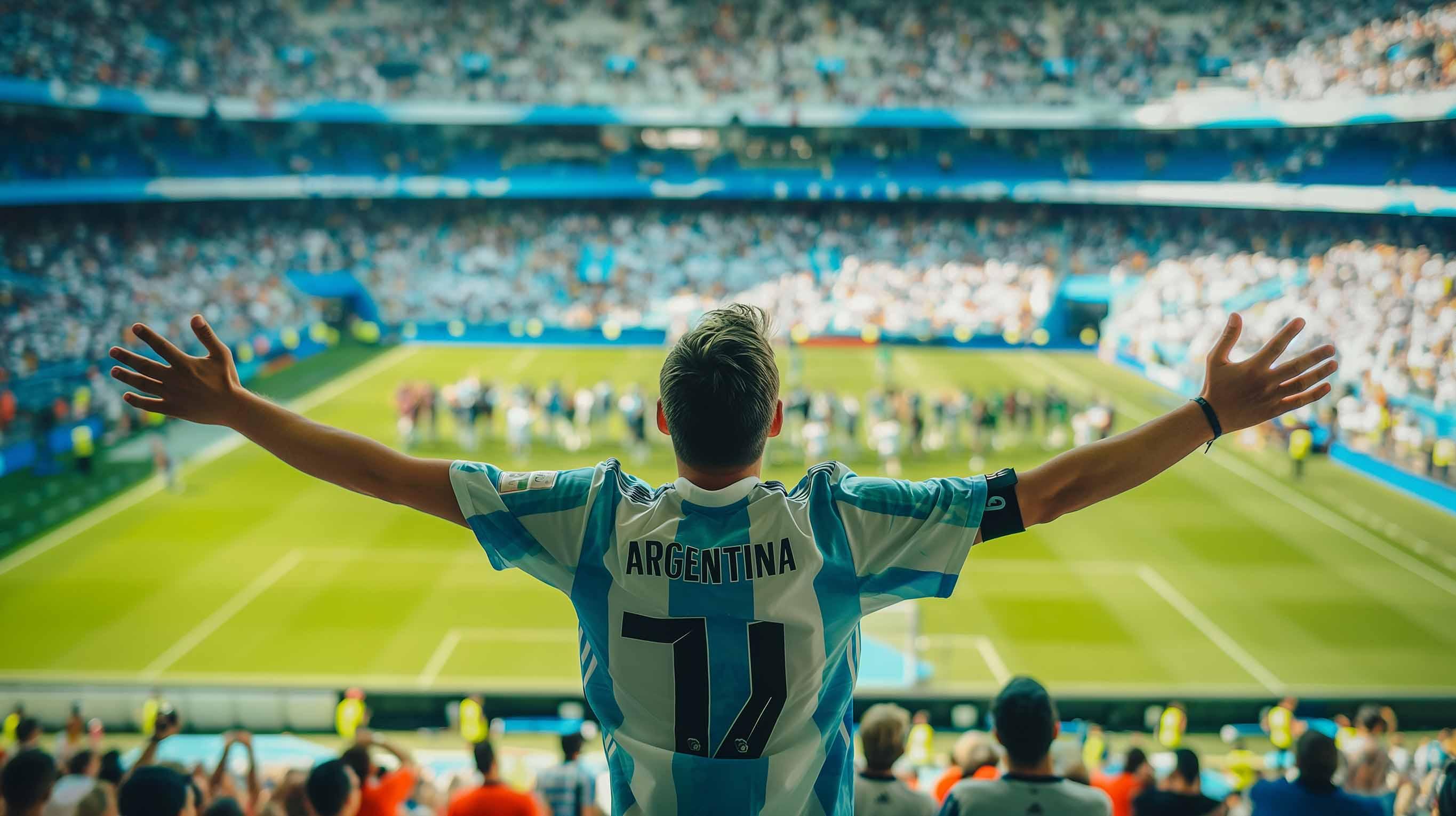
The reigning world champions will defend their title at the 2026 World Cup, and Lisandro Martínez will be one of the key pieces of Argentina’s defensive system. Manchester United’s center-back is one of the most intense and intelligent defenders in the game today, known for his defensive aggression as well as his ability to build play from the back.
With Argentina, Martínez carries the challenge of maintaining the defensive solidity that powered the Albiceleste to their 2022 World Cup triumph in Qatar. Argentina’s defense was one of the pillars of that success, and Lisandro was a fundamental part of that system — on a team led by Messi and where Nicolás Otamendi formed part of the world champion center-back pairing.
For 2026, he’ll arrive with more experience at Manchester United and with the winning mentality the Argentine squad needs.
What sets Martínez apart is his fearlessness. He doesn’t back down from any forward, presses from the first minute, and brings that intensity to everyone around him. In a tournament like the World Cup, where opposing teams will try to exploit any doubt in the defense, having a center-back with that mentality is invaluable.
John Stones — The Modern Defender’s Blueprint
John Stones isn’t the flashiest defender on this list, but he’s possibly the most versatile and the one who best embodies the ideal of the modern defender.
At Manchester City, Pep Guardiola has used him in multiple roles: as a center-back in a back four, as a holding midfielder when the team has the ball, and as a key piece in building from the back.
With England, Stones arrives at the 2026 World Cup as one of the most experienced and technically sound players in the squad. England have been chasing a major trophy for years, and they’ll once again be among the favorites in 2026. The solidity Stones brings to the defensive system is essential to the team’s ambitions.
His tactical adaptability is what makes him especially valuable. In a tournament like the World Cup, where opponents change from match to match and tactical demands shift constantly, having a defender who can play in multiple positions and systems is a significant advantage.
Dávinson Sánchez — Colombia and the Dream of Going Deep
Among the Latin American defenders to watch at the 2026 World Cup, Dávinson Sánchez deserves a special mention. The Colombian center-back has had an up-and-down career at club level, but with the national team he has repeatedly shown that his level is first-rate.
Colombia enters the 2026 World Cup with one of the most talented squads in its recent history — a generation of young, creative players who need a solid defensive foundation to express themselves. Sánchez, with his experience in Europe and his knowledge of international soccer, can be the reliable defensive presence the team needs.
His strength in the air, his speed closing down spaces, and his leadership inside the box make him a defender who can cause serious problems — in the best way — for any team that faces Colombia.
The Debate: Who Could Be the Best Defender at the 2026 World Cup?
Predicting the best defender of a tournament before it begins is an inevitably speculative exercise. The World Cup has a habit of surprising: players who arrive as stars end up in the shadows, and lesser-known names emerge as revelations.
Still, if we’re looking for the strongest candidates to be remembered as the best defenders of the 2026 World Cup, the profiles above offer clear clues. It’s also worth looking at other recent standouts: Joško Gvardiol was the most dominant young center-back at the 2022 World Cup.
Van Dijk has the experience and individual level, but he needs the Netherlands to go deep. Rúben Dias arrives at the peak of his career with the motivation of giving Portugal its first world title. Saliba has the youth and talent to outshine everyone. Hakimi could repeat or surpass Qatar 2022. Theo Hernández also showed in 2022 how elite attacking play from a full-back can elevate an entire defense. And Lisandro Martínez has the champion’s mentality that gives a special edge in the toughest tournaments.
What is certain is that the 2026 World Cup, with 48 teams and more matches than ever in the tournament’s history, will give defenders more opportunities to shine. There will be more games played, more high-pressure situations, more moments where a great defensive play or a defensive mistake decides a nation’s fate.
Defense Wins World Cups Too
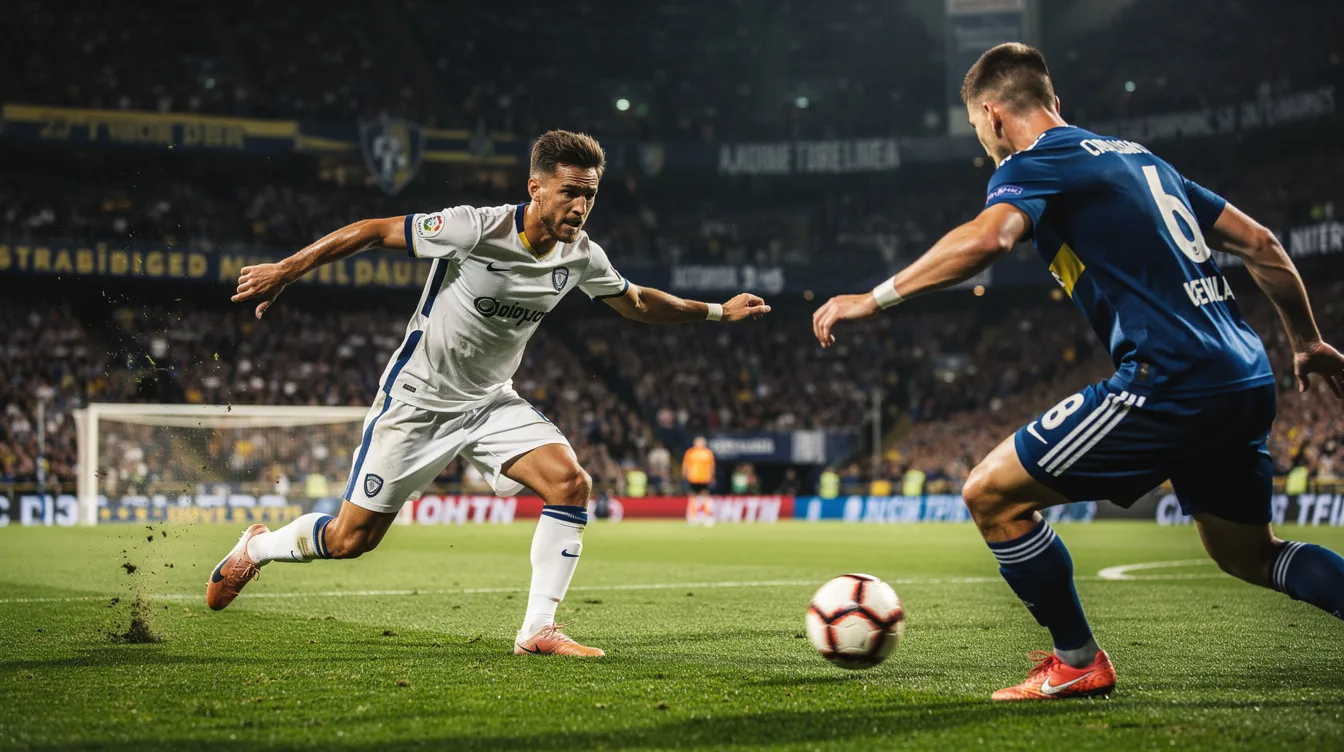
World Cup history has also been written by true legends from back to front: Franz Beckenbauer, widely considered one of the greatest defenders of all time; Bobby Moore, who captained England to their only title in 1966; and Daniel Passarella, who lifted the World Cup in 1978 with Argentina. It’s not just about preventing a goal — it’s about imposing authority, command, and tactical intelligence throughout the entire tournament.
Brazil in 1994 won the title with Aldair as one of their defensive pillars. England in 1966 had Bobby Moore as their great defensive leader. France in 1998 built their title on a nearly impenetrable defense. Germany in 2014 won with a defensive efficiency and collective effort that was the envy of the tournament. And Argentina in 2022 proved that a balanced team — with a solid defense and a brilliant attack — is the perfect formula for winning the biggest tournament in the world.
In the summer of 2026, all eyes will be on the goal scorers, the dribblers, the players who light up the game. But the ones who truly decide the tournament could be the men who work from the back — the ones who stop those very players, who turn chaos into order and danger into safety, with the range and authority to keep the team organized.
These are the defenders to watch — the men who could make history at the 2026 World Cup.
This article is for informational and entertainment purposes only. The players included reflect an editorial selection based on current form, past performance, national team role, and expected impact at the 2026 World Cup. Rankings and player status may change after publication due to injuries, roster decisions, transfers, or team performance.