



Nico Paz, Erling Haaland, Giuliano Simeone, Gio Reyna and more. These are the sons carrying family legacies into the world’s biggest tournament. At Los Defensores, we look back at some of the stories of players carrying family soccer legacies at the 2026 World Cup.
Soccer has a unique way of passing from one generation to the next. Not like an inheritance written on paper, but as something lived at home: the matches a father watches on TV with his son in his arms, the balls kicked around in the backyard, the locker-room stories told at the dinner table. And sometimes — not always, but sometimes — that son grows up, works, perseveres and ends up playing in the same tournament his father played years before.
In that sense, the 2026 World Cup is an especially rich tournament for players with family legacies. There are sons of former internationals arriving at their first World Cup, last names returning to soccer’s biggest stage decades later, and stories that go far beyond the game itself: stories of sacrifice, identity and family pride carried from one continent to another.
Nico Paz and Pablo Paz — Argentina, From France 1998 to 2026
Nico Paz is the son of former Argentina international Pablo Paz, who played in the 1998 World Cup in France. Almost thirty years later, Nico Paz arrives at his first World Cup as part of the defending world champion Argentina squad.
Born on September 8, 2004, Nico Paz is a left-footed attacking midfielder known for his creativity, vision, ability to control the tempo of a match and eye for goal.
Nico Paz became the first player in the history of the Argentine national team to play in a World Cup without ever having played for a club in the country, including at the youth level.
Born in Spain, he came up through Real Madrid’s academy system and is currently one of the most exciting players in Italy’s Serie A with Cesc Fàbregas’s Como.
His family story is also a story of identity: although born in Santa Cruz de Tenerife, he chose to represent Argentina because of his family roots. Pablo Paz didn’t see many minutes in that 1998 World Cup, but the Paz name was on the record at a World Cup. Now it’s Nico writing the next chapter, carrying the family name forward with the Argentine national team as part of a world champion squad that included him in its 26-man roster.
Erling Haaland and Alf-Inge Haaland — Norway, From 1994 to 2026
This is the most epic story among the family dynasties at the 2026 World Cup, and not just because of the numbers.
Erling Haaland was born in Leeds, England, where his father, soccer player Alf-Inge Haaland, was playing in the Premier League at the time. Erling’s father, Alfie, was part of the 1994 Norway squad that failed to advance past the group stage. It was the only time he represented his country in the tournament.
The son went further. Much further. Erling Haaland had never seen Norway play in a World Cup — he was born two years after France 1998, when the Norwegians beat Brazil on the final day of the group stage to reach the Round of 16. Leading Norway’s qualification for the 2026 World Cup was, therefore, a personal goal the Manchester City striker chased for years.
And what he has done in the tournament has been extraordinary. The numbers tell the story: with 62 goals in 54 international appearances, Haaland is his national team’s all-time leading scorer, averaging 1.15 goals per game. His two goals against Brazil in the Round of 32 carried Norway to the quarterfinals for the first time in the country’s history, tying him for the Golden Boot lead alongside Messi and Mbappé.
What the father experienced as a modest appearance at USA ’94, the son is turning into the greatest chapter in Norwegian soccer history — and into an elite international career of his own.
Giuliano Simeone and Diego Simeone — Argentina, From 1994–2002 to 2026
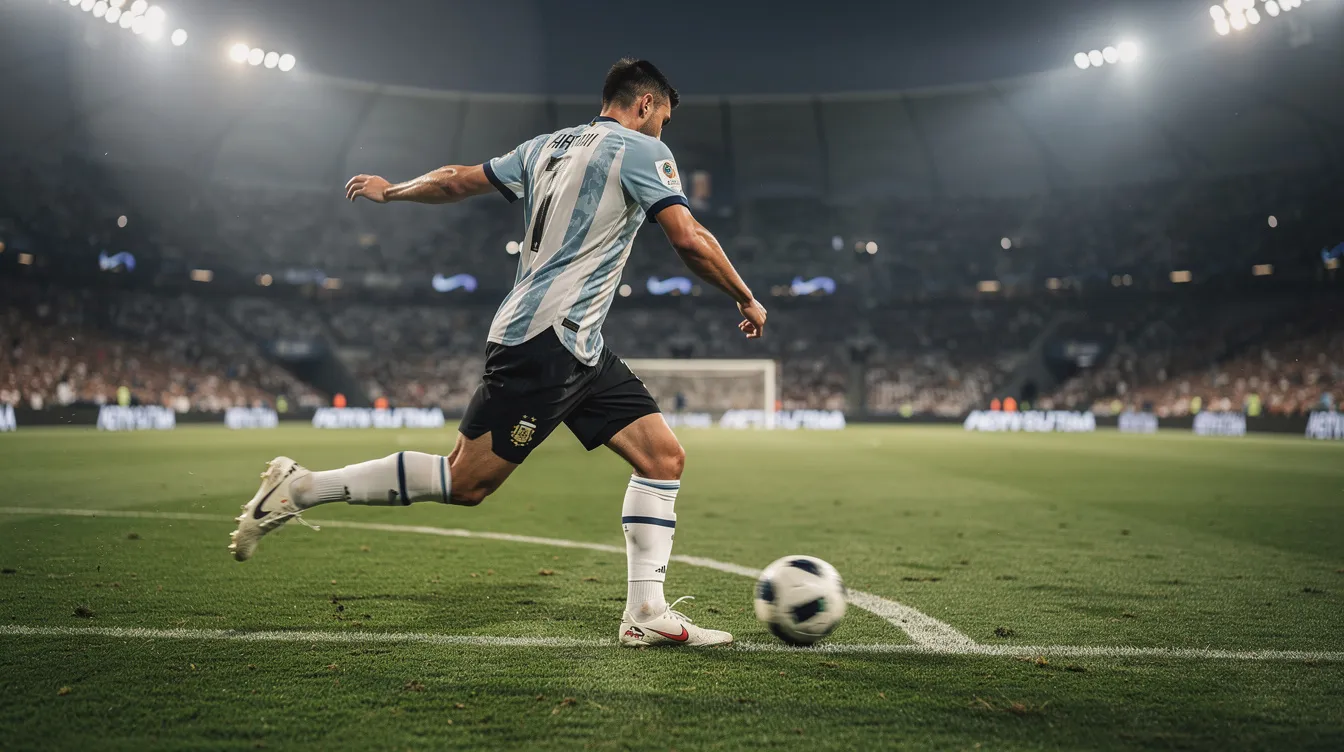
Few stories at this World Cup carry the emotional weight of the Simeones. Diego Armando Simeone was one of the great midfielders of his generation and an Argentina international at three World Cups (USA 1994, France 1998 and Korea/Japan 2002) — one of the most passionate players Latin American soccer has ever produced.
Today he is the longest-tenured head coach in the history of Atlético Madrid. And his son plays for that same club, under his direction.
Giuliano Simeone Baldini was born in Rome while his father Diego was playing for Lazio. His inclusion in the 2026 World Cup squad represents a victory in a race against time that began in August 2023, when he suffered a fractured fibula and a dislocated ankle during preseason with Alavés.
Simeone revealed messages from a 2023 family group chat in which he promised he would play in the next World Cup after that serious injury sidelined him for five months. “I’m going to play in the next World Cup,” he wrote. He kept his word. He made his debut in Argentina’s match against Jordan. “Making my World Cup debut is something incredible. I dreamed about it since I was little, and during my recovery I held on to those dreams,” he said after the match.
What makes this story special is the circle it closes: Diego Simeone played multiple World Cups for Argentina with total commitment. His son is now doing the same, in the same jersey, while searching for his own path in the game under the weight of carrying the name of “El Cholo.”
Giovanni Reyna and Claudio Reyna — United States, From 1994–2006 to 2026
The Reyna family is one of the most iconic in American soccer. Claudio Reyna had a brilliant career and was one of the best U.S. players of his generation, appearing in four consecutive World Cups: USA 1994, France 1998, Korea/Japan 2002 and Germany 2006. That kind of World Cup longevity speaks to an extraordinary career.
His son Giovanni arrived at the 2026 World Cup with a very different story. Qatar 2022 was a personal disappointment: a dispute with then-head coach Gregg Berhalter over an alleged lack of effort nearly sent him home from that World Cup.
His club career also hit significant bumps along the way. But in the tournament opener against Paraguay in Los Angeles, Reyna scored a stunning outside-of-the-boot goal with the last touch of the match in a 4-1 U.S. victory. It was also a way of earning recognition of his own, beyond the Reyna name.
Reyna’s celebration — hands cupped behind his ears — was widely interpreted as a response to all the noise that had surrounded him since the last World Cup. For Claudio, who lived four World Cups from the inside, watching his son redeem himself on the world’s biggest stage, playing on home soil, must feel especially meaningful — and a special joy after everything the family went through.
Anthony Elanga and Joseph Elanga — From Cameroon 1998 to Sweden 2026
This may be the most moving family story of the tournament from the standpoint of identity. Joseph Elanga represented Cameroon at the 1998 World Cup in France. After that tournament, he built his life in Europe — specifically in Sweden, where he played for Malmö FF. Anthony was born in Malmö in 2002, while his father was playing for that same club.
When the time came to choose a national team, Anthony had three options: Cameroon, Sweden or England. He chose Sweden — the country where he grew up, where he started playing soccer and where he became who he is. In international soccer, that decision captures a family identity spread across continents. And now, Anthony Elanga is at the 2026 World Cup with Sweden, 28 years after his father Joseph represented Cameroon at France 1998.
During the group stage, Elanga scored a crucial goal against the Netherlands and a decisive one against Japan, earning Sweden the draw it needed to advance to the next round. Father and son, two different World Cups, two different countries — the same last name and the same passion.
Luca Zidane and Zinédine Zidane — From France 1998–2006 to Algeria 2026
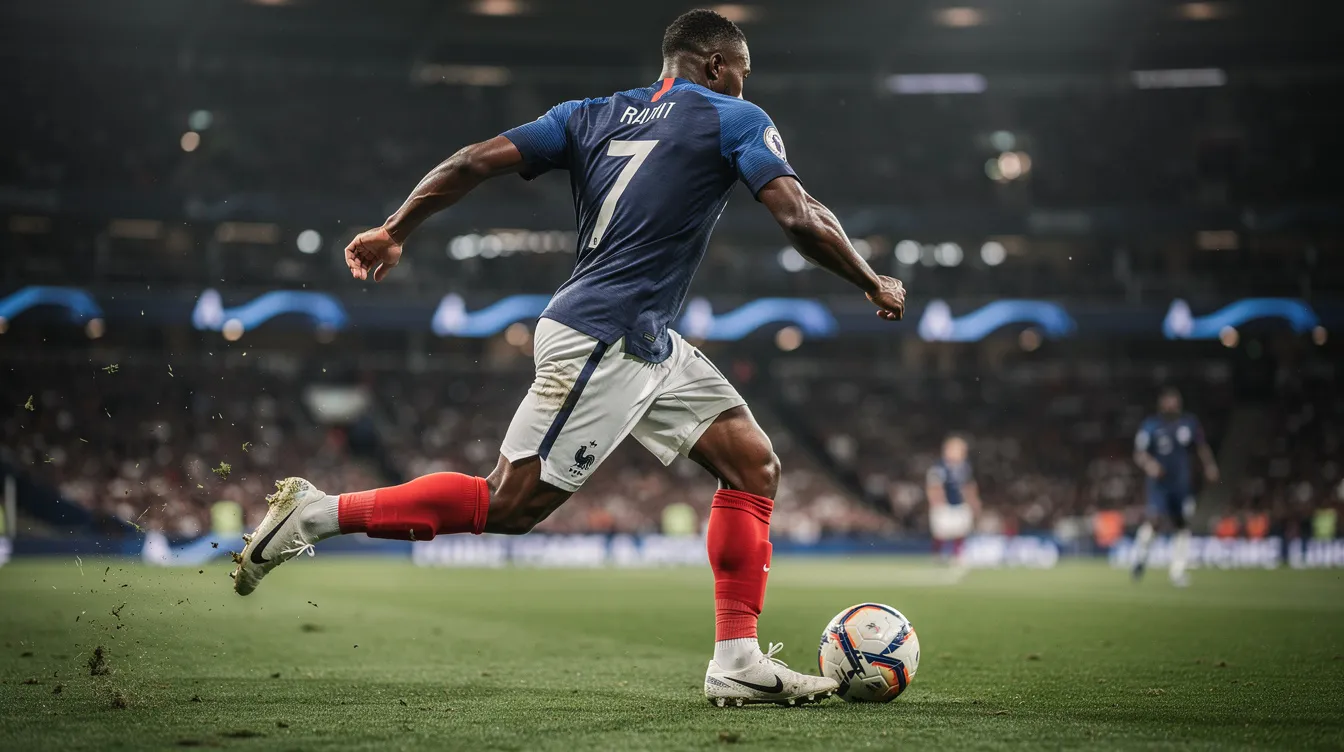
This is, without question, the family story with the greatest symbolic weight at the 2026 World Cup. Zinédine Zidane played in three World Cups for France — 1998, 2002 and 2006 — winning the first and standing as the most influential player of the 2006 tournament in Germany, where he scored a penalty in the final before being sent off for his famous headbutt.
His son Luca has arrived at the 2026 World Cup — but not with France. Luca Zinedine Zidane, born May 13, 1998, in Aix-en-Provence, plays as a goalkeeper for Algeria. Although he was born in France and grew up in Spain during his father’s time at Real Madrid, Luca chose to honor the roots of his paternal grandparents, who emigrated from Algeria to France.
FIFA approved his change of federation in September 2025, clearing him to represent Algeria. Just months before the tournament, he suffered a fractured jaw and chin and a serious concussion in a match with Granada. He decided to play in the World Cup anyway, wearing a protective mask in every match.
The symbolic twist of the story is impossible to ignore: in the first match of the group stage, Argentina beat Algeria 3-0, with Messi scoring a hat trick. Luca Zidane was the goalkeeper on the receiving end of those three goals. It was Zidane’s son in the net, facing Maradona’s successor in attack. Another chapter in the never-ending story of soccer’s great family names.
Not every son of a legend reaches the same heights: Enzo Zidane, also a son of Zinédine Zidane, never matched his father’s level; Jordi Cruyff never equaled the achievements of his father, Johan Cruyff; and Justin Klinsmann has not stood out the way his father, Jürgen Klinsmann, once did. A famous last name can open doors — yet it guarantees neither the same impact nor an escape from comparisons, as Timothy Weah, who has not reached his father’s level of recognition, also shows.
A Family Legacy in Soccer Isn’t Inherited — It’s Earned
Being the son of a great soccer player is, in equal parts, an advantage and a burden in a sport that amplifies every comparison. The advantage is obvious: access from an early age to coaches, facilities and knowledge that others don’t have. The burden is just as obvious: the last name arrives before the player does, and making a name of your own beyond it isn’t always easy.
What the stories of these six players — Nico Paz, Erling Haaland, Giuliano Simeone, Giovanni Reyna, Anthony Elanga and Luca Zidane — demonstrate is that a family legacy in soccer isn’t inherited automatically. There are other families who have carried that weight and turned it into championships, like the Schmeichels, another example of how a last name can stay relevant across generations.
The Maldini family spans three generations of soccer players, and Paolo Maldini is considered by many one of the greatest defenders in the history of the game. That bloodline holds an elite place in soccer’s family lore. Lilian Thuram was a world champion in 1998, and his sons followed his path to leave a mark of their own.
The Alcántara brothers, Thiago and Rafinha, came up through FC Barcelona’s academy, where their recognition began in the formative stages of a youth system that has produced so many stars. These are cases that show how certain family legacies only endure when talent finds the space to grow.
There have also been other illustrious names capable of extending that tradition without repeating the exact same story — with everything that comes with growing up among expectations, comparisons and opportunities.
The last name opens the door. What happens next depends entirely on the heir: a place among the elite is earned on the field, not passed down.