



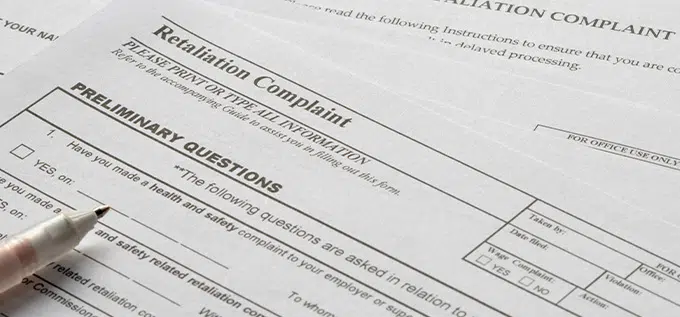

Retaliation at work happens when an employer punishes a worker for asserting legal rights—like reporting discrimination, unpaid wages, unsafe conditions, or harassment. Under federal law and many state law protections, this kind of punishment is illegal. Employer retaliation laws exist to ensure workers can speak up without fear of losing their jobs or facing other consequences.
Major federal statutes including title vii of the Civil Rights Act of 1964, the ADA, ADEA, fair labor standards act, FMLA, and OSHA whistleblower provisions all prohibit retaliation. Los Defensores is a legal advertising service that connects Spanish-speaking workers with independent employment and personal injury attorneys for a free consultation in Spanish.
This article provides general educational information and does not constitute legal advice for any specific situation. This content does not constitute legal advice and should not be relied upon as a substitute for consultation with a qualified attorney.
Quick Answers: Is Retaliation at Work Illegal and What Should I Do First?
Yes, it is generally illegal for your employer to punish you for filing a complaint about discrimination, unpaid wages, safety problems, or other protected issues. Work retaliation can include firing, cutting hours, purposefully changing your work schedule, or verbal or physical abuse.
First steps to take:
- Write down what happened (dates, names, witnesses)
- Save texts, emails, and salary information
- Do not quit impulsively
- Seek a legal consultation immediately
Time limits apply—some claims must be filed within 30–300 days. Contact Los Defensores 24/7 for a free, confidential consultation in Spanish, regardless of immigration status.
What Is Retaliation Under Employment Law?
Under employment law, retaliation occurs when an employer takes an adverse action against an employee because that employee engaged in a protected activity. This definition applies across many forms of workplace disputes.
Protected activity examples:
- Filing an internal complaint about alleged harassment or employment discrimination
- Reporting unpaid overtime or minimum wage violations to the Department of Labor
- Requesting FMLA leave for family responsibilities or a family member’s health
- Reporting a safety hazard to OSHA regarding occupational safety concerns
- Supporting a co workers’ discrimination claim or harassment answering questions during an employer investigation
Adverse action examples:
- Termination, demotion, or suspension
- Moving someone to a less desirable position or desirable position on worse shifts
- Cutting hours or pay as punishment
- Threats about reporting immigration status
- Employers who spread false rumors or false rumors about performance
- Negative performance evaluation after a complaint
The law focuses on whether a reasonable employee would be discouraged from speaking up. Retaliation can be illegal even if your original complaint turns out to be mistaken, as long as you had a reasonable belief it was true.
Major Federal Employer Retaliation Laws
Multiple federal laws protect workers against retaliation, each covering different rights:
| Law | Year | What It Protects |
|---|---|---|
| Title VII | 1964 | Opposes discrimination based on race, color, religious practice, sex (including sexual advances, pregnancy), national origin |
| ADA | 1990 | Protects those requesting accommodation for disabilities |
| ADEA | 1967 | Covers age discrimination complaints for workers 40+ |
| EPA | 1963 | Bars retaliation for raising concerns about unequal pay, helping uncover potentially discriminatory wages or potentially discriminatory wages based on sex |
| FLSA | 1938 | Protects complaints about minimum wage, overtime, misclassification |
| FMLA | 1993 | Bans punishment for using medical leave |
| OSHA | 1970+ | Protects safety hazard reports under particular law provisions |
Many laws apply to employers with 15+ employees, but FLSA protections can apply to smaller employers. Consult an attorney to identify which laws apply to your case.
Common Examples of Illegal Retaliation at Work
Retaliation can be obvious or subtle—both can be unlawful. Here are real-world example scenarios:
- A warehouse worker is terminated two weeks after reporting a back injury and requesting workers’ compensation
- A restaurant cook’s hours are cut in half after filing a complaint about unpaid overtime
- A hotel housekeeper faces the worst shifts and daily yelling after discrimination resisting sexual advances or alleged harassment refusing to comply with inappropriate requests
- A construction worker receives threats about “la migra” after reporting unsafe scaffolding—a possible violation of OSHA rules
- An office employee is denied promotion and receives unfairly negative evaluations after filing with the equal employment opportunity commission
Retaliation doesn’t need to be immediate. It can happen weeks later, but timing remains important evidence. When employer acts with non discriminatory reasons as excuses, a lawyer can analyze documents to uncover pretext and oppose discrimination effectively.
Who Is Protected by Employer Retaliation Laws?

Most workers in the U.S. are protected from retaliation in some way, including part-time, temporary, and even undocumented workers in certain situations.
Protection extends to:
- Current employees, job applicants, and former employees
- Workers in construction, factories, restaurants, agriculture, home health care
- A person’s spouse or family member negatively affected by workplace retaliation in some cases
Immigration status often does not remove protections for reporting safety hazards, wage theft, or discrimination. Specific remedies may vary, so speak with an attorney confidentially. Title VII and ADA require 15+ employees, while FLSA protections apply to employers regardless of size in many cases. Public sector workers often have additional whistleblower protections.
How to Prove a Retaliation Claim
A retaliation claim typically requires three elements:
- Protected activity: Show you complained—through email, HR report, lawsuit communicating concerns, or verbal complaint
- Adverse action: Document the negative treatment—termination letter, schedule changes, increase scrutiny, written warnings
- Causation: Connect the two—close timing, sudden negative impact on reviews, inconsistent employer explanations
Good documentation is critical. Save dates, copies of timesheets, medical notes, text messages, and witness names. Even if your employer later corrects such consequences (like reversing a suspension), the original action can still be unlawful if it would discourage a reasonable worker. Seek early consultation to preserve evidence.
Deadlines and Where to File a Retaliation Complaint
Time limits in retaliation cases can be extremely short:
- Title VII/ADA/ADEA retaliation: Generally 180 days to file with EEOC (300 days in some states)
- OSHA whistleblower claims: Often just 30 days under certain statutes
- FLSA wage retaliation: 2-3 years for court filing, but agency procedures may be shorter
- State law claims: Varies by state (180 days to 3 years)
Where to file:
- EEOC for employment discrimination proceedings and related protected activity complaints
- DOL Wage and Hour Division for wage violations
- OSHA for occupational safety whistleblower issues
- State labor agencies depending on local laws
Meeting deadlines is complex. Contact an attorney quickly to avoid losing rights.
Remedies and Compensation for Victims of Retaliation
Workers who prove unlawful retaliation can recover money and other related protected activity relief:
- Back pay for lost wages from termination to judgment
- Reinstatement or front pay if returning is unsafe
- Compensation for emotional distress
- Punitive damages if employer retaliated with especially reckless conduct
- Attorney’s fees and court costs
- Policy changes, training, or removal of negative evaluations from files
Remedies differ under each law. An attorney can help estimate realistic outcomes based on evidence.
Special Issues: Workplace Injuries, Wage Theft, and Immigrant Workers
Many workers in the Hispanic community face retaliation tied to workplace injuries, dangerous working conditions, unpaid overtime, and threats involving immigration.
Workers who file workers’ compensation claims after accidents—like back injuries from warehouse lifting or physical abuse from unsafe equipment—fear being fired. Many state laws specifically prohibit retaliation for workers’ comp claims. Wage theft cases involving no overtime or below-minimum wages are frequent sources of retaliation when workers complain. The complaint process can feel intimidating.
Undocumented workers retain rights to a safe workplace and payment for hours worked. Threats related to reporting immigration status can constitute illegal retaliation. Consultations with attorneys are confidential, and many lawyers understand these concerns. Don’t let fear silence you from reporting a violation that affects overall employee morale and employee morale across your workplace.
How Los Defensores Can Help If You Suspect Retaliation

Los Defensores is a national legal advertising service that connects Spanish-speaking individuals with independent employment and personal injury attorneys in our network.
How it works:
- Call or fill out an online form in Spanish describing what happened
- Trained staff gather information and connect you with an attorney
- Speak with the attorney in Spanish, usually the same day, for a free consultation
Contact us regardless of immigration status, job type, or documentation. If you suspect your employer took action to terminate workers, punish you, or engage in other acts of retaliation after a workplace injury, discrimination complaint, or wage dispute—reach out now for “Consulta gratis” to learn your options.
Frequently Asked Questions About Employer Retaliation Laws
Such retaliation is usually illegal under wage laws like the fair labor standards act.
Timing and inconsistencies can reveal pretext. An attorney can analyze whether these are truly non retaliatory explanations or future discrimination prevention tactics.
Verbal complaints can be protected activity, but written proof is easier to establish.
Many protections apply regardless of immigration status.
Constructive discharge may apply if conditions were intolerable. Quitting doesn’t always destroy a claim.
Deadlines can be as short as 30 days. Act quickly to protect your rights.
If you believe you have experienced workplace retaliation, you may have legal rights worth exploring. Contact Los Defensores to be connected with an independent attorney in their network.
This content was created with AI assistance and reviewed for accuracy. This article provides general educational information and does not constitute legal advice for any specific situation. This content does not constitute legal advice and should not be relied upon as a substitute for consultation with a qualified attorney.