



If your car begins to fail on a highway, stay calm, turn on your hazard lights, ease off the accelerator and move toward the nearest safe location if the vehicle can still be driven. Once stopped, whether you should remain inside or exit depends on where the vehicle is located and the dangers around it.
If the vehicle is completely outside the travel lanes and there is no smoke, fire or fuel leak, remain buckled, lock the doors and call for assistance. If the vehicle is blocking traffic or you are in immediate danger, call 911 and follow the dispatcher’s instructions. Do not cross active traffic lanes to reach safety.
Quick steps to take the moment your car breaks down
When a car breaks down at highway speed, particularly in rain or low visibility, every second counts. Prioritize safety above everything else.
Before a vehicle breaks down completely, you may notice warning signs:
- Loss of engine power or the car pulling to one side
- Steering becoming unusually heavy
- Dashboard warning lights (temperature, battery, check engine)
- Smoke or steam from under the hood
- Strange grinding, popping, or hissing noises
The moment you sense trouble, stay calm and keep a firm grip on the steering wheel. Avoid braking suddenly. Instead, ease off the accelerator and allow the vehicle to slow gradually whenever traffic conditions permit. Turn on your hazard lights immediately so other drivers behind you have a visual warning.
If the vehicle can still move, signal and steer smoothly toward the nearest safe location outside the travel lanes. Check your mirrors and blind spots, and avoid sudden lane changes. If the vehicle stops in an active travel lane and cannot move, turn on the hazard lights, call 911 and follow the dispatcher’s instructions.
How to pull over and position your vehicle safely
If the vehicle can still move, signal and steer toward the nearest safe location outside the travel lanes. This may be the right shoulder, a left shoulder, an exit, a rest area or another protected location. Do not make sudden lane changes or cross several lanes when doing so would create an additional risk.
Pull as far away from moving traffic as reasonably possible. Avoid stopping on a curve, bridge or narrow shoulder when a safer location is within reach.
Once safely stopped:
- Turn on the hazard lights.
- Shift an automatic vehicle into Park or leave a manual vehicle in gear.
- Apply the parking brake.
- Turn off the engine if the vehicle is overheating or you notice smoke, flames, unusual odors or a possible mechanical failure.
- Avoid standing directly in front of or behind the vehicle.
If the vehicle cannot leave an active lane, do not attempt to push it through moving traffic. Call 911 and follow the dispatcher’s instructions.
Using hazard lights and visibility tools
Making the disabled vehicle visible can help approaching drivers recognize the danger sooner. Keep the hazard lights on while you wait for assistance.
You may raise the hood to signal that the vehicle is disabled, but only if you can do so without standing near moving traffic and there are no signs of fire under the hood. Do not open the hood if you believe the vehicle is burning.
If you carry reflective triangles, place them only when you can safely walk along the shoulder without entering an active lane. Follow the manufacturer’s instructions and applicable state law, since recommended placement may depend on the road, speed and type of vehicle.
Do not use a flame-producing road flare if you see or smell leaking fuel. Never stand directly in front of or behind the disabled vehicle while placing warning devices.
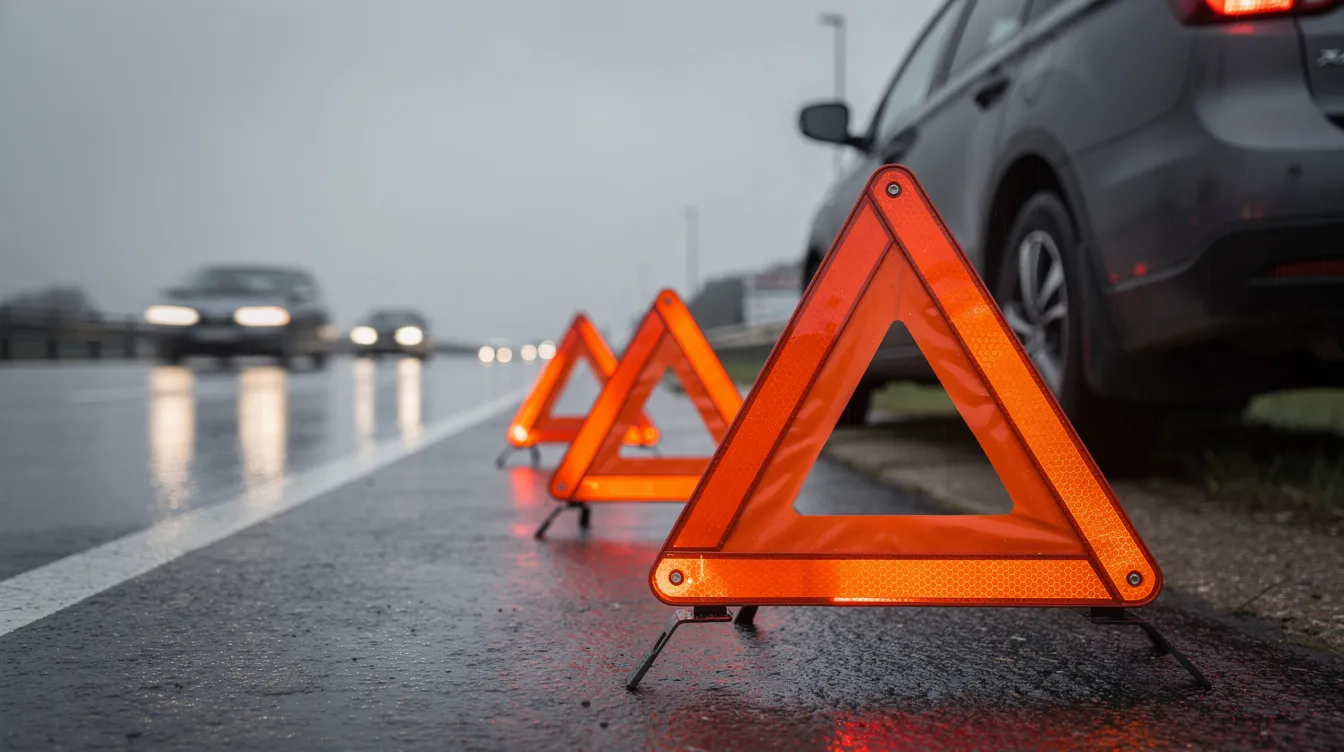
Staying inside or moving to a protected location
Remain inside with your seatbelt fastened when the vehicle is completely outside the travel lanes, there is no fire, smoke or fuel leak, and staying inside appears safer than walking near traffic. Keep children secured in their car seats while you wait for help.
Exit only when remaining inside presents a greater danger or when emergency personnel instruct you to do so. When possible, leave through the side facing away from traffic and move to a protected area, such as behind a guardrail. Never cross active highway lanes.
If the vehicle is stopped in a travel lane, call 911 immediately. Follow the dispatcher’s instructions rather than attempting to push the vehicle or make repairs in traffic.
If someone may have a serious neck, back or other injury, avoid unnecessary movement unless remaining in place creates an immediate danger.
Who to call: 911, roadside assistance, and towing services
Knowing whom to contact can help you get the appropriate assistance. Identify your location using a mile marker, exit number, GPS coordinates or a nearby landmark. Call 911 when the breakdown creates an immediate danger. If the vehicle is safely outside the travel lanes and no one is injured, contact roadside assistance, your insurance provider or a towing service.
Call 911 when:
- Your vehicle is stopped in an active travel lane.
- Someone is injured or needs medical assistance.
- You see flames, dense smoke or a serious fuel leak.
- The vehicle is blocking traffic or creating an immediate risk of a crash.
- Another person is threatening you or creating an immediate danger.
- You cannot reach a safe location without assistance.
Call roadside assistance when:
- The vehicle is safely outside the travel lanes.
- No one is injured and there is no immediate danger.
- You have a flat tire, a dead battery or have run out of fuel.
- You need a tow to a repair facility.
- You need basic mechanical assistance that can be provided safely.
Many insurance companies offer optional roadside assistance coverage. Depending on the plan, it may provide towing, battery service, fuel delivery, help with a flat tire or other basic roadside assistance. Review your policy to understand which services and limits apply.
Save important numbers in your phone and keep a paper list in the glove box: your insurance company’s roadside assistance line, a trusted local towing company, family contacts, your state’s highway assistance number, and a service that can connect you with trusted legal help, such as Los Defensores.
Handling specific breakdowns: flat tire, dead battery, and engine failure
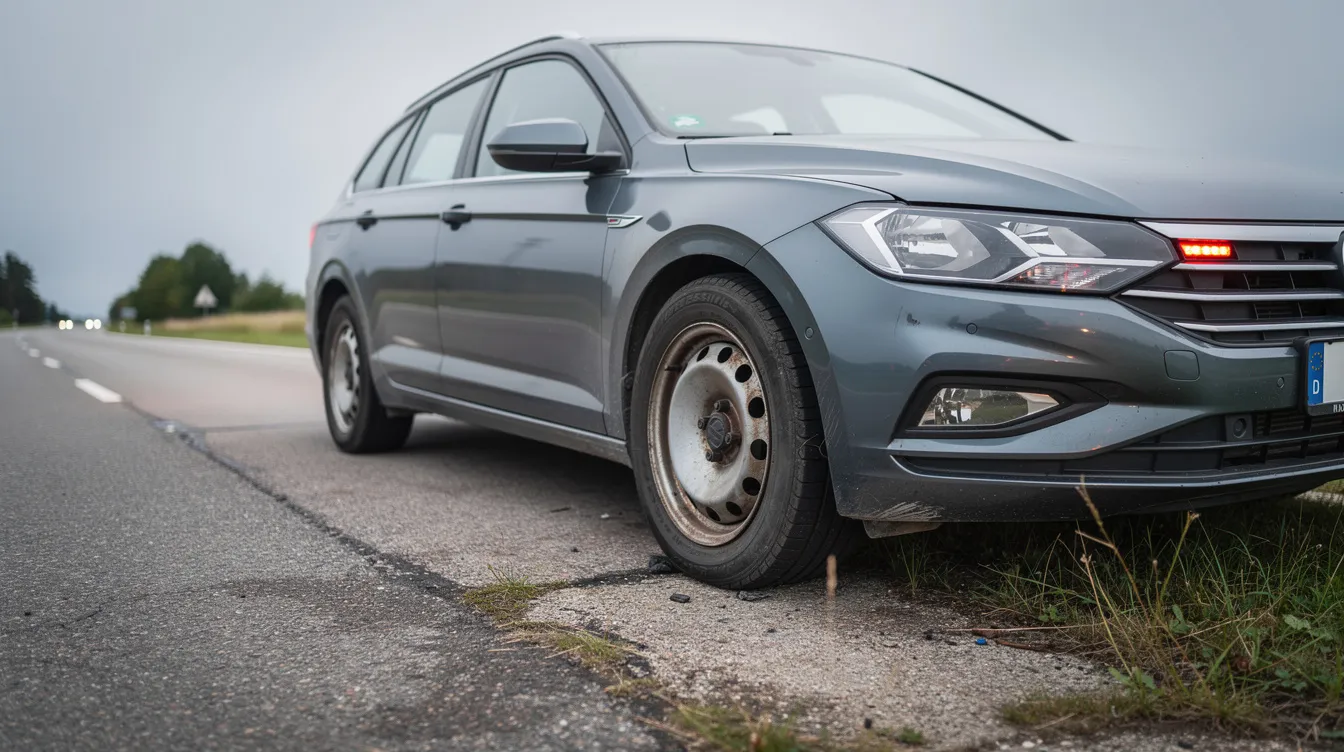
Not every vehicle breaks down the same way. The response may differ depending on whether you are dealing with a flat tire, a dead battery, or sudden engine failure – and bad weather like rain makes each scenario more challenging.
Flat tire at highway speed:
A tire blowout may cause vibration or make the vehicle pull to one side. Hold the steering wheel firmly with both hands and avoid sudden braking or steering. Maintain your speed briefly if it is safe to do so, then gradually release the accelerator. Once the vehicle is stable and under control, signal, slow down and move toward a safe location outside the travel lanes.
Changing a tire on a highway shoulder can be dangerous. Attempt it only when the vehicle is completely outside the travel lanes, the surface is stable and you can work without being exposed to moving traffic. Otherwise, request roadside assistance.
Dead battery or charging system failure:
A dead battery usually prevents a vehicle from starting. If the battery or charging-system warning light appears while you are driving, or if lights and other electrical systems begin to fail, the problem may involve the alternator, battery, wiring or another part of the charging system.
Turn off nonessential electrical equipment, move to a safe location and request roadside assistance. Follow the jump-starting instructions in the owner’s manual rather than assuming that every vehicle uses the same procedure.
Engine failure:
If the temperature warning light appears or steam comes from under the hood, move to a safe location as soon as possible and turn off the engine. Allow the engine to cool completely. Never remove the radiator or coolant-system cap while the engine is hot, because pressurized coolant can cause serious burns. Consult the owner’s manual or wait for roadside assistance.
Possible vehicle fire or fuel leak:
If you see flames or dense smoke, smell a strong fuel odor or believe the vehicle may be on fire, pull over as soon as it is safe, turn off the engine and get everyone out. Move at least 100 feet away from the vehicle and well away from traffic, then call 911.
Do not return to the vehicle, attempt to fight the fire or open the hood or trunk. Opening a compartment may provide additional oxygen and cause the fire to grow.
After a breakdown-related crash or injury: documentation and legal help
Sometimes a car breaks down and another driver collides with it, leading to injuries such as whiplash, back injuries, or other harm. If a crash occurs, calling 911 and getting medical attention come first.
Once it is safe, consider documenting the scene:
- Photograph vehicle positions, damage, skid marks, and lane markings
- Note weather conditions and any road hazards
- Gather license plates, insurance details, and contact information from other drivers and witnesses
Keep copies of police reports, towing bills, medical visit records, and work absence notes. These documents may be important later in an insurance claim or potential legal case.
A person injured in a crash involving a disabled vehicle, defective component or dangerous road condition may have legal options. The availability and potential value of a claim depend on the circumstances, available evidence and applicable state law.
Preventing future highway breakdowns and staying prepared
Some breakdowns can be reduced with regular maintenance and preparation, especially before long trips during rainy seasons or extreme heat. Breakdowns can affect vehicles of any age, but regular maintenance may reduce the risk of being stranded. Follow the manufacturer’s recommended maintenance schedule and have the battery, tires, fluids, belts, hoses and other essential systems inspected before a long trip.
Routine maintenance checklist:
- Regular oil changes and coolant level checks
- Inspecting belts, hoses, and brake pads
- Battery testing, especially before extreme seasons
- Measuring tire tread depth and checking tire pressure monthly
- Looking for nails or sidewall damage that could cause a flat tire at speed
Prepare an emergency kit and keep it in the trunk:
- Reflective triangles or non-flame emergency beacons, and a flashlight with fresh batteries
- Jumper cables and a manufacturer-approved tire inflator or sealant
- Basic first-aid kit, bottled water, and non-perishable snacks
- A phone charger or power bank
- A paper list of emergency contacts
Drivers on rural stretches or storm-prone interstate routes may also want to add blankets. Review your insurance and vehicle warranty documents to understand existing roadside coverage, and consider adding a program if it fits your budget and driving habits.
Even careful preparation cannot remove every risk. But planning ahead and knowing what to do if your vehicle breaks down can make a stressful situation in the middle of a highway safer and more manageable.
If you or a loved one was injured in a crash involving a disabled vehicle, Los Defensores can help connect you with an independent attorney in its network to request a free, confidential consultation.
This content was created with the assistance of AI and is provided for general informational purposes only. It does not constitute legal advice. For guidance specific to your situation, please consult with a licensed attorney.