



Every person becomes a pedestrian at some point during the day – stepping out of a vehicle, walking through a parking lot, or crossing the street to catch a bus. Pedestrian safety is a shared responsibility, and understanding practical pedestrian safety tips can help both drivers and walkers reduce risk in everyday situations.
The numbers show why this matters: 7,080 pedestrians were killed in traffic crashes in 2024, meaning a pedestrian was killed every 74 minutes that year. Over 18% of all traffic deaths in 2024 were pedestrians. Staying alert and learning to avoid distractions – whether you are walking or driving – can help you avoid injury at busy streets, intersections, and parking lots.
Pedestrian Safety Overview: Shared Responsibility on the Road
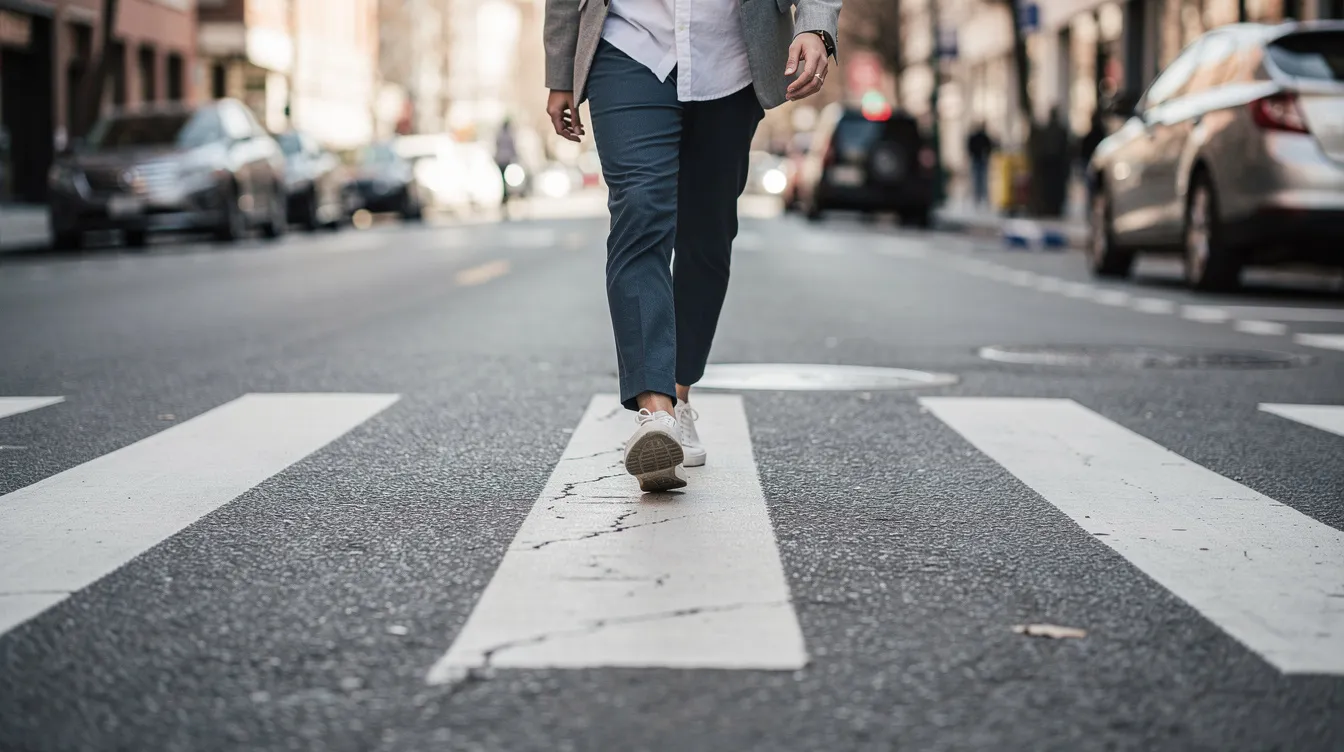
Traffic safety involves everyone on the roadway – drivers, walkers, people using wheelchairs, strollers, and mobility devices. Pedestrians share responsibility for their safety on roads, just as drivers do. Both drivers and pedestrians must follow established traffic rules, obey signs and signals, and treat the rules of the road as the shared baseline for safe, predictable movement.
Pedestrian safety relies on mutual awareness and predictability. Improving urban safety is a shared responsibility among all road users. Continuous, well-maintained sidewalks improve pedestrian safety, while creating physical buffers separates walkers from traffic.
Infrastructure improvements – like installing enhanced crossings near transit stations and schools – can reduce crashes by making streets more forgiving of errors. Implementing public awareness campaigns and supporting educational outreach to teach shared responsibilities on the road also help.
Weather, poor lighting, and missing medians increase risk and call for extra caution. After a serious pedestrian accident, victims sometimes explore legal options for medical bills, lost wages, and pain-related damages with an attorney.
Key Pedestrian Safety Tips for Walkers: Obey Traffic Signals
These safety tips focus on how walkers can stay safe by avoiding distractions and making smarter choices. Distractions increase the risk of pedestrian injuries, so stay alert at every crossing.
- Walk on a sidewalk when available. If there is no sidewalk – including on a private road – walk facing traffic so you can see oncoming cars.
- Cross streets at marked crosswalks or intersections. Walkers should use designated crosswalks and make eye contact with drivers before stepping off the curb. Wait for traffic signals and give yourself enough time to cross safely.
- Look left, right, and left again before crossing streets. Never assume a driver sees you.
- Stay off devices. Avoid cell phone use while walking, and avoid distractions like texting or scrolling. Wearing earbuds while walking can lead to dangerous distractions because you lose critical sounds of approaching vehicles.
- Use bright, light-colored clothing to increase visibility during the day. At night, wear bright clothing or reflective gear and carry a flashlight to improve visibility. Thirty-two percent of pedestrian fatalities occur between 8 p.m. and midnight, so stick to well lit areas when possible.
- Watch for cars entering or exiting driveways, and check for vehicles backing out of parking spaces. Be extra cautious near construction zones, school zones, bus stops, and multi-lane roads where vehicles may block sight lines.
- Older adults or anyone who feels unsteady should consider walking with a companion or using mobility aids, and take extra caution on busy streets at night.
Pedestrian Safety Tips for Drivers
Driver awareness is critical to keeping pedestrians safe. Here are tips every driver should follow:
- Reduce speed in school zones, residential neighborhoods, and areas with heavy foot traffic. Establish and enforce speed limits of 25 mph or lower in pedestrian-heavy areas. Traffic calming measures reduce vehicle speeds and pedestrian crashes.
- Drivers must eliminate distractions and observe speed limits. Stay off your cell phone, avoid adjusting navigation, and do not eat while driving through areas with frequent crosswalks.
- Drivers must yield to pedestrians in crosswalks. Wait until walkers fully clear the lane, and never pass vehicles stopped at a crosswalk – they may be yielding to someone you cannot see.
- Drivers should watch for pedestrians at all times, especially near parked cars where children might step into the roadway. Scan intersections, bus stops, and driveways carefully.
- When exiting driveways, alleys, or parking lots, come to a complete stop. Check mirrors and blind spots slowly because pedestrians – especially kids – may be in your path.
- Never drive impaired. Alcohol or drug use slows reaction times and increases crash likelihood.
- Modern vehicle technologies, like automatic emergency braking, can help reduce collisions with pedestrians, but they do not replace attentive driving.
Pedestrian Safety for Children and Teens
Children and teens face unique pedestrian risks at every age. In 2024, 48 children aged 5 to 9 died as pedestrians, a reminder of how vulnerable young walkers are.
- Children under 10 should cross streets with an adult. Teach kids the “stop, look left-right-left, and listen” routine before every crossing. They should cross only at corners or crosswalks – never between parked cars – and wait for walk signals and for traffic to come to a complete stop.
- Maintain at least 10 feet from a school bus when entering or exiting, and watch for kids darting around the bus.
- For teens, distracted walking is a growing concern. Using a phone, gaming, or listening to loud music while crossing busy streets or walking near parking lots reduces awareness. Encourage teens to obey signs, use crosswalks, and make eye contact with drivers.
- Walk common routes together as a family – paths to school, parks, or bus stops – to point out safe crossing points, blind spots, and directions to follow.
After a crash involving a child pedestrian, parents sometimes seek guidance from personal injury attorneys about medical expenses and long-term care needs.
Common Pedestrian–Vehicle Crash Scenarios to Watch For
Understanding common crash types helps both drivers and walkers anticipate risk and improve traffic safety.
- Right on red: A vehicle turning right while a pedestrian has the walk signal. Drivers may be focused on traffic gaps, not the crosswalk.
- Left turns at intersections: Drivers watching oncoming traffic may not see a pedestrian crossing the street.
- Mid-block crossings: Pedestrians stepping out from between parked vehicles on multi-lane roads catch drivers off guard.
- Backing vehicles: Cars backing out of driveways or parking spaces are a frequent source of pedestrian crashes, especially involving children.
- Nighttime crashes: Improved street lighting increases pedestrian visibility at night, and upgrading and maintaining street illumination at crossings helps, but walkers should still wear light or reflective gear.
- High-risk locations: Busy urban corridors, near transit stops, near bars, and around large events.
In all scenarios, stay aware, slow down, stay off your phone, and assume the other party may not see you.
If a collision occurs, documenting the scene with photos, gathering witness names, and getting medical care promptly can help if you later consult an attorney.
What to Do After a Pedestrian Accident
If you are involved in a pedestrian collision, staying calm and following clear steps can protect both your health and your options.
- Move to a safe location if possible. Call 911 for medical help and request police to document the incident.
- Exchange contact and insurance information with the other party. Take photos or videos of the scene, crosswalks, traffic signals, vehicle positions, and visible injuries when it is safe to do so.
- Seek medical evaluation even if injuries seem minor. Pain from issues like whiplash, soft tissue injuries, or head trauma may appear days later.
- Keep records of all medical bills, prescriptions, and missed work.
Victims may have potential personal injury claims related to medical bills, lost income, and pain-related effects, which they can discuss with an attorney. Results vary based on the facts of each case.
How Los Defensores Helps After Serious Pedestrian and Traffic Accidents
If you or a family member was injured as a pedestrian or in a traffic crash and you are now researching legal options, Los Defensores may be able to help.
Los Defensores serves Spanish-speaking individuals across the U.S. who experience accidents such as pedestrian collisions, accidentes automovilísticos, accidentes de trabajo, or other lesiones personales. You can contact Los Defensores in Spanish to be connected with independent personal injury or workplace injury attorneys who offer free initial consultations.
Potential cases can involve issues like medical treatment, wage loss, long-term recovery, or rights at work after an injury – including derecho laboral and despido injustificado concerns. Attorneys in the Los Defensores network, not Los Defensores itself, evaluate claims, explain legal options, and handle any representation.
If you were injured as a pedestrian or driver in a crash, reach out via phone or online form. Consulta gratis ahora – Habla con un abogado hoy. Note that clients may be responsible for certain legal costs depending on fee arrangements with their attorney. Results vary.
This content was created with the assistance of AI and is provided for general informational purposes only. It does not constitute legal advice. For guidance specific to your situation, please consult with a licensed attorney.