



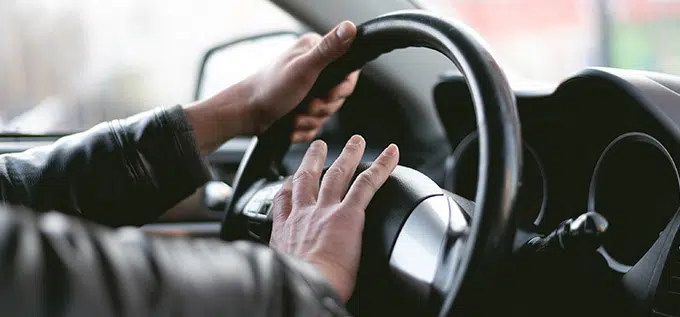

An aggressive driver can turn an ordinary trip into a frightening and dangerous situation. If another driver is aggressive, your safest response is to stay calm, avoid confrontation, create distance between vehicles, and call law enforcement if the behavior escalates or becomes dangerous. Tailgating, repeated honking, unsafe lane changes and threatening gestures can increase the risk of a serious crash.
This guide explains how to stay safe during an aggressive driving encounter, when to call 911, what to do if the driver follows you and which steps to take if road rage causes a crash.
Stay calm and focus on safety
When another driver acts aggressively, it is normal to feel angry, anxious or insulted. Responding emotionally, however, can make an already dangerous situation worse, so do not engage with the other driver through eye contact, hand gestures or any other reaction.
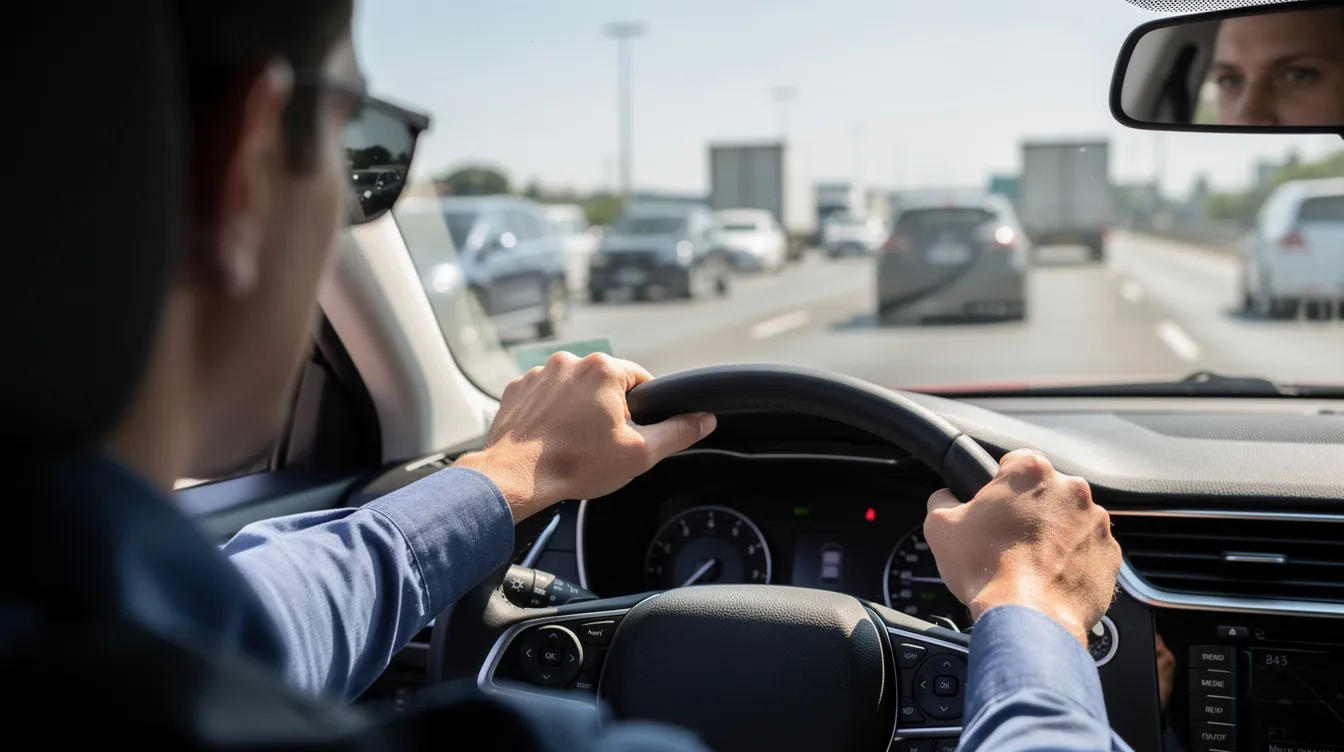
Keep both hands on the wheel, watch the road and continue driving in a predictable manner. Avoid sudden braking, sharp turns or rapid acceleration unless those actions are necessary to prevent a crash.
Keep your doors locked and remain inside your vehicle. Do not lower your window to argue or attempt to communicate with the other driver.
Your goal is not to prove that you were right. It is to get away safely.
Do not confront the other driver
Do not stop to argue, exchange insults or “settle” the disagreement. Do not get into tit-for-tat behavior with angry drivers, because that can escalate the situation quickly when someone is already angry or behaving unpredictably.
To help de-escalate road rage and avoid making things worse, avoid:
- Making rude gestures.
- Yelling through the window.
- Staring at the other driver.
- Following the vehicle.
- Blocking the driver from passing.
- Getting out of your car.
- Displaying a weapon.
- Attempting to record the driver while you are operating the vehicle.
Do not hold your phone to take photographs or video while driving. If a passenger can safely record information without distracting you, that may be an option. Otherwise, wait until you are safely stopped.
Create distance between the vehicles
Putting distance between you and the aggressive driver increases your safety on the road and gives you more time to react.
When it is safe, let the other vehicle get ahead or move past so you can get away from it; in many cases, that space means problem solved.
- Move out of the passing lane.
- Allow the other vehicle to pass.
- Change lanes using your signal.
- Gradually reduce your speed without braking suddenly.
- Take an exit or turn onto a busy, well-lit road.
- Maintain enough space between your vehicle and the one ahead.
Do not speed up to prevent the other driver from passing. Avoid racing, swerving or making abrupt lane changes.
If someone is following too closely, do not “brake-check” the vehicle. Sudden braking may cause a rear-end collision and could place other drivers at risk.
Avoid retaliating
Responding to aggressive driving with more aggressive driving can escalate the other driver’s aggression and turn a tense encounter into a serious accident.
Do not:
- Cut the driver off.
- Block the driver from merging.
- Drive alongside the vehicle to argue.
- Swerve toward the other lane.
- Follow the driver after the immediate danger has passed.
- Speed up, block the vehicle or use your brakes to “teach the driver a lesson.”
Instead, drive at a safe and lawful speed, remain within your lane and use your turn signals early.
If you notice that your own anger is increasing, take slow breaths and focus on the road ahead. Turning down loud music and reminding yourself that reaching your destination safely is more important than responding can also help.
What is the difference between aggressive driving behaviors and road rage?
Aggressive driving may include unsafe behaviors such as:
- Tailgating.
- Excessive speeding.
- Weaving through traffic.
- Ignoring traffic signals.
- Preventing another vehicle from merging.
- Repeatedly using the horn or high beams to intimidate someone.
Road rage generally refers to more extreme conduct directed at another person. It may include threats, attempts to force a vehicle off the road, deliberate collisions, throwing objects or physical confrontation.
Regardless of the label, treat threatening behavior seriously and focus on leaving the situation safely.
What to do if the aggressive driver follows you
Do not drive home if you believe an aggressive driver is following you. You should also avoid driving to your workplace, a child’s school or another location that would reveal where you or your family can be found.
Instead:
- Keep the doors locked and windows closed.
- Call 911 if you believe you are in immediate danger.
- Tell the dispatcher your location and direction of travel.
- Follow the dispatcher’s instructions.
- Drive toward a busy, well-lit public area. Do not stop to confront the other driver.
- Do not stop in an isolated parking lot or on a dark side street.
If you know where the nearest police station is and can reach it safely, drive toward it or another busy public place. Do not make sudden or dangerous maneuvers to get there.
If the driver approaches your vehicle while you are stopped, remain inside with the doors locked. Do not get out to confront the person. If you need to pull over, choose a safe, populated place where other people are nearby rather than stopping where the other driver can approach you.
When should you call 911?

Call 911 when an aggressive driver creates an immediate danger or threatens someone. Reporting dangerous driving to the authorities can also help protect others on the road.
Examples may include a driver who is:
- Trying to force another vehicle off the road.
- Deliberately striking or attempting to strike another vehicle.
- Swerving dangerously across several lanes.
- Following and threatening you.
- Blocking your vehicle to prevent you from leaving.
- Displaying or threatening to use a weapon.
- Creating an immediate risk of a serious collision.
When speaking with the dispatcher, provide whatever information you can observe safely:
- Your current location.
- The road and direction in which you are traveling.
- Nearby exits, intersections or landmarks.
- The vehicle’s color, make and model.
- Part or all of the license plate.
- A description of the dangerous behavior.
- Whether anyone appears injured.
- Whether a weapon is involved.
Do not chase the driver or move closer to obtain a license plate number. Partial information can still be useful.
You may ask for Spanish-language assistance when calling 911. Availability and procedures can vary by location.
What to do if aggressive driving causes a crash
Even when you respond carefully, another driver’s actions may still cause a collision.
After a crash:
- Check yourself and your passengers for injuries.
- Call 911 when someone is injured, the roadway is blocked or there is an immediate danger.
- Move to a safer location when the vehicles can be moved, it is safe to do so and local rules permit it.
- Turn on your hazard lights.
- Prioritize safety and avoid arguing about fault at the scene.
- Follow the instructions of emergency personnel.
Do not confront the other driver, particularly if that person is still angry or threatening. Stay in your vehicle when doing so is the safest option.
Document the accident when it is safe
Evidence from the scene may help an insurance company or attorney understand what happened.
When you can do so without putting yourself in danger, collect:
- Photographs of the vehicle damage.
- Photographs of the road and surrounding area.
- Images of traffic signals, signs and lane markings.
- The other driver’s insurance and contact information.
- Names and contact information for witnesses.
- The responding officer’s name and report number.
- Notes about threatening statements or actions.
- Available dashcam footage.
If the other driver leaves, write down everything you remember as soon as possible. Include the vehicle’s color, make, model, license plate and direction of travel.
Do not follow a driver who leaves the scene.
Seek medical attention
Some injuries may not be obvious immediately after a crash. Adrenaline can temporarily mask pain, and symptoms may appear later.
Consider seeking medical attention when you have pain, dizziness, stiffness, numbness or other symptoms. Follow the recommendations of the medical professionals who evaluate you.
Keep copies of:
- Medical records.
- Bills and receipts.
- Prescriptions.
- Treatment instructions.
- Documentation of missed work.
- Communications with insurance companies.
These records may become important if you later pursue an insurance claim or speak with an attorney.
Can an aggressive driver be responsible for the accident?
Responsibility depends on the facts, the available evidence and the laws of the state where the collision occurred.
Evidence of tailgating, unsafe lane changes, excessive speed, deliberate contact or threatening conduct may be relevant. However, an insurer, attorney, judge or jury may also examine the actions of every driver involved.
Avoid admitting fault or making assumptions about legal responsibility at the scene. Provide accurate information to law enforcement and your insurance company, and consider speaking with an attorney before signing a settlement or recorded statement that you do not fully understand.
How to reduce the risk of an aggressive-driving incident
You cannot control how another person drives, but certain habits may help you avoid conflict:
- Leave early so you do not feel rushed.
- Maintain a safe following distance, since riding too closely behind another vehicle can increase tension.
- Use turn signals before changing lanes or turning.
- Check mirrors and blind spots carefully.
- Avoid distracted driving.
- Do not remain in the passing lane unnecessarily.
- Allow other vehicles to merge when it is safe.
- Avoid using the horn except when needed for safety.
- Do not drive when anger, stress or fatigue affects your judgment.
A defensive-driving course may also help you recognize hazards and respond calmly in heavy traffic, bad weather and other challenging conditions.
A properly installed dashcam may provide useful information after an incident. Follow applicable laws and make sure the device does not obstruct your view or distract you while driving.
Speak with an attorney after an aggressive-driving accident
A collision caused by an aggressive driver can result in medical expenses, missed work, vehicle damage and lasting physical or emotional effects.
An attorney can review the circumstances, examine available evidence and explain which legal options may be available under the laws of your state.
Los Defensores can help connect you with an independent attorney in its network to request a free, confidential and no-obligation consultation in Spanish. Attorneys—not Los Defensores—provide all legal advice and representation.
This content was created with the assistance of AI and is provided for general informational purposes only. It does not constitute legal advice. For guidance specific to your situation, please consult with a licensed attorney.